As the conflict between the United States and Iran enters its fourth month, previously agreed ceasefires have been strained by renewed exchanges of fire, potentially disrupting weeks of negotiations aimed at ending the war.
The effects extend beyond the two countries. Iran has targeted US military sites in neighboring Gulf states in response to recent American military operations.
Analysts suggest that Iran’s decision to restrict passage through the Strait of Hormuz could affect international shipping and energy exports from one of the world’s major oil- and gas-producing regions, potentially pushing oil prices back toward previous highs.
Hegseth Indicates Further Strikes Possible
U.S. Secretary of War Pete Hegseth, speaking during a visit to Central Command in Florida, stated that American military actions would “advance our military interests and also enhance our diplomatic position.”
Speaking to reporters, Hegseth added: “We will strike them hard tonight, and hopefully Iran makes a good decision. If we need to negotiate with bombs, we’ll negotiate with bombs.”
The remarks indicate a U.S. strategy of using military force as leverage amid stalled diplomatic efforts.
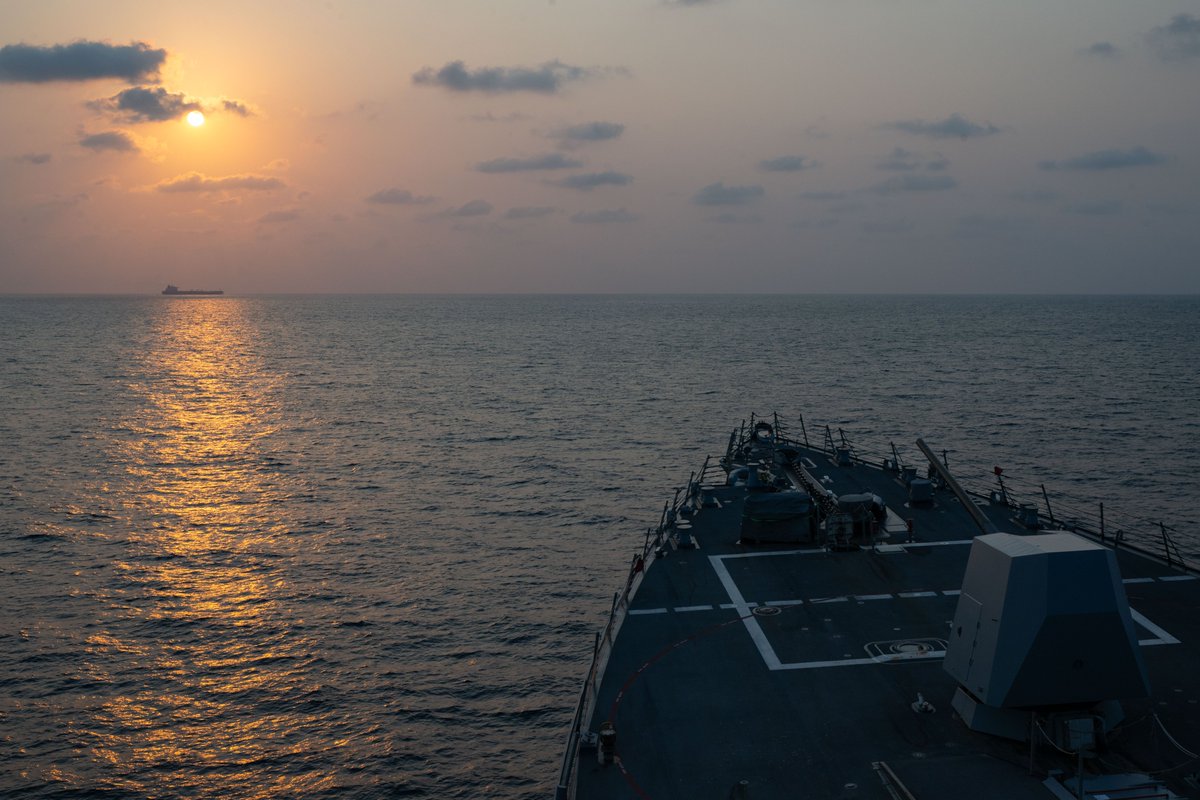
U.S. Marines with the 31st Marine Expeditionary Unit load onto a UH-1Y Venom aboard USS Tripoli (LHA 7) to conduct aerial sniper and close air support training while transiting regional waters. pic.twitter.com/Y6HYfgOVYJ
— U.S. Central Command (@CENTCOM) June 9, 2026
Ceasefire Remains Fragile
Despite a temporary ceasefire, the U.S. and Iran have exchanged fire on multiple occasions.
Before the recent escalation, negotiators had reportedly made progress on a framework for ending the war. President Trump has repeatedly stated that the two countries were “very close” to reaching an agreement.
No agreement has been reached. Trump has indicated that further airstrikes remain possible as part of a broader strategy of maintaining pressure on Iran.
Strait of Hormuz Situation
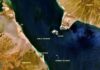
On Thursday, Iran’s Mehr news agency reported that Iran’s military command had declared the Strait of Hormuz closed to all vessels, including oil tankers and commercial ships.
The statement read: “From this moment on, due to insecurity in the region, the Strait of Hormuz is declared closed for the passage of all types of vessels. Any passage [of ships] will be targeted.”
Iranian media also reported that two US ships had been fired upon.
U.S. Central Command denied both the closure and any attacks on its vessels, stating that commercial ships continue to transit the waterway despite Iranian warnings.
Military Exchanges Continue
Iranian news agencies reported explosions in several Iranian cities and towns, including Sirik, Kargan, Bandar Abbas, Minab, Karaj near the strait, and Varamin farther north near the Caspian Sea.
According to reports, the downing of a U.S. Apache helicopter over Hormuz — which Trump attributed to Iran — preceded the latest escalation.
Separately, Israeli airstrikes on Beirut and Iranian strikes against Israel have further contributed to regional tensions.
On Wednesday, U.S. forces targeted air defense and radar sites around the Strait of Hormuz. In response, Iran launched missile and drone attacks on U.S. bases in Jordan, Kuwait, and Bahrain. A US official reported no significant damage from the Iranian strikes.
Iranian Official Criticizes US Actions
Iran’s foreign ministry spokesperson, Esmaeil Baghei alleged that US forces had struck water reservoirs serving 10 villages, describing the action as a violation of international law.
The Pentagon has not yet commented on the claim.
Economic Impact
The conflict has resulted in thousands of casualties and disrupted global energy markets.
Approximately one-fifth of the world’s crude oil and liquefied natural gas supply has been affected, contributing to higher prices.
On Thursday, Brent futures rose 1.57% to $94.56 per barrel, while U.S. West Texas Intermediate (WTI) crude rose 1.89% to $91.73 per barrel. Earlier in the session, U.S. crude futures had increased by more than $3.
Meanwhile, the U.S. and Iranian restrictions on transit through the key waterway remain in place. Iran has restricted traffic through the Strait of Hormuz, while the United States maintains a blockade on Iranian ports.

Kiran Asim is a writer who covers the U.S., Europe, South Asia, and the Middle East. Her reports and analyses look at the geostrategic issues and contemporary developments and their economic and political implications. She also writes about society and education.