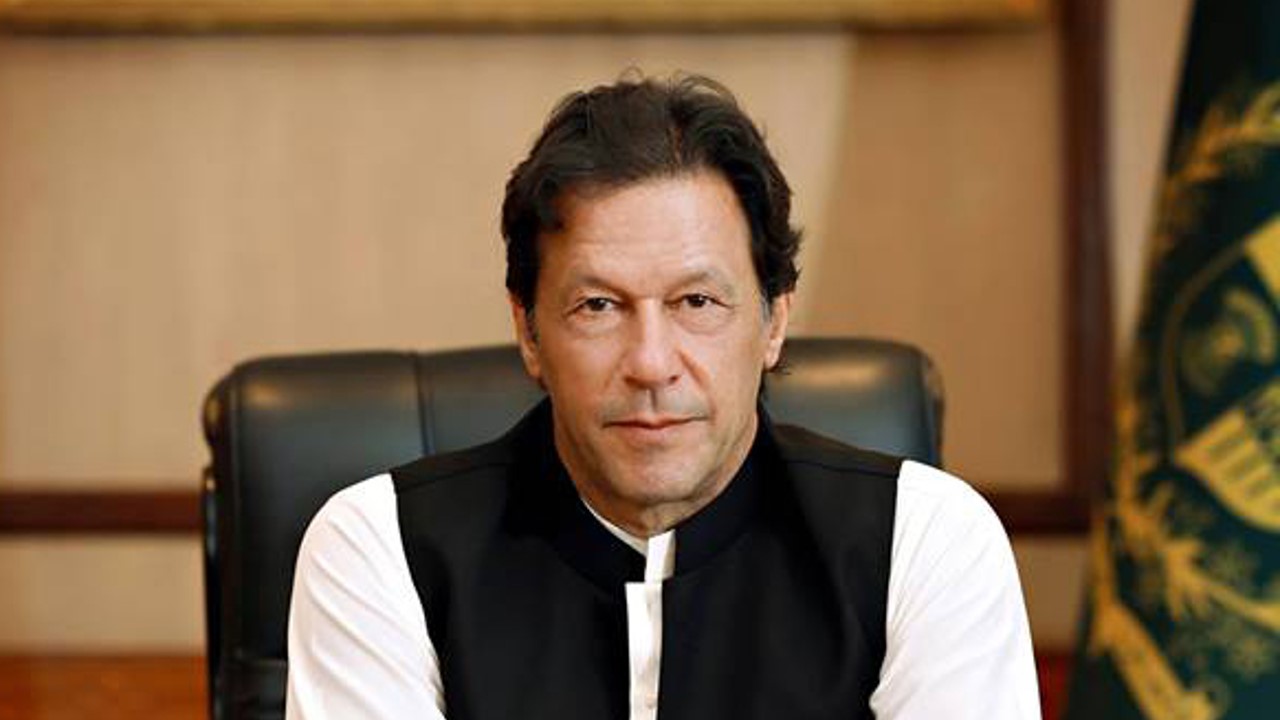
Pakistan’s incarcerated former prime minister Imran Khan, who has lost 85% of vision in one eye, and his spouse, Bushra Bibi, have turned to the Islamabad High Court (IHC) to challenge their recent convictions.
At the heart of their petition is a plea for the suspension of their 17-year sentences in the high-profile “Toshakhana-2” case, citing both a “miscarriage of justice” and a medical crisis that has left the 73-year-old leader partially blind in one eye.
The case centers on the alleged undervaluation of a luxury Bulgari jewelry set gifted by the Saudi royal family.
A special court handed down two concurrent sentences — ten years for “criminal breach of trust” and seven years for “corrupt practices.”
Imran Khan Reports Severe Vision Loss; Top Court Orders Medical Examination
However, Khan’s legal team, led by Salman Akram Raja and Salman Safdar, argues that the trial was marred by “legal infirmities,” including the use of questionable witnesses and a violation of the principle against double jeopardy—charging the couple under two different laws for the same singular act.
While the legal battle rages, a more visceral concern has emerged from within the walls of Adiala Jail, capital’s neighboring city Rawalpindi.
According to a medical report submitted by the Pakistan Institute of Medical Sciences (PIMS) and highlighted by a court-appointed amicus curiae, Khan has suffered a catastrophic loss of vision in his right eye.
The report identifies a blood clot—specifically a Right Central Retinal Vein Occlusion (CRVO)—that has reportedly reduced his sight in that eye to a mere 15%. His defense team claims that despite months of complaints regarding blurred vision starting in late 2025, jail authorities failed to provide timely specialized care.
Offer to Relocate Imran Khan to Bani Gala Home: Politicking or Conciliatory Gesture?
“The petitioner’s eyes were watery, and he repeatedly used a tissue to wipe them, reflecting physical discomfort,” noted Barrister Salman Safdar in a recent report to the Supreme Court.
The prosecution maintains that Khan and Bibi bypassed state protocols to retain the jewelry set—valued at approximately Rs71 million—by paying only a fraction of its worth. Khan’s defense counters that they followed the 2018 Toshakhana policy to the letter, depositing 50% of the assessed value after the mandatory exemptions.
For the international community, the case serves as a litmus test for the independence of Pakistan’s judiciary and the future of democracy.
Critics of the current administration view the relentless flurry of cases against Khan as “political engineering” designed to keep the country’s most popular opposition figure behind bars.
The government, conversely, insists it is merely holding a former leader accountable for the misuse of public office.
The IHC is expected to take up the suspension plea in the coming days. The court must now weigh the gravity of the corruption charges against the immediate health risks of a former head of state who has spent over two years in varying forms of isolation.
Imran Khan’s political stature as a popular leader has remained unaffected. Now, the case — termed as dubious by his Pakistan Tehreek-e-Insaf party– resulting in 17-year sentence, has become more a question of his physical well-being.
The court decision — relief on medical grounds or completion of the appeal process — will likely dictate the temperature of Pakistan’s volatile political landscape for the remainder of 2026.

Kiran Asim is a writer who covers the U.S., Europe, South Asia, and the Middle East. Her reports and analyses look at the geostrategic issues and contemporary developments and their economic and political implications. She also writes about society and education.