Pakistan plans to export surplus food commodities to Gulf countries facing supply disruptions as the conflict involving the United States, Israel and Iran enters its third week.
Prime Minister Shehbaz Sharif on Sunday directed his advisers to prepare a comprehensive plan to ship surplus food to Gulf states grappling with uncertainty in trade and logistics amid the escalating conflict.
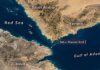
The war—triggered by U.S.–Israeli strikes on Iran and retaliatory attacks by Tehran on American interests in the Gulf—has disrupted regional trade flows and heightened security risks along the Strait of Hormuz, one of the world’s most important shipping routes.
Despite the disruptions, Pakistan remains among the few countries continuing to receive oil shipments through the key maritime strait and the Red Sea.
Officials told the prime minister that Pakistan currently holds ample stocks of food commodities and has the capacity to expand exports of agricultural products, meat, poultry, dairy and seafood.
“The food requirements of Gulf countries and their food security must be taken into consideration in the current situation,” Sharif said, directing authorities to develop a plan to export surplus food without affecting domestic availability.
The countries of the Gulf Cooperation Council—Bahrain, Kuwait, Oman, Qatar, Saudi Arabia and the United Arab Emirates—are among the countries most affected by regional disruptions, including strikes and interruptions to travel and trade.
Gulf countries are among the world’s most import-dependent food markets, purchasing roughly 80–90% of their food from overseas. The region imports nearly all of its rice and a large share of cereals, meat, fruits and vegetables because of limited farmland and water resources.
Analysts say this heavy reliance on imported food leaves the region particularly vulnerable to disruptions in shipping routes such as the Strait of Hormuz, through which a significant portion of food imports normally pass.
While many Gulf states maintain strategic food reserves that can cover several months of demand, supply bottlenecks and rising freight costs have already raised concerns about possible price increases and shortages if the conflict continues.
Pakistan already exports a range of food products to the Gulf region, including rice, beef, poultry, fruits, spices and vegetables. Islamabad recently signed a free trade agreement with the GCC aimed at boosting exports and reducing its trade imbalance with the bloc.
Sharif also ordered the formation of a committee to monitor the situation on a daily basis and instructed Pakistan’s ambassadors and trade officers in Gulf countries to remain actively engaged in facilitating potential exports.
He further directed the Pakistan National Shipping Corporation to ensure the availability of sea transport for food shipments to Gulf markets and called for strict quality control of food products exported to the region.
Millions of Pakistanis live and work across the Gulf Cooperation Council countries, making the region one of the largest sources of overseas employment for Pakistan. Money sent home by these workers is a major pillar of the country’s economy. Workers’ remittances reached about $38 billion in the last fiscal year, with a large share coming from Gulf economies led by Saudi Arabia and the United Arab Emirates.
Remittances from overseas workers are considered a lifeline for Pakistan’s economy, helping stabilize foreign exchange reserves, support household incomes and offset trade deficits. Analysts say any prolonged disruption in the Gulf due to the ongoing conflict could have broader economic implications for Pakistan, given the country’s strong dependence on both remittances and energy supplies from the region.
Pakistan has long maintained close economic ties with Gulf states, serving as a major source of labor and expertise while also relying on the region as a key supplier of energy and an investor.

Muhammad Luqman is Associate Editor at Views News Now. He writes on wide-ranging issues including economy, South Asia, the Middle East, agriculture, economy and innovation. Luqman has worked some of the leading news organizations and won acclaim for his original and research-based works.