A folk singer’s mission to preserve endangered languages and music traditions of Gilgit-Baltistan
With more than 100 recorded songs in the Shina language and a growing catalogue spanning folk, patriotic, romantic and contemporary genres, Salman Paras has established himself as one of the region’s most recognizable cultural voices.
Through his music, the artist has introduced centuries-old traditions to audiences on Spotify, YouTube and other global streaming platforms while remaining committed to preserving their authenticity.
“Preserving culture is a lifelong journey, not a destination,” Paras said in an interview with Views News Now.

Paras makes use of a unique panoply of talents to accomplish his monumental mission. He is not only a folk singer but a songwriter and cultural ambassador too.
Reflecting on nearly two decades of work dedicated to preserving the folk music and endangered languages of Gilgit-Baltistan, Paras says the mission has guided his career spanning nearly twenty years.
He has focused on safeguarding the linguistic and musical heritage of Gilgit-Baltistan, a region home to some of Pakistan’s most endangered languages.
Among them is Shina, a language that Paras believes can best be preserved through music.
Folk songs, he says, create an emotional connection between generations in ways that history books often cannot.
“When young people sing songs in their mother tongue, they naturally become interested in learning the language and understanding the traditions behind it,” he said.
Paras believes that every regional language spoken across Gilgit-Baltistan carries centuries of history, folklore and wisdom. Music, he says, remains one of the most effective ways to preserve that cultural inheritance while keeping it relevant for younger generations.
His latest multilingual project, Sab Rang GB Kay, reflects that vision. The song features all six major languages of Gilgit-Baltistan: Shina, Balti, Burushaski, Wakhi, Khowar and Urdu.
Performed entirely by Paras himself, the project celebrates the region’s rich linguistic diversity while promoting unity through music. Paras is among a small group of Pakistani artists successfully blending traditional Shina folk music with modern production.
The response, he said, has been overwhelmingly positive because listeners appreciate hearing familiar folk melodies presented in a contemporary style without sacrificing their original spirit.
His work reached a wider national audience in 2025 through his collaboration with Ali Zafar on “Karay Karay,” a contemporary interpretation of one of Gilgit-Baltistan’s most beloved folk songs.
He also collaborated with Pashto singer Laila Khan, describing the partnership as a cultural exchange between the musical traditions of Gilgit-Baltistan and Khyber Pakhtunkhwa.

“Regional music can transcend linguistic boundaries while strengthening national unity through cultural diversity,” Paras said. More recently, he has begun composing original Urdu songs inspired by the folk traditions of Gilgit-Baltistan.
His latest release, “Meri Jan e Jahan,” forms part of a deliberate effort to introduce the region’s melodies and rhythms to audiences across Pakistan.
By presenting folk-inspired music in Urdu, he hopes listeners will be encouraged to explore the original Shina songs and the culture from which they emerged.
One composition has become particularly significant in his musical journey. “Hum Gilgit-Baltistan Ke Hain” has grown beyond a popular song to become what many consider an unofficial regional anthem.
“It has become much more than a song,” Paras said. “It represents unity, pride and love for our homeland.” He added that several new multilingual and cross-cultural projects are currently in development, alongside additional songs celebrating the people, languages and heritage of Gilgit-Baltistan.
On a national level, Paras’s contributions to Pakistan’s cultural landscape have received national recognition over the years.
In 2010, he was honored with the Prime Minister National Youth Award for promoting Pakistan’s cultural heritage through music. The following year, he represented Pakistan as a member of the 100 Youth Delegation Visit to China.
Earlier, during his time at Karakoram International University between 2007 and 2009, he earned the title “Voice of KIU” for his musical achievements on campus.
His 2014 studio album, Morek Thay Nay, is widely regarded as one of the first professionally produced albums from Gilgit-Baltistan.
The record helped lay the foundation for the region’s modern music industry and demonstrated the commercial and artistic potential of music produced in local languages.
Today, Paras’s music is available on Spotify, Apple Music, YouTube Music, Amazon Music, Deezer and other major streaming platforms, allowing audiences around the world to discover the languages, traditions and cultural heritage of Gilgit-Baltistan.
For Paras growing international reach, experimentation and evolution are parts of the whole — his mission and he continues to stay steadfast to it.
“My lifelong mission is to preserve regional languages, celebrate cultural diversity and ensure that the unique musical heritage of Gilgit-Baltistan continues to inspire future generations across the world,” he said.
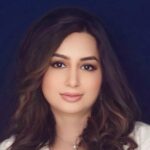
Dr. Sahrish Mahmood is a writer with a passion for cultural storytelling, music, and the arts, viewing them as bridges for cultural connection between people.