A new UN report warns that Asia-Pacific countries risk losing millions of jobs and widening inequality as advanced economies surge ahead with AI-driven growth, creating a stark divide between nations shaping artificial intelligence and those being shaped by it.
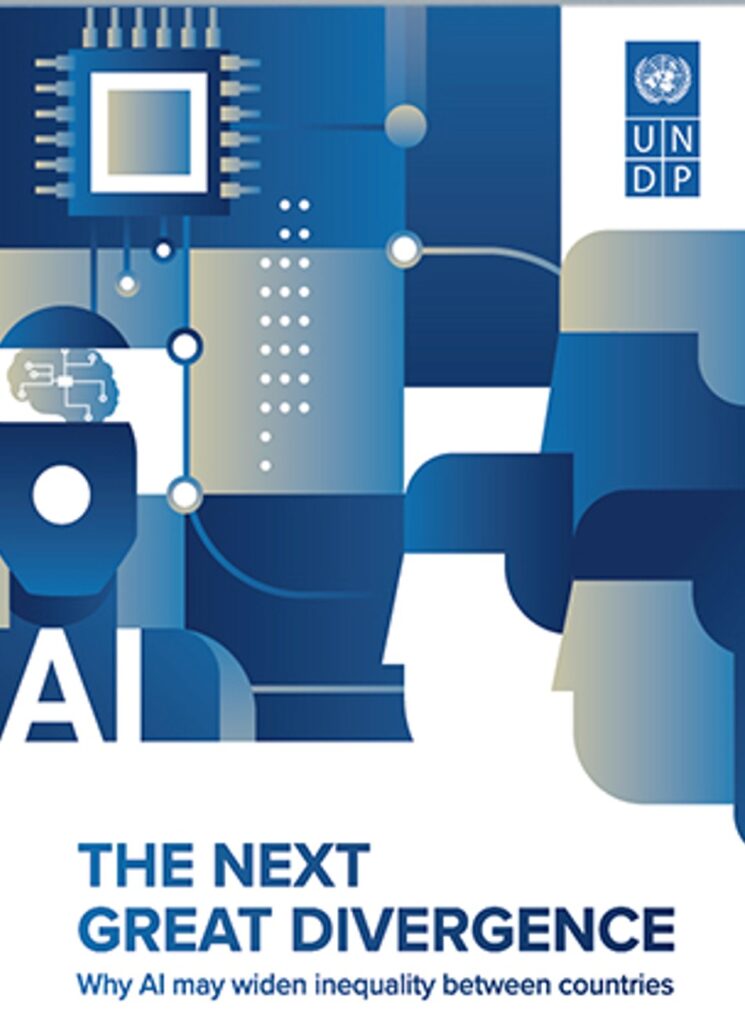
Three decades after the digital revolution transformed economies, the uneven adoption of AI threatens to deepen global disparities, according to the United Nations Development Program (UNDP) study, The Next Great Divergence: Why AI May Widen Inequality Between Countries.
It argues that while Artificial Intelligence offers major development opportunities, countries are entering this transition from vastly different starting points. Without strong and inclusive policy action, AI could reverse decades of progress that had narrowed gaps in income, education and health.
“AI is racing ahead, and many countries are still at the starting line,” said Kanni Wignaraja, UN Assistant Secretary-General and UNDP Regional Director for Asia and the Pacific. “The Asia and Pacific experience highlights that how quickly gaps can emerge between those shaping AI and those being shaped by it.”
Uneven Digital Readiness Across Asia-Pacific
The Asia-Pacific region — home to more than 55% of the world’s population — now hosts over half of global AI users and is expanding its innovation footprint rapidly. China accounts for nearly 70% of global AI patents, and more than 3,100 newly funded AI companies have emerged across six key economies.
AI could lift annual GDP growth in the region by around two percentage points and raise productivity by up to 5% in sectors such as health and finance. ASEAN economies alone could gain nearly $1 trillion in added GDP over the next decade.
But digital readiness varies sharply. Singapore, South Korea, and China are investing heavily in AI infrastructure and skills, while many lower-income nations are still struggling to secure basic digital access and literacy. Afghanistan’s average income is 200 times lower than Singapore’s — a gap that shapes how unevenly AI adoption is unfolding.
“We’re not starting from a level playing field in this region,” said Philip Schellekens, UNDP Chief Economist for Asia and the Pacific. “Countries that invest in skills, computing power, and sound governance systems will benefit; others risk being left far behind.”
Millions of Jobs at Risk — Especially for Women and Youth
Economists warn that millions of jobs across Asia are threatened by automation as AI accelerates in wealthier nations. Workers in South Asia and other lower-income regions face “significant exposure,” particularly in entry-level roles.
READ NOW | @UNDPasiapac’s flagship report on AI and human development explores how AI is reshaping economies and societies, and why it may widen inequalities between countries that could trigger a next great divergence unless urgent action is taken.
📖: https://t.co/jG4TCVZclB pic.twitter.com/0S7YZYEKei
— UN Development (@UNDP) December 2, 2025
Women and young adults are especially vulnerable. Jobs held by women are nearly twice as exposed to automation, and youth employment is already declining in high-AI-exposure roles. In South Asia, women are up to 40% less likely than men to own a smartphone — a divide that limits their ability to navigate AI-driven labor markets. Rural and Indigenous communities also risk being left out of datasets that train AI systems, increasing the danger of algorithmic bias and exclusion from essential services.
Infrastructure and Governance Gaps Amplify Risks
Limited infrastructure, insufficient skills, lack of computing power and weak governance capacity are constraining lower-income nations’ ability to harness AI. These gaps increase risks including job displacement, data exclusion, and the rising energy and water demands of AI-intensive technologies.
Only a small number of countries have comprehensive AI regulations, and UNDP estimates that by 2027 more than 40% of global AI-related data breaches may stem from misuse of generative AI.
The wizard who fuses art and artificial intelligence for cinematic magic
Opportunities Already Emerging
Despite these challenges, AI is transforming governance and public services across parts of Asia.
- Bangkok’s Traffy Fondue platform has processed nearly 600,000 citizen reports, helping agencies resolve daily issues faster.
- Singapore’s Moments of Life service has reduced paperwork for new parents from around 120 minutes to 15 minutes.
- Beijing’s digital twins are aiding urban planning and flood management.
For countries such as Cambodia, Papua New Guinea and Vietnam, UNDP says immediate gains may come not from cutting-edge AI but from simple voice-based tools that frontline health workers and farmers can use even when internet access is limited.
Digital devices: New study says screens could help young people’s health
A Warning Against a New Global Divide
UNDP cautions that without inclusive policies, AI could replicate the 19th-century pattern in which industrialization “split the world into a wealthy few and the impoverished.” Gains in health, education, and income achieved during decades of convergence between rich and poor nations are at risk of erosion.
To avoid a looming jobs crunch, the agency urges governments to adopt ethical frameworks, invest in digital skills, expand access to technology, and build governance systems that ensure AI benefits all.
“The central fault line in the AI era is capability,” Schellekens said. “Those who can build it will move ahead; those who cannot risk falling further behind.”

Iftikhar Ali is a veteran Pakistani journalist, former president of UN Correspondents Association, and a recipient of the Pride of Performance civil award