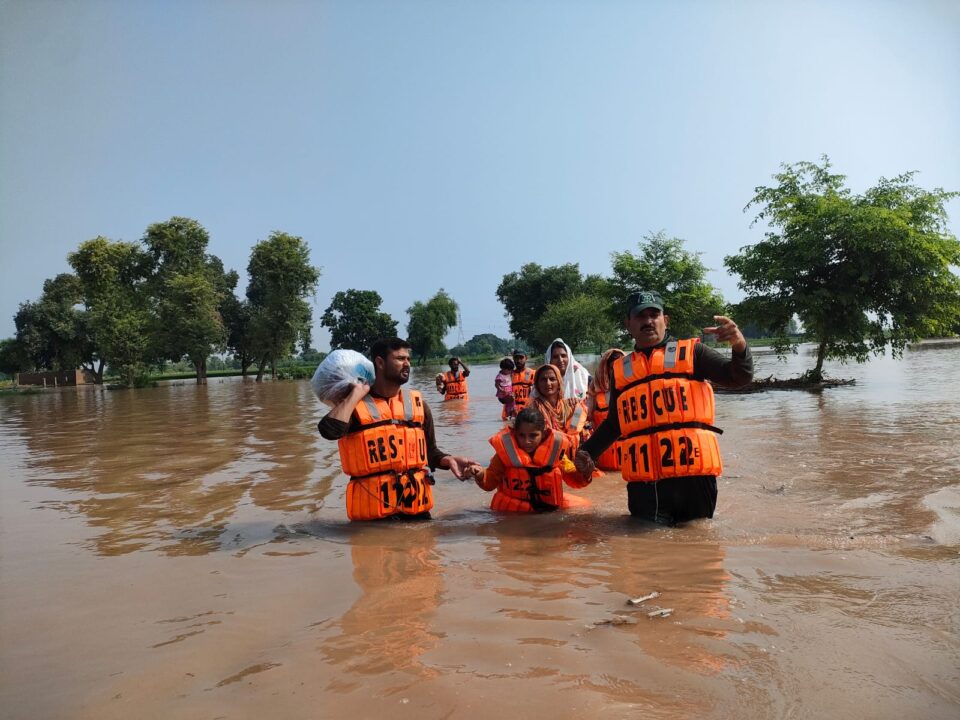
Following India’s warning on release of more floodwater into Pakistani rivers downstream and continuing monsoon downpours, the Chenab, Sutlej, and Ravi rivers have swelled dangerously, erasing villages in one of the worst flood disasters in Punjab in recent years. Catastrophic floods
The flooding has devastated thousands of square kilometers of farmland, destroying standing crops across districts such as Kasur, Okara, Pakpattan, Bahawalnagar, Vehari, Lodhran, Chiniot, Jhang, Multan, and others. Catastrophic floods
The latest Indian warning – which it says has been shared on humanitarian grounds – points to River Sutlej’s overflows. Catastrophic floods
Over 1.5 million people have been directly affected, with 750,000 evacuated to safer locations, according to government figures, but people say the number is far greater than that. Catastrophic floods

More than 900,000 livestock have also been relocated in a large-scale rescue operation coordinated by the Punjab government, PDMA, Rescue 1122, Civil Defense, police, and district authorities, Irfan Ali Kathia, Director General of the Punjab Disaster Management Authority (PDMA) said. Catastrophic floods
Across the province, 2,200 villages have been submerged, 34 lives lost, and hundreds injured, as the floodwaters tore through homes and infrastructure.
There have been stories of loss and resilience.
In Chiniot, a district familiar with seasonal flooding, many families hesitated to evacuate, believing the rising water wouldn’t reach dangerous levels.
“How much water can really come anyway?” Local residents asked before the flood hit their areas.
But the situation quickly escalated. As monsoon rains brought more rains and rivers surged, mosque loudspeakers warned of a massive flood wave — over 1 million cusecs — heading toward Chiniot.
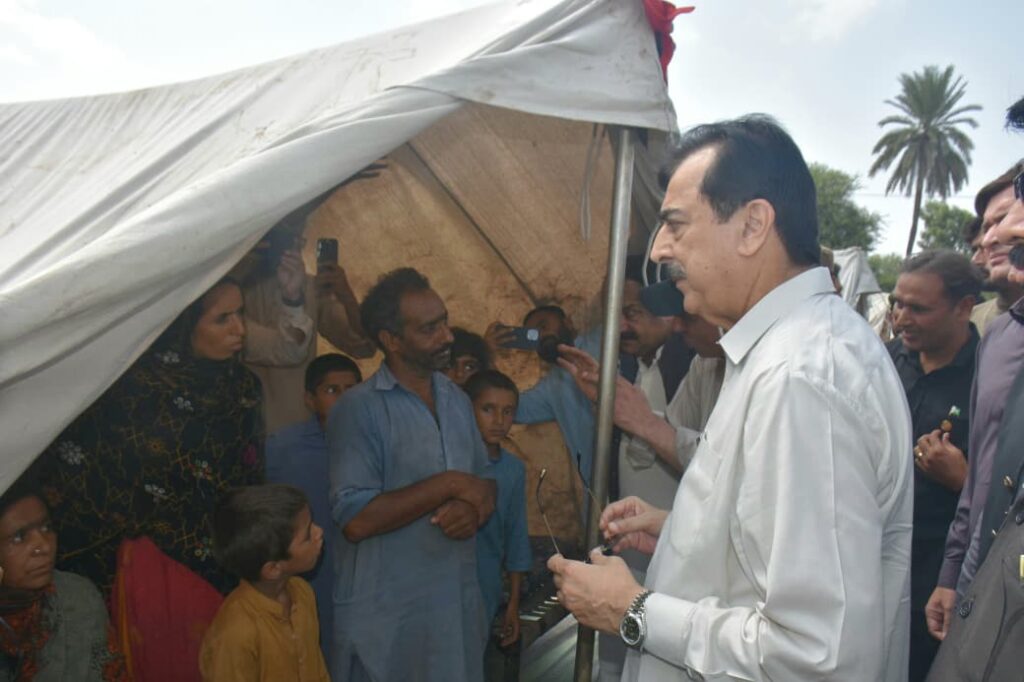
Some families, like Fatima Abbas’s, delayed their evacuation until the last moment. By the time they decided to leave, streets were already under several feet of water, forcing them to wait for a Rescue 1122 boat. Others, like Tahir Hammad and his neighbors, refused to leave, clinging to the rooftops of their flooded concrete homes.
“We cannot abandon our homes,” Tahir Hammad, a Chiniot resident said.
Without electricity or mobile signals, many became completely cut off, unable to call for help. Rescue boats had difficulty reaching them due to strong currents, debris from destroyed crops, and hidden culverts under flooded roads.
As the 850,000-cusec flood wave hit, rescue workers and residents alike huddled on rooftops, unsure whether the buildings would withstand the water’s force. For some, the night was a terrifying wait, the sound of raging water growing louder as the Chenab devoured entire villages.
Punjab Pakistan Floods

Punjab Pakistan Floods
“The sound of the waves was terrifying. It truly felt like nothing would survive,” a flood survivor recalled.
Even though the worst of the flood wave passed, water levels remain dangerously high—over eight feet deep in some areas. In many villages, only rooftops remain visible, with boats navigating what were once roads. Catastrophic floods
Residents are slowly returning, often on makeshift rafts or tubes, to check what remains of their homes. Zulfiqar Mirza, standing on his rooftop, pointed toward the river:
“A few years ago, there was a village there, just like ours. The river changed its course and swallowed it. Now it’s pressing against our side. We don’t know how much longer we have.”
The damage is extensive, and for thousands of families, the path to recovery will be long and painful. Their immediate hope is simple: for the waters to recede, so they can begin to rebuild what they’ve lost. Catastrophic floods
Follow for more: Twitter (X) | Facebook | Instagram | LinkeIn

Asim Tanveer is a seasoned journalist working for TV and electronic and print media outlets. He has been working for some of the world’s leading news organizations including Associated Press (AP), Reuters, BBC, CNN, CNBC, Star TV, Voice of America and The New York Times for more than 20 years. He has won several awards for his live coverage of events that include a Reuters News Agency World Award and the Pride of Performance award in 2010.