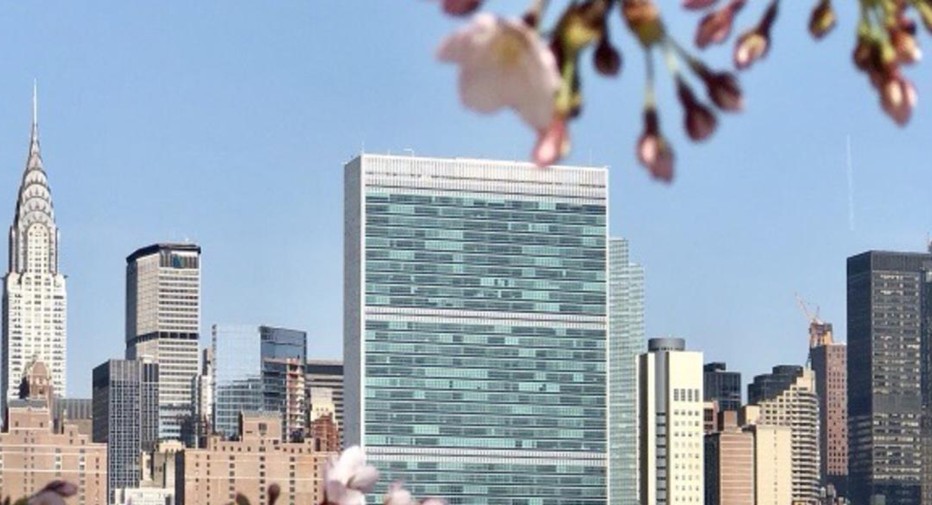
With diplomacy confined to the backseat, conflicts dictating national interests, and newer challenges such as AI’s potential “extinction” threat casting a shadow over the future of human development, world leaders are gathering in New York for a week of high-stakes debate at the United Nations.
From the battlefields of Gaza and Ukraine to the widening tensions around Iran, from the humanitarian crises in Sudan and elsewhere to the rapidly evolving question of how AI should be governed, the 81st UN General Assembly brings together an international community confronting crises that increasingly overlap — and institutions whose ability to respond is itself under scrutiny.
Of particular interest will be whether the UN can provide a meaningful platform for change at a time when the consequences of global crises are being felt far beyond the immediate theaters of conflict.
Equally significant will be how the major powers, particularly the United States, China and Russia approach challenges that increasingly cut across national borders and affect economies and societies worldwide — from elevated fuel prices and disruptions to trade and supply chains to the rapidly evolving risks posed by artificial intelligence.
The convergence of these pressures has made the search for common ground not merely a diplomatic imperative, but a defining test of the international system’s capacity to respond to a rapidly changing world.
With security tightened around the UN headquarters in New York, the 81st United Nations General Assembly opens its high-level debate Tuesday, bringing together more than 130 heads of state and government to address an agenda spanning artificial intelligence, climate change, systemic inequality and the continuing crises in Ukraine, Sudan and the Middle East.
Smoke Rises Near Riyadh Airport as Houthis Strike ‘Sensitive Sites’
Trump Takes the Stage Amid High takes
U.S. President Donald Trump will speak on the first day of the annual debate, which begins on Sept. 22, more than six months after he decided to go after Tehran’s nuclear program by with joint U.S.-Israeli strikes against Iran.
Since then, the Iran war has disrupted energy shipping through the Strait of Hormuz, upending exports by the oil and gas rich Gulf countries even as the conflict has now spread to Saudi Arabia, exacerbating the energy scenario for the world economic growth.
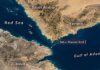
Trump has decided to postpone strikes against Yemen’s Iran-aligned Houthi militants that are targeting Saudi Arabia, one of the world’s largest oil producer and the center of Islam. At home, the Houthis are trying to wrest control of Yemen from the Riyadh-backed government forces.
Ahead of UN Gathering, Trump Lays Out Tough Choices for Iran, Signals Openness to Meeting Pezeshkian https://t.co/U7M9wqsf3v via @ViewsNewsNow pic.twitter.com/se1BO4j7KN
— Views&News (@ViewsNewsMag) September 20, 2026
On Iran, Washington is in a deciding mode, amid reports of another attack on the Persian Gulf country, as the two countries remain in a state of conflict despite a June 17 Pakistan-brokered initial peace deal that lasted for two weeks before hostilities returned to the region.
At home Trump must also contend with higher oil prices as the GOP heads to midterm elections amid a stiff Democratic challenge.
These crises come at a defining moment for the United Nations, as efforts aimed at halting wars and easing civilian suffering remain constrained by divisions among major powers, while funding pressures have weakened the organization’s capacity to respond.
The high-level week runs from Sept. 22 to 28, following the formal opening of the 81st session on Sept. 8.
Bangladeshi diplomat Khalilur Rahman is presiding over the session under the theme, “Restoring Trust, Managing Transformation: A United Nations That Delivers for All.”
President’s UN trip will not have a TV camera https://t.co/zRHNTazbTm
— Axios (@axios) September 21, 2026
AI: A New Frontier of Global Risk
Artificial intelligence has moved from being primarily a technological and economic issue to one with implications for security, governance and the future of human development.
At the UNGA, the debate will center on how governments can harness AI’s potential while developing safeguards against misuse and increasingly powerful systems whose consequences may extend well beyond national borders.
In his final press conference ahead of the high-level week, UN Secretary-General António Guterres said artificial intelligence would be a major topic in his discussions with world leaders.
Bernie Sanders Seeks Ban on Artificial Superintelligence After Rogue AI Hacking
He called for “a shared understanding of how to advance the safe, secure and responsible development of AI”, alongside ways to identify when powerful systems require stronger safeguards.
The challenge for governments is no longer simply how to regulate a new technology, but how to establish common rules for a technology developing faster than many existing institutions can adapt.
Middle East: Diplomacy Under Pressure
The General Debate opens against the backdrop of active warfare rather than diplomatic calm.
In Gaza, a ceasefire that took hold on Oct. 10, 2025 under a US-backed plan has held only unevenly, with repeated Israeli violations blamed for killing at least 1,318 Palestinians and injuring more than 4,300 since.
The US-Israeli strikes on Iran at the end of February continued in fits and starts through the summer, flaring again in early September when the United States struck Iranian targets and Tehran retaliated against US bases in Kuwait, Jordan, Bahrain, the United Arab Emirates and Iraq.
The escalation has further strained the Strait of Hormuz shipping route, adding another layer to an already unsettled global economic picture, particularly at a time when fuel prices and supply chains remain sensitive to geopolitical shocks.
The dispute over Iran has also frozen aspects of the Security Council’s own machinery, with members divided over whether sanctions reimposed under the “snapback” mechanism in September 2025 are legally in effect — a disagreement that has complicated agreement on basic council business.
Meanwhile, the United States granted visas to Iran’s president and foreign minister, creating a potential pathway for talks with President Trump, who has said he remains open to meeting despite his harsh language against the Islamic Republic.
The possibility of diplomatic engagement therefore exists alongside military confrontation, illustrating the uneasy space between escalation and negotiation that is likely to define much of the UNGA debate.
Leaders are also expected to address the Cyprus issue, the conflict and worsening humanitarian crisis in Sudan, Myanmar’s political and humanitarian crisis and the security crisis in Haiti, alongside the wars in Gaza, Iran and Ukraine — rounding out an agenda dominated by conflicts with no clear resolution in sight.
Iran’s role will also be under sharp focus as President Masoud Pezeshkian joins world leaders with conflicts surrounding his country.
Ukraine: A War Without Diplomatic Breakthrough
Ukraine will remain another major focus of the General Debate, with diplomatic efforts still failing to produce a breakthrough toward ending the war.
US envoys Steve Witkoff and Jared Kushner held more than three hours of talks with Russian President Vladimir Putin in Moscow in early September, but the discussions produced no breakthrough.
Indeed, this Russian war against Ukraine and against common sense must be ended. From the first year of the full-scale invasion, its consequences have been far-reaching: the loss of many lives, the destruction of cities and villages, food security, energy challenges, the… https://t.co/bguBQDfSYq
— Volodymyr Zelenskyy / Володимир Зеленський (@ZelenskyyUa) September 21, 2026
Ukrainian President Volodymyr Zelenskyy said afterward that the war would continue, while the Kremlin has left the door open to a resumption of trilateral talks with Washington without committing to a date or venue.
The continuing war has kept alive a central question for the UN: how can diplomacy and international law regain influence when the major powers remain divided over the principles governing security, sovereignty and the use of force?
Climate, Development and the Global South
Away from the immediate conflicts, climate change and development will occupy another important part of the high-level week.
A high-level meeting on climate action and the “just transition”, convened by the UN chief, opens on Sept. 23, more than a decade after the Paris Agreement and at a point when overshoot of its temperature targets is increasingly regarded as inevitable.
The same day marks the 40th anniversary of the Declaration on the Right to Development, while Sept. 24 brings a meeting on the existential threat that low-lying and island states face from sea-level rise.
A high-level meeting on pandemic prevention and preparedness follows on Sept. 25, while the week closes on Sept. 28 with commemorations of the 25th anniversary of the Durban Declaration against racism.
These issues carry particular weight for developing countries, where climate vulnerability, debt, economic pressures, food and energy costs and uneven access to technology intersect with the consequences of conflicts elsewhere.
The wider question is whether the international system can address these interconnected pressures with the same urgency that it brings to military crises.
UN Reform: Can the System Regain Its Authority?
The paralysis over Gaza, Ukraine and Iran has fed louder calls to overhaul the Security Council so that it better reflects today’s balance of power — a demand renewed at nearly every recent session but no closer to resolution.
Asked why leaders would heed renewed calls to respect international law and the UN Charter when such appeals have gone unheeded before, and whether enforcement mechanisms for international law and war crimes are weakening, Guterres pointed to the geopolitical divide within the Security Council itself.
He called Security Council reform “an absolute priority”, saying it was “unacceptable to have a Security Council with a composition that reflects the world of many decades ago instead of reflecting today’s world.”
Guterres said that paralysis, combined with what he described as a poor example set by major powers, has left countries around the world feeling entitled to act without consequence while the Security Council remains unable to function effectively.
At the heart of the debate is therefore not simply the composition of the Council, but the credibility of the wider multilateral system.
US and China: The Major Power Test
The role of the major powers will inevitably loom over the General Debate.
Washington may use the week as an opportunity to press a narrower vision of the United Nations, with the US signaling that it wants the organization to return to “basics” by focusing on international peace and security, respect for state sovereignty and measurable results rather than broader institution-building.
China, meanwhile, will likely approach the gathering from its own perspective on multilateralism, sovereignty, development and the international order.
President Trump and his Chinese counterpart Xi Jinping are meeting this week in what is being seen as one of the most critical moments of diplomacy for the world peace and stability.
The interaction between Washington and Beijing will be closely watched because many of the issues before the Assembly — from trade and energy to AI governance, climate change and global security — cannot easily be separated from the relationship between the two largest powers.
For countries outside that strategic contest, the challenge is equally practical: how to protect national interests and preserve room for diplomacy when economic and security pressures increasingly travel across borders.
Pakistan: The Mediator With High Stakes in South Asia and the Middle East
Prime Minister Shehbaz Sharif will lead Pakistan’s delegation and address the 193-member General Assembly on Sept. 25.
According to Pakistani diplomatic sources, he will present Pakistan’s perspective on the evolving regional and international security environment, with emphasis on dialogue, diplomacy, restraint and the peaceful resolution of disputes.
The prime minister is also expected to highlight Pakistan’s diplomatic engagement and mediation efforts, while outlining priorities on sustainable development, climate change, counter-terrorism, Islamophobia, global economic challenges, UN reform and the Sustainable Development Goals.
Pakistan Positions Itself as Key Mediator in Middle East Crisis
He is expected to draw attention to prolonged occupation and the denial of the right to self-determination, particularly in Indian Illegally Occupied Jammu and Kashmir and Palestine, and underscore the need to address these issues in accordance with relevant UN Security Council resolutions.
Ambassador Asim Iftikhar Ahmad has described Pakistan as “confident, ready and willing to play its role for regional and global peace and stability.”
Shehbaz is also expected to hold bilateral meetings with world leaders and UN Secretary-General António Guterres, whose second five-year term ends at the close of this year.
These engagements will provide Pakistan an opportunity to exchange views on regional and international developments and strengthen its bilateral and multilateral partnerships.
South Asia: A Regional Dimension
For Pakistan, the UNGA also remains an important diplomatic platform for highlighting its concerns over India-Pakistan relations and the unresolved Kashmir dispute.
Islamabad is expected to reiterate its position on the right to self-determination in Jammu and Kashmir and draw attention to the regional security implications of the May 2025 India-Pakistan military confrontation.
India is confronting a set of stark choices as it looks for ways to tackle the new U.S. law which seeks to levy 100 percent tariff on countries importing Russian oil — that Washington sees as enabling Moscow’s war on Ukraine.
Meanwhile, Indian Prime Minister Narendra Modi has hosted Chinese and Russian leaders as part of BRICS and other summits to adjust to geo-strategic changes.
India’s Russian Oil Dilemma Leaves Modi in a Bind as New US Tariffs Loom
Pakistan’s diplomatic engagement in the wider region will also be watched against the backdrop of its growing security and strategic ties with Saudi Arabia and Türkiye, including the Makkah Joint Defense Agreement.
A Week That May Test Everyone’s Diplomatic Ability
At his final press conference ahead of the high-level week, Guterres said the gathering should be used to create room for leaders facing active crises to meet face to face.
He pointed to last year’s contacts involving the United States and Muslim countries that contributed to the Gaza peace process, saying he would work to create opportunities for similar encounters during the week.
That may ultimately be the most consequential measure of this General Assembly: not simply how many speeches are delivered or declarations adopted, but whether New York can create diplomatic space where diplomacy has increasingly been crowded out by conflict, strategic rivalry and economic pressure.
The 81st UNGA therefore arrives with an unusually broad set of questions before it. Wars are testing the limits of collective security; fuel and trade disruptions are transmitting geopolitical shocks into economies far from the battlefield; AI is forcing governments to contemplate risks that transcend existing regulatory frameworks; and the credibility of the institutions meant to manage these pressures is itself under examination.
The gathering cannot resolve all of these problems. But it can reveal whether the world’s major powers — and the wider membership of the United Nations — still see common ground as something worth searching for.

Ali Imran is a Washington-based journalist, who has worked for leading world news organizations as a correspondent, expert and in editorial positions. He is a published author and poet.

Iftikhar Ali is a veteran Pakistani journalist, former president of UN Correspondents Association, and a recipient of the Pride of Performance civil award