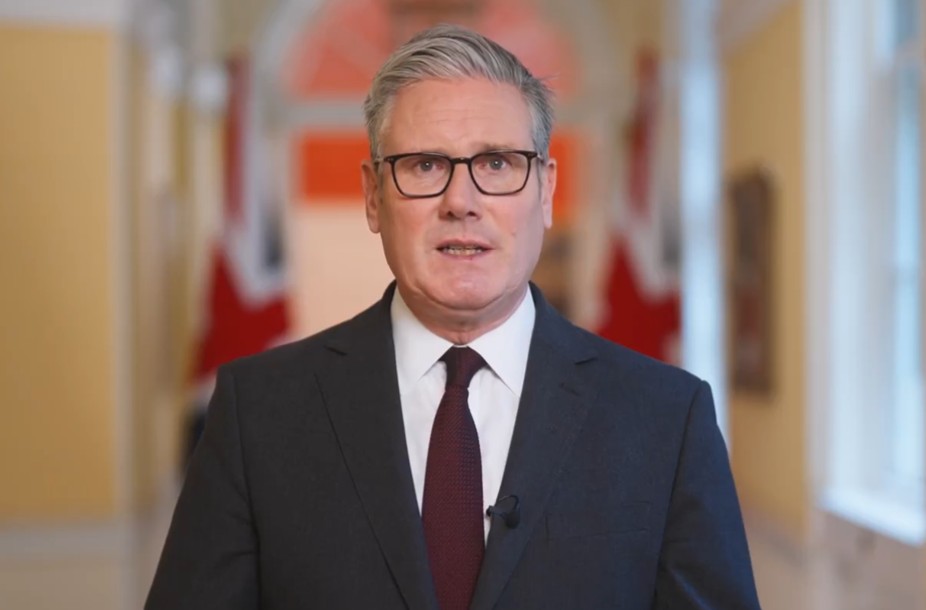
In a move that signals a decisive shift in Britain’s post-Brexit foreign policy, Prime Minister Keir Starmer departs for China this Wednesday. The three-day visit, the first by a British premier since 2018, marks an end to a period of diplomatic hibernation and the beginning of what Downing Street calls a “hard-headed, grown-up” relationship with the world’s second-largest economy.
Starmer’s itinerary includes high-stakes meetings with President Xi Jinping in Beijing and engagements with business leaders in Shanghai. Accompanied by a heavyweight delegation of over 50 corporate chiefs, the Prime Minister is seeking to unlock Chinese investment in green technology and infrastructure while securing better market access for British financial services, automotive exports, and Scotch whisky.
The Prime Minister’s mission is framed as a rejection of the binary choices that have characterized the last decade. Speaking to his Cabinet before departure, Starmer noted that UK-China relations had veered wildly from the “Golden Age” optimism of the David Cameron era to a frost-bitten “Ice Age” under his immediate predecessors.
US-UK tech pact worth more than $40 billion revealed as Trump makes state visit
“Sticking our heads in the sand and pretending China does not matter would be reckless,” a Downing Street source said, according to a report.
Some experts call it a “third way” approach, one that seeks to separate essential economic cooperation from non-negotiable national security concerns.
However, the tightrope Starmer is walking has never been thinner.
The visit comes at a moment of profound geopolitical realignment as the United States and China compete for economic and political influence. It takes place amidst President Donald Trump pursuit of “America First” policy that includes tariffs against even closest American allies. London may be increasingly looking to diversify its portfolio.
Starmer recently secured a bilateral trade deal with Washington to protect British aerospace and automotive sectors. However, recent U.S. threats over Greenland and escalating global protectionism have affected middle powers.
Flanked by India and Russia, Xi seeks to project China as global leader
Starmer may be signaling that while the “Special Relationship” with the U.S. remains the bedrock of UK security, Britain will not be forced into a total decoupling from China that could cripple its own economic growth.
Starmer’s trip is a textbook example of strategic hedging. Britain is also seen as attempting to position itself as a reliable, pragmatic middle power.
With the UK economy struggling for momentum, the $137 billion trade relationship with China is too large to ignore. Starmer needs “results that create jobs” to sustain his domestic popularity.
On the question of “choosing sides” between Washington and Beijing, the UK is asserting a level of diplomatic independence that has been missing since Brexit. The recent approval of a massive new Chinese embassy in London was clearly the “ante” required to get this meeting on the books. It serves as a olive branch, despite domestic outcry over potential espionage.
In my latest @thetimes article on PM Keir Starmer’s visit to China—the first by a British prime minister since 2018—I highlight the importance of renewed high-level engagement to build trust, expand co-operation, manage differences, and work together globally.
Let’s seize this… pic.twitter.com/cwphwGk3nn— Zheng Zeguang (@AmbZhengZeguang) January 27, 2026
The Prime Minister faces a minefield of criticism. China hawks in his own Parliament view the trip as a “kowtow” to a regime they accuse of systemic human rights abuses in Xinjiang and the erosion of democracy in Hong Kong.
Starmer has promised to raise the case of imprisoned British national and media mogul Jimmy Lai, but critics argue that economic priorities will inevitably muffle the UK’s moral megaphone.
As Starmer touches down in Beijing, the world will be watching to see if a middle power can truly maintain a “steady, consistent course” between two world powers, or if the “hard-headed” approach will eventually hit a wall.

Kiran Asim is a writer who covers the U.S., Europe, South Asia, and the Middle East. Her reports and analyses look at the geostrategic issues and contemporary developments and their economic and political implications. She also writes about society and education.