
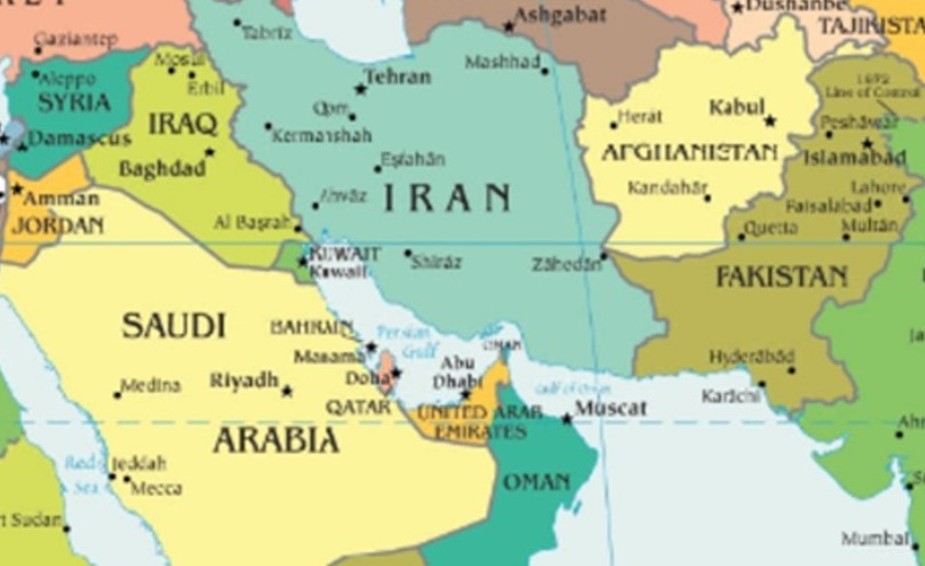
Saudi Arabia secretly carried out retaliatory airstrikes inside Iran during the recent Middle East war, making Riyadh the second Gulf state after the United Arab Emirates known to have directly responded militarily to Iranian attacks.
The previously undisclosed Saudi operations, cited by Reuters based on two Western officials and two Iranian officials familiar with the matter, reportedly involved strikes by the Royal Saudi Air Force in late March after Iran launched missile and drone attacks against targets inside the kingdom.
Neither Riyadh nor Tehran publicly acknowledged the retaliatory attacks during the conflict, reflecting what analysts describe as a broader pattern of covert escalation combined with parallel diplomatic engagement across the region.
Reuters said the Saudi strikes marked the first known instance of the kingdom carrying out direct military action on Iranian soil.
Though it remains unclear what Saudi strikes exactly targeted.
The disclosure comes shortly after The Wall Street Journal separately reported that the UAE had secretly launched strikes against Iran, including an attack on an oil refinery on Lavan Island in the Persian Gulf.
Taken together, the reports point to a significant — and largely hidden — transformation in Gulf security strategy during the conflict, with regional powers increasingly willing to respond militarily to Iranian attacks while publicly maintaining calls for restraint and de-escalation.
Throughout the war, Gulf capitals largely avoided publicly discussing retaliatory operations even as Iran targeted military facilities, airports, oil infrastructure and civilian sites across the region with missiles and drones.
Saudi Arabia has traditionally relied heavily on the United States security umbrella and has rarely engaged in direct military confrontation outside its border conflict with Yemen’s Iran-aligned Houthis.
Although Riyadh and Tehran have long backed rival proxy forces across the Middle East, direct attacks between the two regional powers have historically been rare.
According to Reuters, the Saudi retaliation was followed by intensive diplomatic contacts and warnings from Riyadh that furthen r military action could follow unless tensions eased.
One Iranian official cited in the report said the subsequent understanding between the two countries aimed to “cease hostilities, safeguard mutual interests, and prevent the escalation of tensions.”
A senior Saudi foreign ministry official did not directly confirm the strikes but reiterated Riyadh’s longstanding position favoring “de-escalation, self-restraint and the reduction of tensions.”
The conflict also accelerated a broader restructuring of regional defense coordination beyond Washington’s traditional security framework.
During the crisis, Pakistan played an active behind-the-scenes diplomatic role, urging restraint while facilitating communication between Saudi Arabia and Iran on one hand, and between Washington and Tehran on the other.
Islamabad is the chief mediator in U.S.-Iran talks, and has also followed a delicate diplomatic dance in convincing Iran and Saudi Arabia to observe restraint.
Pakistan and Saudi Arabia have recently expanded military cooperation under a strategic mutual defense arrangement aimed at strengthening regional deterrence capabilities.
As part of that cooperation, Pakistan last month deployed thousands of troops along with fighter aircraft and support assets to Saudi Arabia, with the deployment centered around King Abdulaziz Air Base in the kingdom’s Eastern Province.
The military deployment came as Saudi Arabia faced sustained Iranian missile and drone attacks during the conflict, including strikes targeting energy infrastructure and military facilities.
Saudi Arabia has also increasingly broadened its defense partnerships beyond its traditional dependence on the United States. Regional reports in recent weeks have suggested that Turkey is moving closer toward joining the emerging Saudi-Pakistan defense framework in what analysts describe as a significant geopolitical and military realignment across the Middle East and South Asia.
Reuters data compiled from Saudi defense ministry statements showed attacks on the kingdom declined sharply after the late-March exchanges, suggesting the combination of covert retaliation and diplomatic engagement helped contain a wider regional escalation.
Despite the reported back-channel understanding, sporadic attacks and tensions have continued across the Gulf even after the broader U.S.-Iran ceasefire announced in early April.

Kiran Asim is a writer who covers the U.S., Europe, South Asia, and the Middle East. Her reports and analyses look at the geostrategic issues and contemporary developments and their economic and political implications. She also writes about society and education.







