As the world grapples with the escalating fallout of the Iran war, India finds itself walking a diplomatic and economic tightrope. With deep strategic and economic, stakes in the Middle East, New Delhi is striving to protect its interests while maintaining careful neutrality in an increasingly polarized conflict.
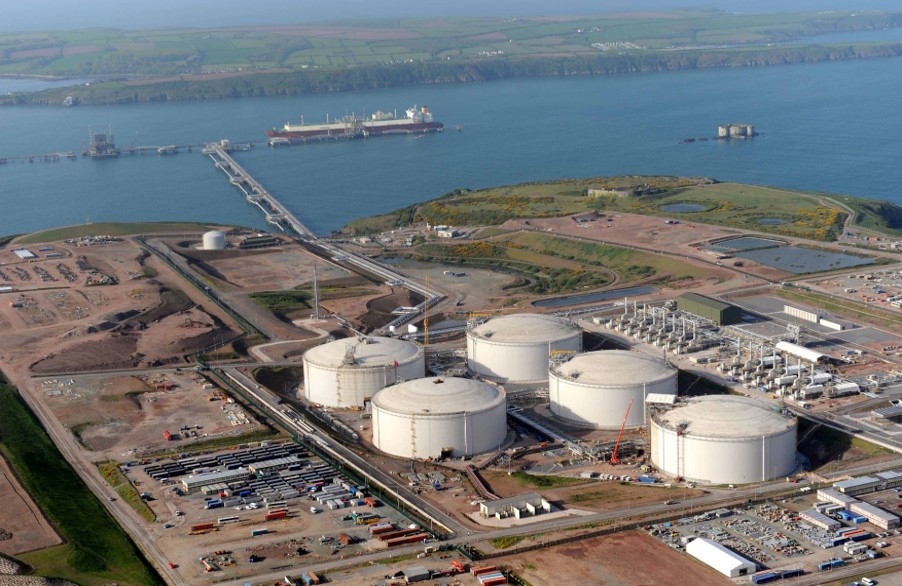
New Delhi is particularly concerned about the unfolding gas crisis after Iran’s attack on QatarEnergy’s main gas facility caused “extensive damage,” as Qatar is India’s largest single supplier of liquefied natural gas (LNG). India meets a large share—around 40–45%—of its LNG requirements through imports from Qatar, according to Moneycontrol.
Used as fuel in fertilizer production, industrial heating, power generation, and urban transportation, natural gas is an indispensable part of everyday economic activity. Despite producing some of its required gas domestically, India relies on imports from the Middle East to fulfill its 195 MMSCMD requirement. Of this, nearly 60 MMSCMD comes from Qatar.
For India, the stakes extend far beyond the closed shipping lanes of the Strait of Hormuz.
Energy imports, trade flows, and remittance inflows are all vulnerable to prolonged instability in the region. Nearly 10 million Indians living in the Middle East send billions of dollars home annually, making any disruption a serious economic concern.
Qatar’s Ras Laffan LNG Recovery Could Take Five Years After Iran Strike Damage
According to Harsh V. Pant of the Observer Research Foundation, India’s stakes in the Gulf are simply too large to risk disruption. Millions of Indian workers live in the region, and their remittances form a critical pillar of the country’s economy. Trade ties are equally significant, with a substantial portion of exports passing through the Strait of Hormuz—a vital artery for global energy supplies.
That waterway has now become a focal point of concern. Iran’s strategic leverage over the Strait of Hormuz—through which roughly one-fifth of the world’s oil and LNG flows—poses a direct risk to India’s energy security and shipping routes. Ensuring safe passage for Indian vessels has therefore emerged as an immediate priority.
This dependence and economic connectivity make the current scenario a sobering moment for India.
New Delhi’s response to the supply disruptions and expanding crisis has been marked by active but cautious diplomacy.
US has ‘temporarily permitted’ India to buy Russian oil, White House
External Affairs Minister S. Jaishankar has remained in close contact with his Iranian counterpart, Abbas Araghchi, holding multiple conversations in recent weeks.
At the same time, Prime Minister Narendra Modi has reached out to key Gulf leaders across Saudi Arabia, the UAE, Qatar, Oman, Kuwait, and Bahrain. This multi-channel engagement reflects India’s effort to remain connected to all sides without appearing aligned with any, the South China Morning Post reported.
Analysts say this balancing act is less about traditional geopolitics and more about safeguarding tangible national interests.
Some recent developments offer reassurance. Following diplomatic engagement with Tehran, several Indian ships, including LPG tankers and crude carriers, were able to transit the strait safely. Jaishankar credited sustained dialogue for this outcome, though he emphasized that no blanket guarantees exist. The Indian government has also identified over 20 vessels requiring monitoring and potential assistance, underlining the scale of the challenge.
Experts argue that India’s approach reflects pragmatic risk management rather than ideological alignment. Walter Ladwig of King’s College London notes that New Delhi’s priority is to preserve access to all actors—whether the United States, Iran, Israel, or Gulf states—without closing off future options. This strategy allows India to remain flexible in a rapidly shifting geopolitical landscape.
However, this neutrality is not without complications. Scott Lucas from the University of Birmingham highlights that India is already dealing with overlapping global pressures, including sanctions dynamics linked to Russia and shifting trade alignments. The Iran conflict adds another layer of complexity, particularly as India must simultaneously manage ties with Washington, Tehran, and regional powers that are themselves divided.
Criticism has also emerged from within India. Gul Mohammad Wani of the University of Kashmir argues that New Delhi’s diplomatic signaling has at times appeared inconsistent. Modi’s earlier visit to Israel, followed by relative silence during key moments of the conflict, has raised questions about India’s positioning. Some critics believe this has hurt India’s image as a balanced actor in the region.
Further controversy surrounds India’s muted response to U.S. and Israeli actions against Iran, contrasted with its support for a UN resolution condemning Iranian strikes on Gulf states. Opposition voices, including the Congress party, have described the government’s timing and messaging as problematic, arguing that India risks appearing selective in its principles.
There are also suggestions that Iran’s temporary restrictions on Indian shipping could have been influenced by perceptions of India’s delayed diplomatic responses. While such claims remain speculative, they highlight the tenuous nature of perception in international relations.
Despite these criticisms, defenders of the government’s approach argue that restraint is deliberate and consistent with India’s long-standing foreign policy. Pant points out that even major powers like Russia and China have avoided strong public positions on the conflict. Similarly, Ladwig notes that India has historically refrained from overt criticism in comparable situations, including Russia’s actions in Ukraine.
In this context, silence is not inaction but strategy. By avoiding sharp public positions, India seeks to retain diplomatic flexibility and protect long-term interests across multiple fronts.
As the Iran war continues to reshape regional dynamics, India’s challenge will be to sustain this delicate balance—protecting its economy, ensuring energy security, and maintaining credibility as an independent global actor in an increasingly divided world.

Muhammad Luqman is Associate Editor at Views News Now. He writes on wide-ranging issues including economy, South Asia, the Middle East, agriculture, economy and innovation. Luqman has worked some of the leading news organizations and won acclaim for his original and research-based works.