U.S. President Donald Trump has escalated his “maximum pressure” campaign against Tehran, issuing a stark ultimatum: return to the negotiating table while also indicating that Iran wants to make a deal rather than face consequences.
In a series of statements made this week, the President confirmed that a massive U.S. naval “armada,” led by the aircraft carrier USS Abraham Lincoln, is currently en route to the region.
“I can say this, they do want to make a deal,” Trump told reporters at the White House on Friday.
While the deployment signals a significant spike in military readiness, Trump emphasized that his preference remains a diplomatic breakthrough, provided Iran meets his administration’s non-negotiable demands.
Trump Warns Iran of ‘Far Worse’ Attack, Says Time Running Out for Nuclear Deal
President Trump has identified two core pillars for any future engagement: A definitive end to Iran’s pursuit of nuclear weapons. An immediate cessation of the execution of protesters following the recent wave of domestic unrest in Iran.
“We have a group headed out to a place called Iran, and hopefully we won’t have to use it,” Trump told reporters. “Make a deal! It would be much better if we didn’t have to, but time is of the essence.”
On Friday, Trump said, “We have a large armada, flotilla, you can call it whatever you want, heading to Iran right now. Even larger than what we had in Venezuela.”
“Hopefully, we’ll make a deal. If we do make a deal, that’s good; if we don’t make a deal, we’ll see what happens,” Trump added.
US Armada steams toward Persian Gulf; Iran warns of all-out war
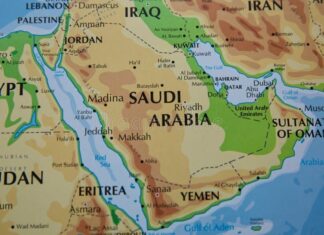
Market analysts and economists are warning that the cost of a military escalation would extend far beyond the battlefield. The primary concern lies with the Strait of Hormuz, a narrow waterway through which approximately 20-30% of the world’s total oil consumption passes daily.
If Iran follows through on its periodic threats to block the Strait in response to an attack, experts predict a catastrophic surge in energy prices.
Disruptions in supply and sustained spike in oil prices could act as a “tax” on the entire global economy. Higher fuel costs drive up the price of increasing the cost of every physical good, from electronics to clothing.
“It’s really all about Iran right now,” John Kilduff, a partner with Again Capital said, according to CNBC.
“The market had priced in a lot of geopolitical risk on Iran, but it’s difficult to quantify the market at this point. The question is if there is action against Iran, what will the Iranians do?”
On Thursday, oil prices rose to the highest point in six months before dropping on Friday.
Iran has responded to President Trump’s statements with a mixture of defiance and a cautious opening for talks, provided the conditions change.
Iranian Foreign Minister Abbas Araghchi has flatly rejected the idea of holding talks while under the shadow of military threats. “Diplomacy through military threat cannot be effective or useful,” Araghchi stated.
On the military front, Iranian officials have warned that they are at their highest level of readiness. Senior advisors to the Supreme Leader have stated that any U.S. strike will be met with an “unprecedented and immediate” response, targeting U.S. interests across the region.
While both sides have hinted at willingness to talk, the “armada” in the water and the looming threat to global energy stability have created a high-stakes standoff with implications far beyond the region.

Kiran Asim is a writer who covers the U.S., Europe, South Asia, and the Middle East. Her reports and analyses look at the geostrategic issues and contemporary developments and their economic and political implications. She also writes about society and education.