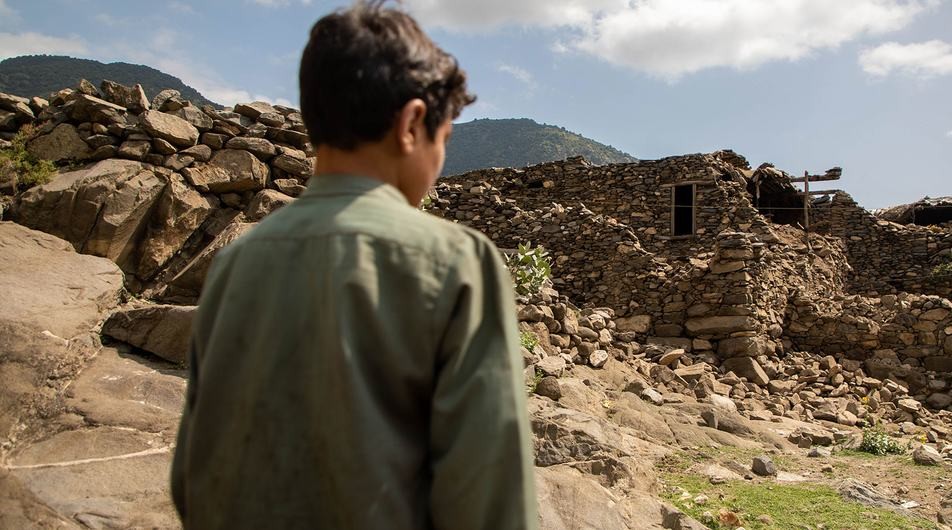
Rescue workers walked for miles to reach the earthquake-affected people in Afghanistan’s remote areas as death toll to more than 2,200.
Citing a Taliban government spokesperson, reports said rescuers have recovered hundreds of bodies from mountainous areas of eastern Afghanistan, which was hit by a major earthquake this past weekend.
Previous estimates said some 1,400 people were killed. Taliban spokesperson Hamdullah Fitrat said on Thursday that the updated death toll was 2,205.
Salam Al-Jabani from the UN Children’s Fund, UNICEF, in Kabul said “Our teams had to leave their cars and walk two hours to get to Ghazi Abad,” explained Al-Jabani.
“Other villages are six to seven hours’ walk away and still not reached…not even by the local authorities’ helicopters.”
Afghanistan death
🔴 #AfghanistanEarthquake Update: Nearly all villages in Nurgal district, have been flattened. Survivors—especially women & children—urgently need food & clean water.
Despite rough, mountainous roads, WFP is working to deliver high-energy biscuits to those affected. pic.twitter.com/Ykp9JOm2HO
— WFP in Afghanistan (@WFP_Afghanistan) September 2, 2025
Afghanistan death
Communications are also patchy or non-existent: “There is one cell tower near a health center, otherwise it is dark,” Al-Jabani added.
“Tents have been set up for people, and the delivery of first aid and emergency supplies is ongoing,” a spokesperson said.
A third earthquake struck the region on Thursday, as search and rescue efforts were continuing.
No new deaths have yet been reported after the magnitude 6.2 earthquake.
In an update, the UN Children’s Fund, UNICEF, said that access routes remain blocked in various locations including the districts of Chawkay and Nurgal, both in Kunar province, although the authorities have deployed earth-moving machinery to restore access.
Latest estimates indicate that approximately half a million people have been affected – including 263,000 children – while at least 5,000 homes have suffered partial or total damage.
Among the UN agencies operating there, UN Habitat noted that the earthquake had caused massive upheaval in a remote region where recent returnees from Pakistan and Iran were just beginning to settle.
“There are still more earthquakes every day in the region, causing landslides and making access even harder,” said UN Habitat’s Stephanie Loose in the capital, Kabul.
She noted that women and girls were the main victims because of strict rules preventing them from leaving their homes alone.
“Many of them, due to cultural norms or restrictions imposed, didn’t dare to leave their houses; nor are there sufficient female doctors in the country, and I understand they are not able to reach the women who would need it,” Ms. Loose said.
Follow for more: Twitter (X) | Facebook | Instagram | LinkeIn

Asim Tanveer is a seasoned journalist working for TV and electronic and print media outlets. He has been working for some of the world’s leading news organizations including Associated Press (AP), Reuters, BBC, CNN, CNBC, Star TV, Voice of America and The New York Times for more than 20 years. He has won several awards for his live coverage of events that include a Reuters News Agency World Award and the Pride of Performance award in 2010.