Pakistan’s economy faces a potential annual loss of $10 billion to $68 billion if the Middle East conflict drags on, with inflation possibly surging to 17% amid extreme oil price volatility, an economist warned at a parliamentary briefing.
Speaking before a National Assembly panel, economist Ali Salman—head of the Policy Research and Market Economy Institute—outlined three escalating scenarios, each carrying increasingly severe economic consequences. In the worst-case scenario, remittances could plunge by up to 40%, while exports may shrink by nearly half from current monthly levels.
Salman estimated that the country’s losses could range between $10 billion and $50 billion depending on how long the conflict persist.
In response, convener of the Parliamentary Committee. Parliamentarian Syed Naveed Qamar noted is far higher than Pakistan’s $7 billion program with the International Monetary Fund.
The crisis began on February 28 following joint strikes by the United States and Israel on Iran. Although direct attacks have subsided, tensions remain elevated, with Iran effectively closing the Strait of Hormuz and the US maintaining a naval blockade on Iranian oil shipments—developments that have rattled global energy markets.
Inflation and external pressures intensify
Salman described inflation as the most immediate macroeconomic threat. If the conflict lasts around 51 days, Pakistan could face annual losses of $10–14 billion. This includes an additional $334 million per month in oil import costs, a $333 million decline in remittances, a $400 million drop in exports, and a $100 million rise in freight charges.
Inflation under this scenario is projected at 10–12%.
Prime Minister Shehbaz Sharif has already expressed concern over the growing cost, noting that the weekly oil import bill has surged from $300 million to $800 million.
If the conflict extends to three months, projected losses rise sharply to $24–32 billion annually. Monthly oil import costs could increase by $1 billion; remittances may fall by $700 million, exports by $800 million, and war-related risk premiums could add another $150 million per month. Inflation in this case may climb to 13–15%.
Worst-case scenario: severe macroeconomic shock
Under an extreme scenario—where global oil prices reach $150 per barrel—Pakistan could incur losses of up to $68 billion annually, equivalent to a substantial share of its economy.
Monthly losses could reach $5.7 billion, driven by a $2.8 billion spike in oil import costs, a $1.5 billion fall in remittances, and a $1.2 billion decline in exports. Inflation could peak at 17%.
Salman noted that rising oil prices alone have already added approximately $4 billion to Pakistan’s external payments by the end of April.
PIDE warns of wider economic fallout
A separate analysis by the Pakistan Institute of Development Economics (PIDE) underscores the broader risks, describing the conflict as a global economic shock rather than a purely regional crisis.
According to the study, disruptions in the Middle East could significantly affect Pakistan’s trade with Gulf Cooperation Council (GCC) countries.
Direct exports to the GCC may decline by $1.5–2 billion, particularly if the Strait of Hormuz remains restricted. Meanwhile, imports—largely energy—could fall by $3 billion, potentially disrupting domestic production and export capacity.
At the same time, higher energy prices are expected to increase Pakistan’s import bill by $4.5 billion, widening the current account deficit and adding to external debt. The combined impact of reduced exports, falling remittances, and rising import costs could place unsustainable pressure on foreign exchange reserves and worsen the balance of payments position.
The report also highlights risks to border trade with Iran and warns that elevated oil prices could push Pakistan back into double-digit inflation, undoing recent economic stabilization gains.
Policy options and long-term strategy
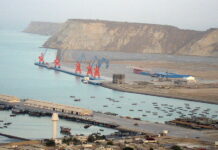
To mitigate these risks, PIDE recommends diversifying oil import routes, including rerouting shipments through the Red Sea port of Yanbu, and reducing reliance on Gulf energy supplies.
The think tank also calls for leveraging the next phase of the China-Pakistan Economic Corridor (CPEC 2.0) to expand alternative trade markets.
The study concludes that the crisis presents a critical test for Pakistan’s economic resilience, where long-term stability will depend less on external support and more on competitiveness, efficiency, and structural reforms.

Muhammad Luqman is Associate Editor at Views News Now. He writes on wide-ranging issues including economy, South Asia, the Middle East, agriculture, economy and innovation. Luqman has worked some of the leading news organizations and won acclaim for his original and research-based works.