The United States said Tuesday that its ceasefire with Iran remains in effect despite recent confrontations in the Strait of Hormuz, as tensions persist in the strategic waterway.
Speaking at a Pentagon briefing, U.S. Defense Secretary Pete Hegseth said, “the ceasefire is not over,” even after Iranian vessels reportedly fired on U.S. ships escorting commercial traffic through the strait a day earlier. U.S. forces responded by destroying several small Iranian boats, officials said.
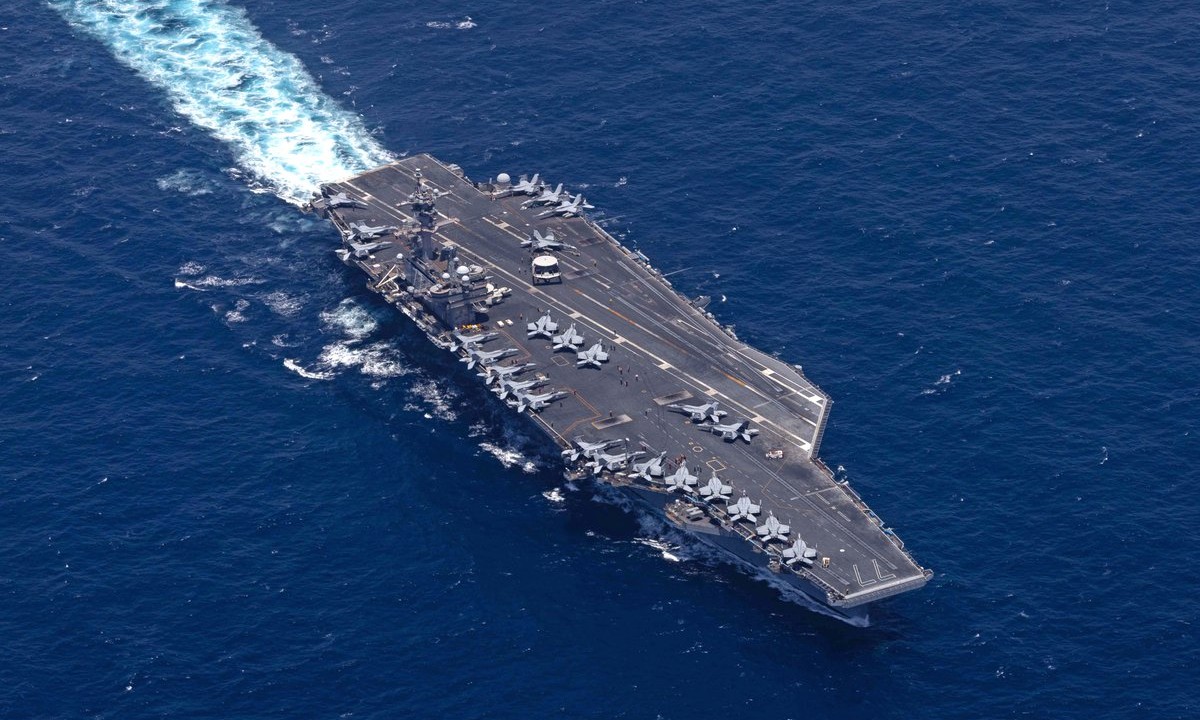
Hegseth, appearing alongside Chairman of the Joint Chiefs of Staff Dan Caine, described the ongoing U.S. naval mission—dubbed Project Freedom—as a temporary measure aimed at ensuring the safe passage of commercial vessels.
“Iran cannot be allowed to block innocent countries and their goods from an international waterway,” he said.
The operation was announced by Donald Trump on Sunday to assist ships stranded amid disruptions in the Strait of Hormuz, a critical global energy corridor.
General Caine said Iran has conducted more than 10 limited attacks since the April 8 ceasefire, though none have escalated into broader conflict. He emphasized that Project Freedom is focused on maritime security and distinct from other military operations.
The mission involves approximately 15,000 U.S. personnel, supported by guided-missile destroyers, warships, around 100 aircraft, and unmanned systems tasked with monitoring and countering potential threats.
Separately, the United Arab Emirates has accused Iran of launching missile and drone strikes on an energy facility, further heightening regional tensions.
U.S. Air Force F-16 fighter aircraft are among more than 100 land and sea-based aircraft supporting Project Freedom. During the defensive operation, these advanced warfighting platforms are helping to protect U.S. forces and defend commercial shipping. pic.twitter.com/7boqPZ1rSZ
— U.S. Central Command (@CENTCOM) May 5, 2026
Iran, however, has pushed back against the U.S. narrative. Foreign Minister Abbas Araghchi said the latest developments highlight the limits of military action, stating that “there’s no military solution” to the crisis and urging all sides to avoid further escalation.
According to U.S. Central Command, American forces successfully escorted commercial vessels through the strait despite reported drone and missile threats. Iran’s state-run media denied that its forces suffered any losses during the encounters.
Tensions remain elevated, with President Trump warning of strong consequences if Iran interferes with maritime traffic, while Tehran has cautioned against any expanded U.S. military presence in the area.
The Strait of Hormuz, through which roughly one-fifth of global oil supplies typically pass, has faced ongoing disruption since hostilities escalated earlier this year.
Despite the flare-ups, diplomatic efforts continue. Araghchi said talks are “making progress,” though Trump has expressed skepticism, suggesting Iranian proposals do not yet meet U.S. expectations.

Kiran Asim is a writer who covers the U.S., Europe, South Asia, and the Middle East. Her reports and analyses look at the geostrategic issues and contemporary developments and their economic and political implications. She also writes about society and education.

Muhammad Luqman is Associate Editor at Views News Now. He writes on wide-ranging issues including economy, South Asia, the Middle East, agriculture, economy and innovation. Luqman has worked some of the leading news organizations and won acclaim for his original and research-based works.