
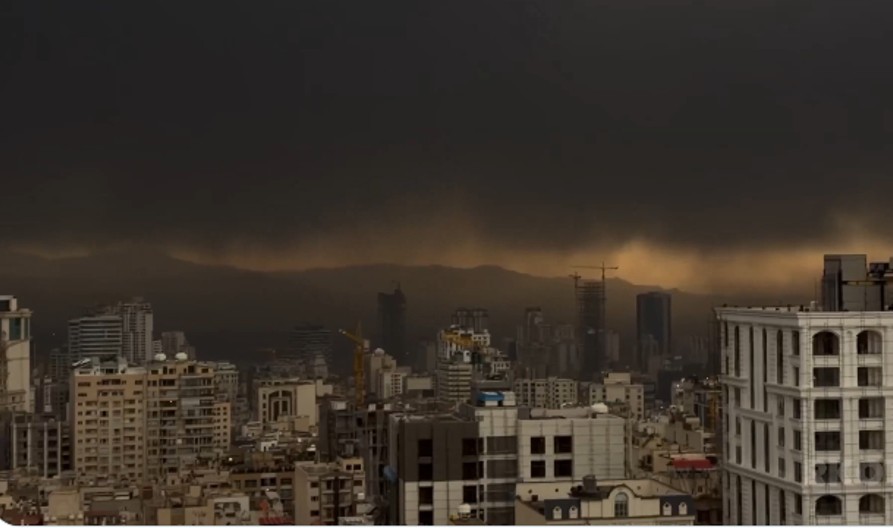
The United Nations has voiced concern over reports of toxic pollution and “black rain” in Tehran following recent strikes on oil depots in the Iranian capital, warning of potential health and environmental risks as the war in the Middle East enters its second week.
Images circulating from Tehran showed the city’s skies covered by thick, dark smoke after Israeli strikes ignited fires at oil storage facilities during the ongoing conflict involving the United States, Israel and Iran.
Speaking to reporters in Geneva, Ravina Shamdasani, spokesperson for the UN Human Rights Office, said the attacks could have serious environmental and humanitarian consequences.
“The strikes have reportedly released toxic pollutants into the air,” she said, adding that the situation raises concerns about whether the principles of proportionality and precaution under international humanitarian law were respected.
Shamdasani also noted that the facilities targeted “do not appear to be of exclusively military use,” raising additional legal questions over the strikes.
Health risks from toxic fallout
The World Health Organization (WHO) also warned about the potential health impact of pollution from the burning oil sites.
WHO spokesperson Christian Lindmeier said the reported “black rain” and “acidic rain” falling in Tehran after the attacks “is indeed a danger” to public health.
“We are in contact with hospitals and authorities, and Iranian officials have issued an alert advising people to stay indoors, particularly following the attacks on oil warehouses,” Lindmeier said.
The UN health agency said it is monitoring the risks from the “massive release” of toxic hydrocarbons, sulphur oxides and nitrogen compounds into the air.
Risk of wider regional pollution
Lindmeier also warned that additional reported Iranian strikes on oil infrastructure in Bahrain and Saudi Arabia could increase the risk of wider regional pollution exposure.
Such pollutants can have long-term consequences, he said, including respiratory illness and contamination of water and soil, potentially affecting communities beyond the immediate conflict zone.
The environmental fallout comes as the war between Iran, Israel and the United States enters its 10th day, raising fears that attacks on energy infrastructure could trigger broader humanitarian and ecological consequences across the region.

Iftikhar Ali is a veteran Pakistani journalist, former president of UN Correspondents Association, and a recipient of the Pride of Performance civil award










I can only extend sincere sympathies to the United Nations—an institution whose principles are routinely ignored by bullies, dictators, and those devoid of moral and ethical conscience.