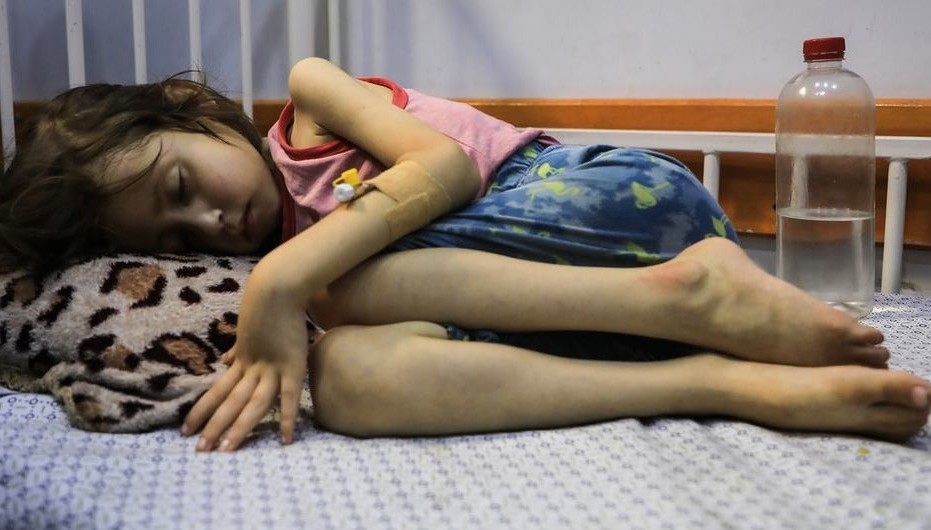
The United Nations has declared famine in Gaza as more than 500,000 people in the besieged Palestinian territory face conditions, marked by severe starvation, preventable deaths, and systemic collapse of essential services.
The assessment of escalating humanitarian crisis in Gaza comes after months of Israeli blockade, which has only lately been relaxed to allow some humanitarian aid into the war-ravaged Strip, and amid recently approved Israeli plans to launch a military takeover of Gaza city.
A UN-backed food security report, The Integrated Food Security Phase Classification noted that famine will soon spread beyond Gaza City into other areas, including Deir Al Balah and Khan Younis.
UN Secretary-General António Guterres condemned the crisis as a “man-made disaster, a moral indictment, and a failure of humanity.”
He emphasized that famine is not merely about food scarcity but the deliberate dismantling of systems vital for survival. He called on Israel—citing its obligations as an occupying power under international law—to immediately allow unimpeded humanitarian access.
The UN and partner agencies are urgently calling for a ceasefire, the release of hostages held since October 7, 2023, attacks, and large-scale humanitarian aid.
The war broke out after militant organization Hamas attacked southern parts of Israel which killed 1200 people, according to Israeli officials. The militants also took around 250 people as hostages. In retaliation, Israel has bombarded the narrow Gaza Strip, displacing almost the entire 2.3 million population, killing more than 61,000 Palestinians, mostly children and women, according to Gaza health officials.
U.S. President Donald Trump said upon seeing pictures of emaciated Palestinian kids that children are starving that there was “clear starvation” on the territory.
Israel plans further escalation with takeover of Gaza city despite domestic, global opposition
Israeli Prime Minister Benjamin Netanyahu has denied charges that his government is deliberating targeting civilians or following a policy of starvation in Gaza. His government has planned a major military offensive in Gaza city.
Meanwhile, the UN warned that continued military operations, especially in Gaza City, risk worsening an already catastrophic situation, particularly for vulnerable populations such as children, the elderly, and the disabled who cannot evacuate.
The UN-endorsed report on Gaza projects that by the end of September, over 640,000 people in Gaza will face “catastrophic” food insecurity (IPC Phase 5), with another 1.14 million in Phase 4 (emergency) and nearly 400,000 in Phase 3 (crisis). North Gaza remains critically affected, but limited access prevents full assessment.
UN officials criticized Israel for systematically blocking aid, despite food and supplies being available just across the border. UN Emergency Relief Coordinator Tom Fletcher described the situation as “a famine within a few hundred meters of food,” calling it a crisis that the world will be judged by: “A 21st-century famine watched over by drones and the most advanced military technology in history.”
Malnutrition among Gaza’s children is rising at what UN agencies called a “catastrophic pace,” with over 12,000 children acutely malnourished in July alone—a sixfold increase since January.
UN human rights chief Volker Türk labeled the famine a direct result of Israeli policy and warned it may amount to a war crime. He stressed the illegality of using starvation as a weapon of war and called for immediate humanitarian access to prevent further loss of life.
Israel has rejected the charges that it is committing war crimes in Gaza.
This marks the first officially recognized famine in the Middle East since the IPC began its analyses, amid near-total destruction of Gaza’s agricultural sector and widespread displacement affecting 90% of the population.
Follow for more: Twitter (X) | Facebook | Instagram | LinkeIn

Asim Tanveer is a seasoned journalist working for TV and electronic and print media outlets. He has been working for some of the world’s leading news organizations including Associated Press (AP), Reuters, BBC, CNN, CNBC, Star TV, Voice of America and The New York Times for more than 20 years. He has won several awards for his live coverage of events that include a Reuters News Agency World Award and the Pride of Performance award in 2010.