Pakistan’s federal government is advancing plans to spend an estimated Rs 9.6 billion—roughly $34 million—on a fleet of 45 high-end bulletproof luxury sedans for the Shanghai Cooperation Organization (SCO) Council of Heads of State Summit scheduled in Islamabad in September 2027.
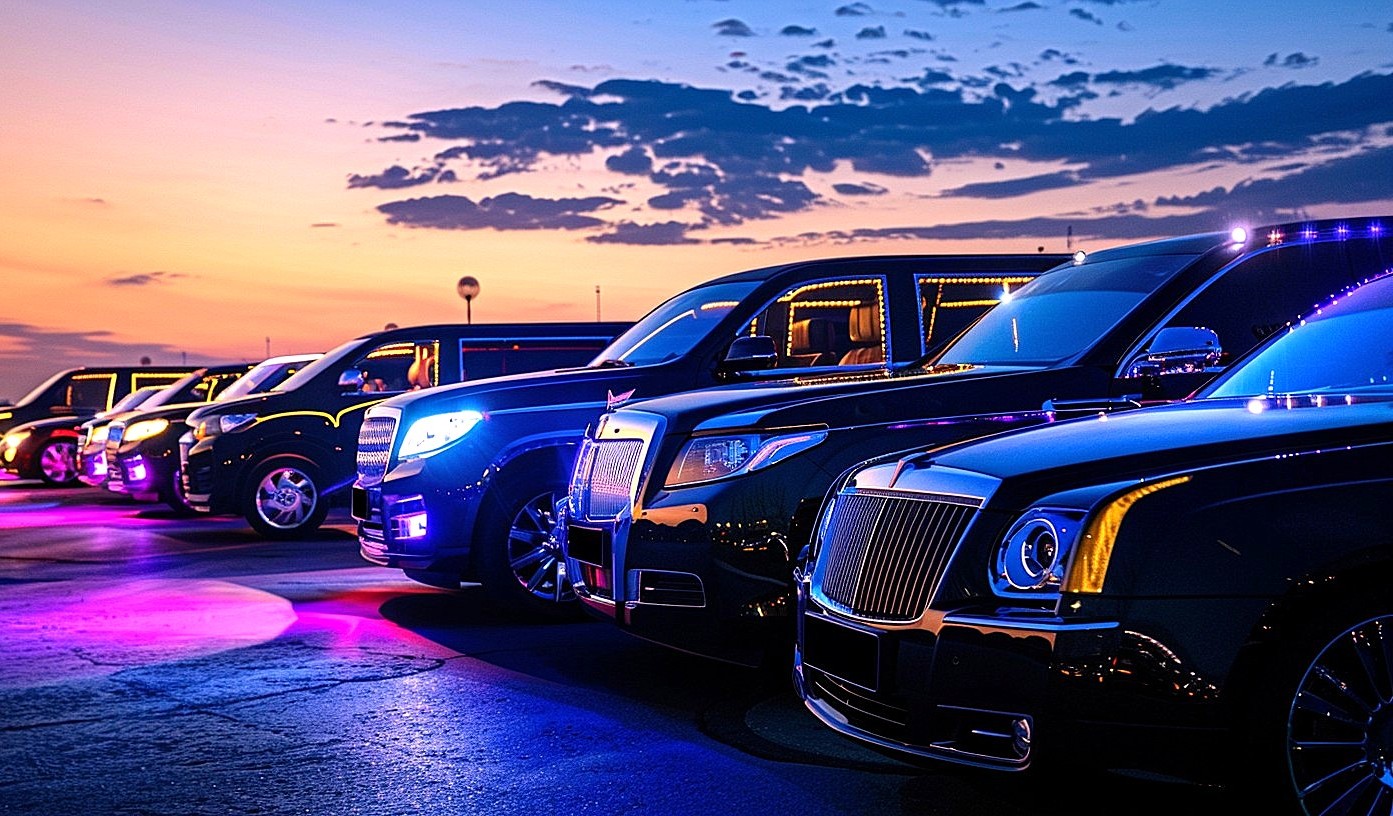
The vehicles include 30 Mercedes-Maybach S680 Guard models, rated at VR10 ballistic protection, and 15 BMW 760i xDrive armored sedans rated at VR9. This comes just days after the same government imposed a nationwide ban on purchasing new official vehicles as part of sweeping austerity measures.
The proposal has drawn sharp criticism from within political circles, including from senior PML-N leader and former senator Mushahid Hussain Sayed, who labeled the austerity plan “dead” and questioned the logic of buying 45 limousines for a summit involving only 10 SCO member states and a handful of visiting leaders.
Political commentators call it a case of striking display of misplaced priorities at a time when price-hike has pushed hundreds of million to the edge of economic survival.
“The Cabinet Division told the meeting that in compliance with the directive, 15 BMW 760i xDrive (VR9) bulletproof sedans, costing Rs3 billion, may be procured in addition to the 30 bulletproof Mercedes Benz Maybach S680 Guard (VR10) sedans, for which the ECC had already approved…
— Miftah Ismail (@MiftahIsmail) September 29, 2026
The Procurement Details and Official Process
The Economic Coordination Committee (ECC) first approved a technical supplementary grant of Rs 6.6 billion in early September 2026 for 30 Mercedes-Maybach vehicles. It later cleared an additional Rs 3 billion for 15 BMW sedans, bringing the total to Rs 9.6 billion for 45 vehicles. An earlier Cabinet Division request sought roughly Rs 12.6 billion for more than 50 to 65 vehicles, including a mix of Mercedes, BMWs, and Toyota Land Cruisers. Prime Minister Shehbaz Sharif reportedly directed a reduction to 45 after consultations with relevant ministries.
The Cabinet Division has been instructed to seek a specific exemption from the vehicle purchase ban imposed on September 17, 2026, as part of fuel-conservation and austerity measures.
Those measures also include a 50 percent cut in fuel allocations for official vehicles for three months, a 5 percent reduction in non-employee-related expenditure, and restrictions on foreign travel. Officials have cited the need to ensure secure transportation for visiting heads of state and other senior dignitaries. Reports indicate the government is also exploring exemptions from customs duties, sales tax, and federal excise duty on the imports.
Pakistan assumed the rotating chairmanship of the SCO Council of Heads of State and is scheduled to host the summit in September 2027. The organization has 10 full members. Officials have pointed to security requirements as the primary justification.
Austerity Rhetoric Meets Elite Spending
The timing is particularly jarring. On September 17, 2026, the Cabinet Division issued a notification enforcing a complete ban on the purchase of new government vehicles of all types, along with other cost-cutting steps prompted by rising global fuel prices linked to Middle East tensions.
Prime Minister Shehbaz Sharif publicly framed the campaign as one in which “sacrifices would first be made by the government and the elite.”
Yet within two weeks, the same administration is seeking to carve out a multi-billion-rupee exception for luxury armored limousines.
AUSTERITY Plan Dead: Govt squanders Rs 9.6 BILLION to buy 45 LUXURY bullet-proof limousines (BMW & MERCEDES) ostensibly for SCO Summit in Pakistan in 2027, when SCO has only 10 members! 45 cars bought for 9 visiting foreign leaders (including India)? Who is Govt trying to fool? pic.twitter.com/UdG90RDIT4
— Mushahid Hussain Sayed (@Mushahid) September 30, 2026
Mushahid Hussain Sayed, in a widely shared post on X (formerly Twitter), captured the contradiction:
“AUSTERITY Plan Dead: Govt squanders Rs 9.6 BILLION to buy 45 LUXURY bullet-proof limousines (BMW & MERCEDES) ostensibly for SCO Summit in Pakistan in 2027, when SCO has only 10 members! 45 cars bought for 9 visiting foreign leaders (including India)? Who is Govt trying to fool?” He further questioned the security rationale, noting Pakistan’s ranking near the top of global terrorism indices.
Several Pakistani media outlets viewed the exception critically.
Government Defends Decision
Islamabad has defended the decision to buy the latest vehicles, saying ensuring the maximum possible level of protection becomes all the more critical keeping in view Pakistan’s security paradigm, in particular the threats posed by hostile external elements.
In a statement, shared by Defense Minister Khawaja Asif, the Cabinet Division said at present, the latest model bulletproof vehicles available with the Cabinet Division are a few 2016 models, which are far below the standards required for the Summit.
GOVERNMENT OF PAKISTAN
CABINET SECRETARIAT
CABINET DIVISIONPRESS RELEASE
Purchase of Bulletproof Vehicles for SCO’s CHS Summit, Islamabad 2027
Certain sceptical and unwarranted comments have appeared in the press and social media
on the purchase of 45 bulletproof vehicles by…— Khawaja M. Asif (@KhawajaMAsif) September 30, 2026
“The decision to purchase 45 bulletproof vehicles of the requisite specifications was deliberated upon at several forums and the number has been determined on the basis of the bare minimum requirement. All other non-bulletproof vehicles, around 300 in number, will be rented.
“As Pakistanis we should be proud of the honor conferred on Pakistan and support Government’s effort to organize it in a befitting manner,” the statement said.
The Real Conditions Faced by Ordinary Pakistanis
While the government prepares armored transport for foreign dignitaries, the daily reality for most Pakistanis remains one of economic pressure and insecurity, due to a combination of factors including inept governance and oil disruptions amid ongoing U.S.-Iran war.
Inflation averaged around 7.1 percent in fiscal year 2025-26 and is projected by the Asian Development Bank to reach 8.3 percent in FY2027—well above the central bank’s medium-term target range and higher than the South Asian average. Fuel, energy, and food prices continue to climb, squeezing household budgets. Petrol and diesel rates have fluctuated sharply, and reports describe a deepening cost-of-living crisis in major cities.
Commentators point out that unemployment has hovered near 7 percent, with limited job creation despite modest GDP growth projections of around 3.7 percent. Poverty rates have risen in recent years according to multiple assessments, including government survey data showing a national rate near 28.9 percent in some periods and higher rural figures. World Bank and independent analyses point to eroded purchasing power for large segments of the population after successive shocks.
I hope this SCO meeting not taking place in KPK or Balochistan then why are we importing these expensive bulletproof vehicles? If SCO meeting will be held in Islamabad then these extra security measures may give an impression that situation in Islamabad is not different from KPK… https://t.co/k7vlprv3KW
— Hamid Mir حامد میر (@HamidMirPAK) September 30, 2026
Security remains a persistent concern. Pakistan continues to face terrorism and violence that claim civilian lives, even as the government prioritizes specialized fleets for visiting leaders. The contrast is stark: resources that could strengthen everyday policing, counter-terrorism capacity, or basic public services are instead directed toward imported luxury vehicles that will see limited use after a short summit.
Journalist Hamid Mir noted in a posted shared on X: “I hope this SCO meeting not taking place in KPK or Balochistan then why are we importing these expensive bulletproof vehicles? If SCO meeting will be held in Islamabad then these extra security measures may give an impression that situation in Islamabad is not different from KPK or Balochistan.”
A Pattern of Disconnect?
This episode fits a broader pattern in which official rhetoric about belt-tightening collides with high-profile spending decisions. The SCO summit is an important diplomatic platform, and host-country security arrangements are legitimate. Yet the scale of the proposed purchase—45 top-tier armored limousines at nearly Rs 10 billion—raises legitimate questions about necessity, alternatives such as rentals or existing government fleets, and opportunity cost.
Saima Khan, a social media user, drew attention to the past misuse of government vehicles. After his July 2017 disqualification, Nawaz Sharif used bulletproof SAARC-imported BMWs from the federal fleet during his “Kyun Nikala” GT Road trip to Lahore. In 2019, she added, NAB tracked down and retrieved these state-owned vehicles from Sharif’s Jati Umra estate.
No comprehensive public security assessment or detailed cost-benefit analysis has been released alongside the ECC decisions. Taxpayers, already bearing the weight of inflation, elevated energy costs, and constrained public services, are entitled to transparency.
In a country where ordinary citizens struggle with rising prices, limited employment opportunities, and ongoing insecurity, the decision to pursue dozens of multi-million-rupee luxury armored cars for a single high-level event calls for serious self-examination on part of the government.

Kiran Asim is a writer who covers the U.S., Europe, South Asia, and the Middle East. Her reports and analyses look at the geostrategic issues and contemporary developments and their economic and political implications. She also writes about society and education.