The battle of conflicting narratives between Pakistan and India took a sharp turn on Thursday when Pakistan presented a man to the media that India claimed to have killed as a militant commander in the Indian administered part of the disputed Kashmir region.
Indian security forces announced the killing of a senior Lashkar-e-Taiba operative in a joint operation in the Budgam district of Indian-administered Kashmir in late September 2026.
Pakistani military officials responded the next day by presenting a man they identified as the same individual, saying he was alive and had no connection to the reported events.
The episode has highlighted the persistent gap between official accounts from the two nuclear-armed neighbors on cross-border militancy and security incidents.
Indian government and media have been beating the drums of a successful intel operation in which a high-profile Kashmiri militant was killed. Turned out that the Kashmiri militant is a man from Pakistan who appeared at a press conference today, refuting the Indian claims. pic.twitter.com/UPrQaeFZA7
— Akal Pulse ☬ (@akalpulse) October 1, 2026
Pakistan saw its presentation of the living Asif as a direct rebuttal to the Indian claims circulating since September 29–30.
India blames Pakistan for stoking militancy in Kashmir while Islamabad regularly accused New Delhi of sponsoring militancy in Balochistan as well as Afghanistan-based militants who attack Pakistan.
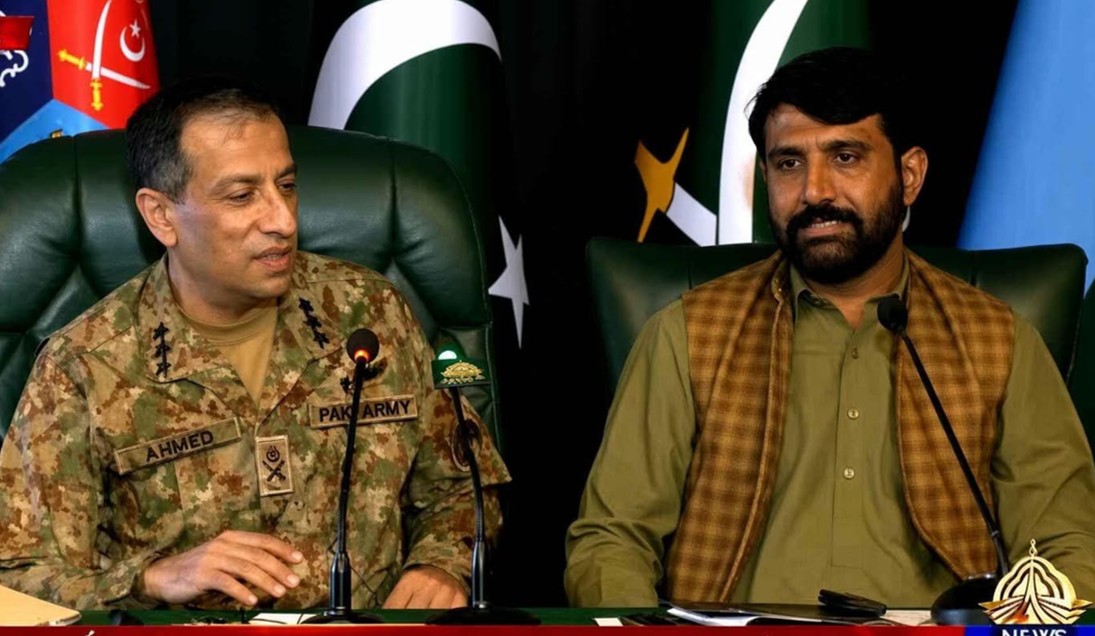
The head of Pakistani military’s media department, Inter-Services Public Relations, General Lt Gen Ahmed Sharif Chaudhry, who presented Asif before the national Press, said: “So-called terrorist incident, another false flag that has been staged by the Indian military. I will take you step by step through the details.”
مردہ زندہ ہوگیا،تاریخ میں پہلی بار ایسا ہوا ہے کہ جس بندے کو دہشتگرد قرار دیکر بھارت 4 مرتبہ مار چکا ہے،دو دن سے بھارتی میڈیا اور حکومت پاک فوج کے جس حوالدار کو شہید کرنے کا دعویٰ کررہے تھے،وہ زندہ ہوچکا ہے اوراسکرین پر آپ جسے دیکھ رہے ہیں یہ وہی زندہ معجزہ ہے،اس بار تو ثابت… https://t.co/ypV3vkZkpD pic.twitter.com/R6rlIQKoAG
— Ali Raza Shaaf (@AliRazaShaaf) October 1, 2026
Indian Account of the Operation
On the night of September 29, 2026, the Indian Army’s Chinar Corps posted on social media that a joint search operation involving the Army, Jammu and Kashmir Police, and Central Reserve Police Force had begun in the Korag area of Yousmarg, based on specific intelligence inputs. Troops reported observing suspicious movement. When challenged, the individuals opened fire, leading to an exchange in which one terrorist was neutralized. The operation, referred to as Operation Korag, continued.
Early the next morning, forces recovered a body in the general area of Palmaidan along with war-like stores. The Chinar Corps identified the deceased as Mohammad Asif alias Hashim Moosa (also referred to in some reports as Hashim Musa or Asif Fauji), described as a Pakistan-based Lashkar-e-Taiba terrorist.
Pakistani terrorist Mohammad Asif alias Hashim Musa was killed by the Indian Army in Budgam, Jammu and Kashmir. Mohammad Asif was a retired commando from the Special Services Group (SSG) of the Pakistan Army, where he held the rank of Havildar. Following his retirement from the… https://t.co/bQWmFFDuFF
— ANI (@ANI) September 30, 2026
Indian media, including the news agency ANI citing unnamed sources, published a detailed profile: born March 7, 1980; joined the Pakistan Army in 2000 under service number PA-3106947; retired as a Havildar; inducted into the Special Services Group (SSG) in 2005; served with the 4 Commando “Yalgar” Battalion; posted in Balochistan from 2006 onward where he participated in about 10 operations against Baloch insurgents and was credited with 13 personal kills; and served on the VVIP security team of former President Pervez Musharraf between 2006 and 2009.
Indian officials linked him to the April 22, 2025, Pahalgam attack and a series of earlier incidents, including the Halan attack in August 2023, DKG attack in December 2023, Kandi attack in May 2023, Shah Sitar attack in May 2024, Shiv Khori attack in June 2024, Gagangeer and Boota Pahari attacks in October 2024, and Basira (or Baisaran) attack in April 2025. The killing was presented as the culmination of a longer intelligence-led effort known as Operation Sheruwali, launched in May 2026. Officials stated it completed the neutralization of a four-member LeT group active since around 2022. The other three members—Junaid Bhat (killed December 3, 2024, in Dachigam), Suleman (killed July 28, 2025, in Operation Mahadev), and Yasir (killed September 4 or 5, 2026, in Operation Asdhar or Ashdar)—had been eliminated earlier.
Pakistani Military Response
On October 1, 2026, the head of ISPR Director General Lieutenant General Ahmed Sharif Chaudhry held a press conference in Rawalpindi. He described the Indian reports as another “false-flag” operation staged by Indian political and military authorities, part of a pattern that included previous incidents such as Uri, Pulwama, and Pahalgam.
He laid out a timeline of the Indian announcements, noting that the initial post on September 29 did not name the individual and that identification and the detailed military background emerged hours later through Army updates and media reports, including references to an alleged Pakistani identity card.
Lieutenant General Chaudhry then invited a man identified as Havildar Muhammad Asif to the podium. Asif stated he was from Pindi Gheb in Attock district, currently living in Rawalpindi, and working for a private security company after retiring from the SSG in 2023. He confirmed joining the Pakistan Army in 2000 (initially in artillery) and the SSG in 2005, serving for 18 years.
In UNGA Clash, Pakistan, India Trade Accusations Over Terrorism
“I was surprised that I was sitting at home and India had already declared me dead,” he told reporters, according to accounts of the briefing. Friends had called him after seeing social media reports of his death. He said he also received calls from Indian numbers seeking personal details.
Asif displayed identity documents, rejected any links to terrorism or the claimed attacks, and stated: “I am a soldier of the SSG, the Special Services Group. We have always fought from the front; we are not those who attack from behind.” He added that he remained willing to serve the country.
General Chaudhry referred to the Indian portrayal of Asif as a “Superman” responsible for multiple operations and sarcastically remarked on the claims of neutralization after months of effort. He asserted that India sponsors terrorist groups operating against Pakistan and described Indian-administered Kashmir as the world’s largest prison, while listing several reasons he said explained the timing of such narratives.
Conflicting Narratives and the Context
Indian sources maintain that the individual killed was a Pakistan-based LeT commander with the background described, and that the operation formed part of sustained counter-terrorism efforts.
Pakistani officials counter that the detailed personal and service information matched a living retired soldier who was presented publicly, calling the identification fabricated to link Pakistan to militancy in Kashmir.
No independent verification of the body recovered in Budgam, forensic matches, or the precise identity of the deceased has been publicly detailed by third parties in the immediate aftermath.
Some analysts say the exchange fits a long-standing pattern in which India attributes attacks and infiltrations to Pakistan-based groups, while Pakistan rejects the charges and points to what it calls staged incidents or propaganda
Pakistan’s diplomat Adeel Mumtaz Khokhar has delivered a forceful right of reply at the UN Human Rights Council, rejecting India’s allegations regarding human rights in Azad Jammu and Kashmir and challenging New Delhi’s claims over Jammu and Kashmir, while highlighting human… pic.twitter.com/MkiSFnv071
— Pakistan TV (@PakTVGlobal) October 1, 2026
Pakistan and India have frequently clashed on world diplomatic forums.
Last week, diplomats from the countries vehemently defended their stances on the disputed Jammu and Kashmir, after Prime Minister Shehbaz Sharif declared that Islamabad remains steadfast in its support for the suppressed people of Indian-controlled Jammu and Kashmir.
On Thursday, a Pakistan diplomat retorting to Indian allegations, said New Delhi preaches human rights while its record under the BJP government is abysmal with the party not having a single member from the Muslim community in the national parliament.

Kiran Asim is a writer who covers the U.S., Europe, South Asia, and the Middle East. Her reports and analyses look at the geostrategic issues and contemporary developments and their economic and political implications. She also writes about society and education.