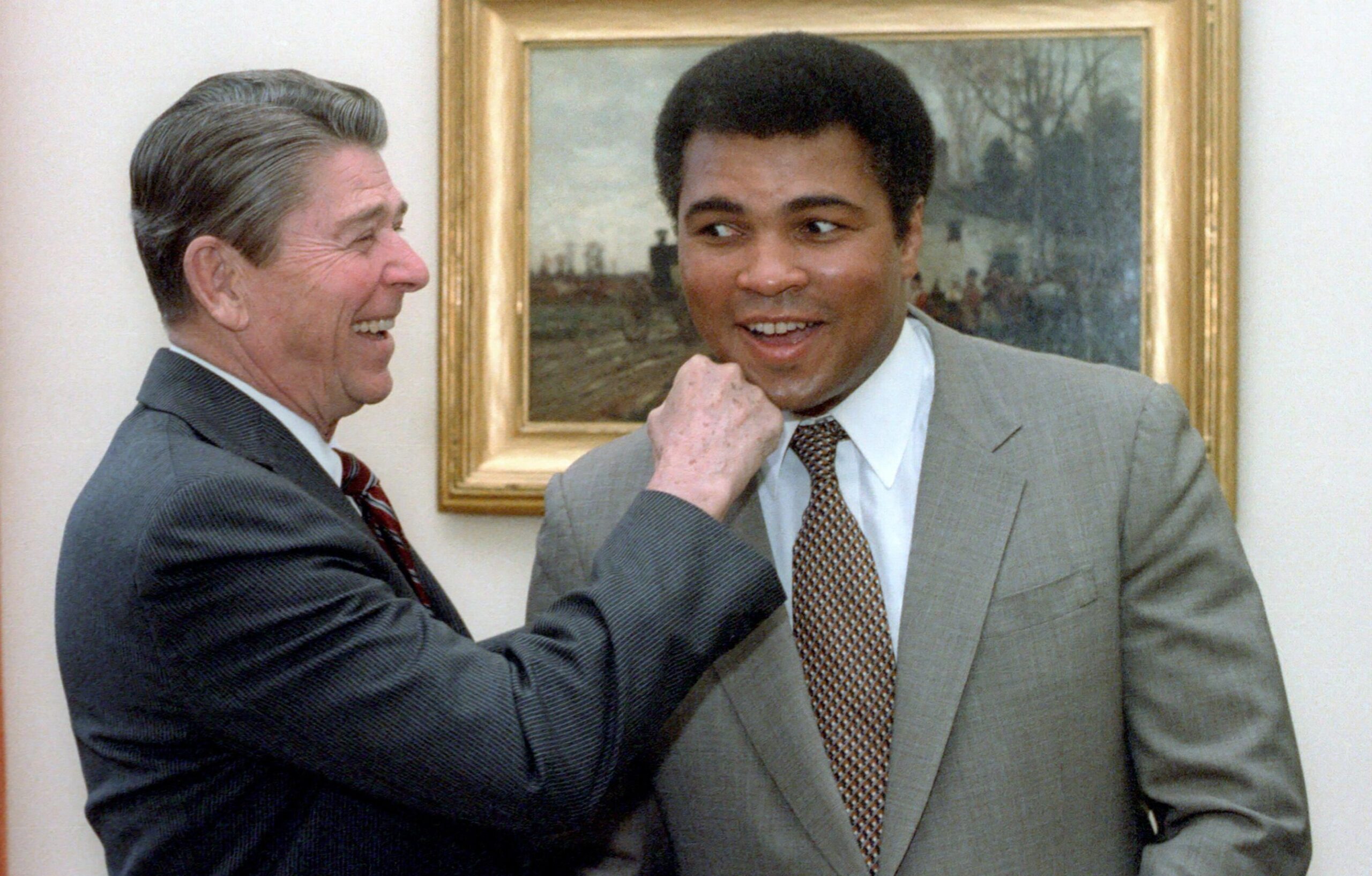
In 2010, my office received an urgent call. It was Laura Fattal of suburban Philadelphia, and she explained to Frankie Martin, who was working in the office, that the previous year, her son Josh Fattal, along with his American friends Shane Bauer and Sarah Shourd, were hiking in Iraqi Kurdistan in the mountains. During this hike, they were arrested by Iranian authorities and told they had crossed the border illegally into Iran. Josh had been working at an international study abroad program, Shane was a journalist, and Sarah was teaching in Damascus—all had met up for this fateful Iraqi vacation. Iran, claiming the three were spies, incarcerated them in Tehran’s Evin Prison. Laura and the mothers of Shane and Sarah, Cindy Hickey and Nora Shourd, were leading a campaign to secure their release, but were finding themselves blocked at every turn and were in anguish. The hikers had become embroiled in the conflict between the US and Iran, two countries with no diplomatic relations. In this confrontation, the humanity of the hikers and the anguish of their families were being forgotten.
In reaching out to me, Laura explained, she was trying a new tactic. Laura, who is Jewish, decided to try to reach out to the Muslim community, to see if Muslim leaders could get through to the Iranian leadership. I was the first Islamic scholar they reached out to, and I agreed to do anything I could to free the hikers.[1] This included a special letter which I wrote to the Supreme Leader of Iran, Grand Ayatollah Ali Hosseini Khamenei, appealing to him to show Islamic compassion during the holy month of Ramadan and free the hikers.[2] I highlighted specifically the suffering of the families and the hikers themselves who were being held in solitary confinement—Sarah, I noted, had already been diagnosed with a precancerous medical condition and was concerned she might have cancer, and was clinically depressed. Frankie and I visited the Iranian interest section in Washington, DC and delivered the letter to the highest ranking Iranian diplomat, who told us it would be immediately translated into Persian and sent directly to the Supreme Leader. We met the hikers’ families, including Laura’s son Alex Fattal, and I along with Frankie became part of the “brain trust” working with the families to mobilize support and free the hikers. For over a year we focused intently on this important task, which included many ups and downs and twists and turns. On September 14, 2010, Iran released Sarah, citing medical reasons, Islam’s respect for women, and the end of Ramadan[3]—this was a wonderful development, but Shane and Josh still languished in prison. As Frankie said, “I felt that through our efforts, we helped the families keep their hope alive.”
The families had one very prominent person in their corner, who made all the difference—Muhammad Ali. Widely praised as the greatest boxer of all time, he was not only the most famous American Muslim, but also possibly the most famous person in the world. Indeed, when we discussed who might strengthen the appeal as a voice of the American Muslim leaders in this case, the biggest name I could think of was Ali. I involved my friend Dr Mohamed Elsanousi, who had a leadership role at the Islamic Society of North America, in the group meeting to discuss how to free the hikers. Ali invited us to visit him and his family to discuss the effort, and while I couldn’t make this trip due to other obligations, Elsanousi went and had a great visit with Ali.

Ali was in touch with the families, and he agreed to fully be part of the effort to free Sarah, Shane, and Josh. He wrote a letter to Ayatollah Khamenei, asking him to show Islamic compassion by freeing the hikers: “Please show the world the compassion I know you have in your heart.”[4] Ali also recalled his prior visits to Iran, and discussed his affliction of Parkinson’s disease which had transformed his life from the 1980s onwards, limiting his speech and movement: “You may or may not know, that even at the time of my visit [to Iran] I was and still am afflicted with Parkinson’s disease. It is a neurological disorder that affects mobility and causes other challenges involving motor movements in the body. My disease has worsened since my last visit to Iran to the point I don’t travel as much and find it hard to walk with balance and speak clearly. Sometimes I cannot speak at all. I am not discouraged because I know everything is part of Allah’s plan and am happy to do Allah’s bidding while I am here on earth. My life has been spent trying to help those who are in need all over the world. Allah blessed me with celebrity to help those who could not and cannot help themselves. I am not able to do as much as I used to but I still try to do what I can, where I can, to the extent I am able.”[5] Ali argued that the young Americans were only trying to experience the world, much as he had: “I was exactly the same way as a young adult. I wanted to get to know people everywhere.”[6]
Ali then went further. Eight months later, and following Sarah’s release, Ali and his wife Lonnie agreed that the time had come to try a more public approach to free Shane and Josh. Ali agreed to appear alongside American Muslim leaders and scholars, including myself, at a press conference at the National Press Club in Washington, DC. This was not an easy task, as Ali lived in Arizona, and no American airlines could accommodate his condition. Yet Alex Fattal was able to get through to the boxing magnate and promoter Bob Arum, who arranged for a private jet to fly Ali to and from DC.
Ali even offered to fly to Iran if he were able, if it would help free the hikers. There was a precedent for such an action. After Iranian students took over the US Embassy in Tehran in 1979 and held dozens of Americans hostage, Ali offered to fly to Iran to negotiate with the students and their leader, Ayatollah Khomeini, for their release.[7] He also volunteered to exchange himself for the hostages, but the offer was declined.[8] In 1990, Ali flew to Iraq where he successfully personally negotiated with Saddam Hussein who agreed to release 15 American hostages he had used at “strategic locations to deter international forces from bombing and risking civilian casualties.”[9]
On May 24, 2011, we held the press conference. It was amazing for me to meet Ali—as a young man, like millions of others, I watched rapt as he took on the world and reached the highest echelons of boxing, sports, and popular culture. While I was living in Cambridge, England in 1965, I stayed up all night to watch him defeat Sonny Liston for the second time to retain his title of World Heavyweight Champion. Ali was lightning fast and at the height of his powers. And yet now, as I entered the room directly behind Ali to face the cameras, I saw his difficulty lifting his foot onto the carpet. It was a poignant reminder of the fragility of life, that even the mightiest person must eventually face his own mortality. And Ali was, of course famously conscious of his own physical beauty, making statements like “I’m so pretty!”

At this moment, I truly understood the greatness of Ali. Dealing with a devastating illness, which most people would face in private, Ali was still living in the full glare of the media. He was not doing it for himself, however, but for others. The spirit of this great humanitarian was soaring to new heights. His physical strength had withered, but his moral and spiritual strength, nourished by his faith, was only increasing.
During the conference, Lonnie spoke for Ali from the podium, while Ali sat on a chair surrounded by our group. I also addressed the press at this gathering, appealing to the Iranian leadership to free the hikers on the basis of Islamic compassion. It would be a gesture of magnanimity to the hikers and their families who had endured so much anguish, I pointed out, and also to the nation of the United States.
Before the event, Frankie and I met and spoke with Ali backstage. It was difficult for him to speak, but he listened as we described our work to improve relations between Islam and the West, including our “Journey into America” project on Islam in America. Interestingly, I had earlier been told by the actor Christopher Lee, when I first met with him in London about playing the title role in my film Jinnah about the founder of Pakistan, that he was already aware of my work because Ali had showed him my book Living Islam.
And I had another connection to Ali. When Ali was in the UK training in the 1960s, my brother Tariq, then an undergrad studying in Birmingham, turned up alone unannounced at Ali’s training site in London. Tariq was initially refused entry, but when he told Ali’s security detail to inform him that a young Pakistani and representative of the Muslim students of Birmingham had arrived to meet him, Ali immediately let him in. The two took photos of themselves clowning around and, suffice to say, Tariq became an Ali superfan. Many people who met Ali had similar anecdotes, all demonstrating Ali’s kindheartedness, grace, good humor, and effusive embrace of people across the world. Much later in Pakistan, Amineh Hoti met Khalilah Camacho Ali, Ali’s former wife, who remembered her husband as warm and funny, attesting, “He had the ability to make everyone feel happy and he was kind to everyone.”[10]
Ali’s entrance in such a public fashion was a game changer for the families of the hikers held in Iran. After the press conference, as Alex Fattal recounted, the families began to hear rumors that Khamenei had issued a pardon to the hikers, and the diplomatic process accelerated, with Ali helping to create the public conditions for secret talks between the US and Iran, facilitated by Oman. [11] On September 21, 2011, Iran released Shane and Josh. The talks were historic beyond the case of the hikers, however, as they were also the starting point for the nuclear agreement signed by the US and Iran. [12] The case of the hikers, and Ali’s involvement, had led to the two countries speaking directly with each other. It was very much in keeping with Ali’s life and mission to bring the people of the world closer together in an embrace of love and brotherhood.
In order to reach his towering stature, however, Ali had to endure many trials. First, as he ascended into the stratosphere of American celebrity in the 1960s on the strength of his superior boxing skills and charisma, he became a Muslim—initially through the Nation of Islam—and immediately alarmed many Americans, particularly among the white population. Then, when he was drafted to fight in the Vietnam War, he refused on religious grounds, stating that he had no quarrel with the Vietnamese with whom the US was fighting. This resulted in more controversy. Ali was convicted in court for refusing conscription, faced years in prison, and his world heavyweight title was stripped from him. By the time the US Supreme Court reversed the conviction in 1971, Ali had lost over three years of prime boxing time.

In the 1970s, though older and slower, he mounted a comeback through sheer willpower and recovered his title. America was transfixed by Ali, with the writer Norman Mailer describing him as the most prominent person in the nation following the president and “the very spirit of the 20th Century.”[13] His status as a global icon was solidified and assured. Particularly in the Muslim world and in Africa Ali was embraced as a native son. In the 1980s, his Parkinson’s condition forced him to give up boxing, but he began the next phase of his life as a humanitarian. He traveled the globe on goodwill missions, and raised millions for various philanthropic causes, sometimes without anyone knowing he was involved.[14] By the time he appeared at the 1996 Olympics in Atlanta and held aloft the Olympic torch, the US and the world were in love with him. He was greeted by adoring crowds wherever he went. As the twentieth century concluded, Ali received still more accolades—he was named “Sportsman of the Century” by Sports Illustrated and “Sports Personality of the Century” by the BBC. Ali’s life evidenced a dynamic combination of an elevated spirituality and a will, energy, power, and fortitude of steel: his soul was that of a Sufi saint in its purity and his strength was that of Thor’s hammer.
In all the great religions and traditions there is the notion of the prophetic figure who goes through fire, only to emerge on a higher spiritual plane. Nothing illustrated this better for Ali than his 1968 photo on the cover of Esquire magazine. In it, Ali is shown in his boxing trunks, tied to a stake, with arrows which drew blood sticking out of his body. The editors were equating him with a Christian saint and martyr, Saint Sebastian, and making the point that this was how America was treating him. If America was not yet feeling that it had mistreated its great hero, who would not break or yield to the relentless pressure, it eventually came around to this realization. When Ali died in 2016, he was mourned as a national and international icon, with his funeral in his hometown of Louisville, Kentucky attended by US presidents and foreign heads of state alike.
Indeed, the greatness of Ali was also the greatness of America, which produced and, finally, fully embraced and loved him. It was a country striving to live up to the hopeful vision Ali said he had while experiencing prejudice in the 1960s: “I just wanted America to be America.”[15] At his best, Ali symbolized his nation as the gentle giant. In his courage and character, we can see the American icons John F. Kennedy, Martin Luther King, Jr,. Malcolm X, and Jimmy Carter—Kennedy in his determination to land a man on the moon, King and Malcolm X fighting for social justice, and Carter embracing all with his compassion. And in Ali’s commitment to his faith, his humility, his generosity, and his expression of love for his fellow Muslims, he reflected his religion of Islam. He was Muslim in his refusing to acquiesce before what he saw as tyranny and his belief in an outcome in which the universe promised him justice and compassion. In his facing persecution and loss of his titles and livelihood and yet refusing to bow before what he perceived as unjust and prejudicial authority, he echoed the inspiring example of Hussain, the grandson of the Prophet and son of Ali, at Karbala. Ali was truly a great American, and a great Muslim.
For us, the authors, Ali is also a great “Mingler,” a person who embraces and loves all of humanity regardless of race, religion, ethnicity, or nation. Indeed, as Lonnie said at our press conference for the hikers, Ali was “A citizen of the world. There were no boundaries, there were no different cultures, wherever he went, he melded into the environment, into the culture, into the society that he visited.” Regardless of how others treated him—from his childhood in the segregated South to his life in the glare of the media and politics—his great love of humanity could not be extinguished.
In this piece, we would like to pay tribute to Ali and highlight those aspects of his life, thinking, and teaching which may promote human coexistence. At a very difficult moment in world history characterized by increasing national, religious, racial, and ethnic conflict, Ali’s message is needed more than ever.
The Early Life and Rise of Ali
Muhammad Ali was born Cassius Marcellus Clay Jr. in Louisville in 1942. His father was a painter and his mother worked as a housekeeper when Ali was young. He was raised in his mother’s Baptist church, while his father was a Methodist.[16] Growing up, Ali had dyslexia, and consequently struggled in school. As he got older, he was increasingly aware of social hierarchies and the prejudice towards Blacks in the segregated Jim Crow South. Once, on a hot day when Ali was a young child, Ali’s mother walked up to a small diner and asked for a cup of water she could give her thirsty son, but the door was shut in their faces: “I’m sorry, but we don’t serve Negros. I could lose my job,” the clerk told them.[17] While Ali said he didn’t run into too much trouble with white kids in Louisville growing up, he noted, “there were times when we were called ‘nigger’ and asked to leave certain neighborhoods.”[18] “At that early age,” he affirmed, “I could see that something was very wrong.”[19]

Ali found role models in his parents concerning dealing with and standing up to injustice. They instilled in him both a pride in his identity and a compassion for others. Of his parents, Ali stated, “I noticed how they remained dignified in the face of injustice. I saw how they responded to the people around them; I witnessed how my mother would forgive, not hate. And how Cash [his father] always held his head high and he worked hard.”[20] His father, Ali attested, “taught us to always confront the things we feared, and to try to be the best at whatever we did,” and he described his mother as never saying “a bad thing about anyone…She taught us that prejudice was wrong, and to always treat people with love and respect.”[21] Her message was that “Hating is wrong, no matter who does the hating.”[22] Thus, with his parents’ encouragement, and contrary to the common views of the majority society, as a child, Ali said, “I thought that my skin was beautiful, I was proud of the color of my complexion.”[23]
In 1955, Emmett Till, a 14-year-old Black boy, was lynched in Mississippi, blamed for purportedly whistling or flirting with a white woman. Ali was deeply affected by this case. “I cried for months just thinking about it,”[24] Ali said, “He was a black boy about the same age as me…A picture of him in his coffin was in the newspapers, with a gruesome description of what had been done to him. It made me sick, and it scared me. I was full of sadness and confusion. I didn’t realize how hateful some people could be until that day. Although I didn’t know Emmett Till personally, from that day on I could see him in every black boy and girl. I imagined him playing and laughing. As I looked at his picture in the paper, I realized that this could just as easily have been a story about me or my brother.”[25]
Despite this horrible murder, Ali decided he would not give into hate: “I knew that my heart could harden in a world with so much pain, confusion, and injustice. Somehow, I knew that if I were going to survive, I could not become bitter. I would have to love even those who could not give it in return. I would have to learn to forgive even those who would not—or my soul would wither away.”[26]
By this point, Ali had met a man who would become instrumental in his life—Joe Martin, a white policeman who was teaching boys to box in his spare time. While Ali had initially sought him out to report a stolen bike, he soon joined Martin’s gym and started boxing. He threw himself into the sport, training constantly. When the young Ali heard a boxing announcer on the radio discuss Rocky Marciano, “the Heavyweight Champion of the World,” Ali reported that he “never heard anything that affected me like those words: ‘Heavyweight Champion of the World.’ All the world?”[27] From that day forth, he wanted to hear those words said about him, and “I was determined to be the best boxer.”[28] There was another motivation, as Ali said, in that he wanted to be “that public Black role model who was missing while I was growing up.”[29]
Ali began fighting in amateur contests, and by the time he was 18 he had already fought over 100 such bouts, winning 100 and losing 8.[30] At this time, he met his boxing hero, Sugar Ray Robinson, and when Sugar Ray brushed him off, saying he was busy, Ali’s feelings were hurt. He consequently vowed, “I was going to be different when I became a great boxer. I would be the kind of champion that fans could walk up to and talk to. I would shake their hands and sign every autograph…I was going to go out of my way to show my fans how important they were, and how much I appreciated them.”[31]
This would be a characteristic of Ali’s moving forward. An additional characteristic also formed: his showmanship. This he learned from the wrestler Gorgeous George. On a radio program in which Ali appeared after Gorgeous George, Ali heard George say about his upcoming fight, “I’ll kill him; I’ll tear his arm off. If this bum beats me, I’ll crawl across the ring and cut off my hair, but it’s not gonna happen because I’m the greatest wrestler in the world!”[32] “That really made an impression on me,” Ali said, “because I couldn’t wait to see that match. I didn’t care if he won or lost. I just wanted to be there to see what happened…So that’s when I really started shouting, ‘I am beautiful. I am the greatest. I can’t be beat, I’m the fastest thing on two feet, and I float like a butterfly and sting like a bee.’”[33]
Thus, the distinctive Ali style of self-promotion was born. He referred to his promotions before fights as “campaigning,” similar to presidential candidates. Ali traveled around in buses, for example, reciting poetry lines like “The name of this Champion, I might as well say,/ No other one than the greatest, Cassius Clay,[34] and referred to opponents as ugly bears amid other taunts.
Ali also set out to challenge the image of boxers, to “change the image of the fighter in the eyes of the world.”[35] He stated, “I’d known fighters to be the most human of humans and among the most talented people to be found anywhere,” but they were seen as “Just brutes that exist to entertain…animals to tear each other’s skin, break each other’s nose, and bleed and bleed, then get out of sight while the managers and the lawyers and the promoters announced it all, judged it all and profited most from it all.”[36] Ali’s strategy in the ring was not savagery, but, as he put it, “to be as scientific as I could when I fought. I didn’t want to be seriously hurt, and I didn’t want to do that to anybody else either. My plan was to dance, stay out of my opponent’s reach, and use my wits as much as my fists. I tried to get into the mind of my opponent and psyche him out.”[37]
In 1960, Ali competed for the United States at the Summer Olympics in Rome, winning a gold medal. This made him a hero both in Louisville and nationally. With his star on the rise, a group of Louisville millionaires united to represent him, thus keeping him out of the often seedy world of boxing which was frequently associated with gangsters. Ali’s rise was meteoric as he moved from amateur to professional boxing and won fight after fight, including upsets against established boxing superstars such as Sonny Liston. All the while, he kept the media enthralled with his dynamic personality and promotional strategy.
And yet, in Louisville and in the USA, Ali was still Black. This was brought home to him when he attempted to order a cheeseburger and a milkshake at a Louisville restaurant shortly following his Olympics triumph. Despite the fact that he was wearing his gold medal around his neck, the waitress told him, “We don’t serve Negroes.”[38] Ali was crestfallen, recounting later, “I had won the gold medal for America, but I still couldn’t eat in this restaurant in my hometown, the town where they all knew my name, where I was born in General Hospital only a few blocks away. I couldn’t eat in the town where I was raised, where I went to church and led a Christian life. I still couldn’t eat in a restaurant in the town where I went to school and helped the nuns clean the school…I didn’t have the right color skin.”[39] Ali proceeded to get into a fight with a local motorcycle gang which was in the restaurant, and the evening culminated, the story goes, with Ali throwing his gold medal into the river and exclaiming, “This medal ain’t worth a damn thing.”[40]
Ali and the Nation of Islam
Ali had embarked on his personal journey of racial and spiritual awareness, as he weighed how to respond to the social injustices around him. He began to realize that he was unknowingly reflecting some of the attitudes and prejudices of white America, for example a stereotyped view of Africa and Africans. While in Rome for the Olympics, he told reporters that America was the best country in the world and he was better off there than in Africa, because in Africa he would be fighting off snakes and alligators and living in mud huts.[41] When a young Nigerian asked him if he had been quoted correctly, Ali said he had, and the disappointed Nigerian replied, “I thought we were brothers. You don’t understand.”[42] Ali was then aware of how limited his knowledge was—what he knew about Africa he learned from Tarzan movies.[43] Ali then made the decision that he did not wish to be a “White Hope” catering to and reflecting the attitudes of the white majority. In doing so, “I felt a new, secret strength.”[44]
Muhammad Ali says politicians should promote understanding about Islam
In cities such as Chicago and New York, Ali had already come across Black Muslims belonging to the Nation of Islam. As we discussed in our study Journey into America,[45] the Nation of Islam was part of a long tradition in Black America of recovering and reviving Islam, the religion of a great number of enslaved peoples brought to the Americas. The Nation of Islam had emerged from the Moorish Science Temple, an organization founded in New Jersey in 1913, which featured members praying facing the east and dressing in “Turkish” attire including fezzes, turbans, curved swords, and silk robes. By Ali’s time, the Nation of Islam was led by Elijah Muhammad, who had taken over the organization in 1934 after its founder, Wallace Fard Muhammad, had disappeared. Elijah Muhammad had fled the US South, where he witnessed lynchings of Blacks, and found work in a factory in Detroit before joining the Moorish Science Temple and then the Nation of Islam. During the Second World War, Elijah Muhammad was arrested several times and imprisoned for refusing to serve in the military.
The Nation of Islam movement gathered momentum after the war, stressing pride, empowerment, self-reliance, responsibility, and clean living within the Black community. The Black American writer James Baldwin captured the significance of Elijah Muhammad’s accomplishments concerning the Black community: to “heal and redeem drunkards and junkies, to convert people who have come out of prison and to keep them out, to make men chaste and women virtuous, and to invest both the male and female with pride and a serenity that hang about them like an unfailing light.”[46] Theologically, however, the Nation of Islam differed substantially from the religion of Islam. In the case of the Nation of Islam, Wallace Fard Muhammad was seen as Allah, and Elijah Muhammad considered the Messenger of Allah. Elijah Muhammad also taught that the white race was evil and associated with the devil. Politically, the Nation of Islam sought to secure its own state or territory within the United States in which it could live separately from whites.
Ali initially encountered the Nation of Islam through its newspaper, Muhammad Speaks! which he bought from a man selling it in the street. An illustration drew his instant attention. As Ali described, it was a cartoon of a Muslim slave who “is praying with his hands open in the Muslim manner: ‘Oh Allah! Oh, Allah!’ A white slave master comes up behind him with an upraised whip: ‘Boy, who are you praying to?’ The slave quickly hides his Islamic guise, bows his head and says, ‘Boss, I was praying to Jesus. Jesus Christ, our Lord and Savior, Jesus Christ.’ The slave master lowers his whip and walks away, satisfied, saying, ‘All right, you keep praying to Jesus!’”[47] For Ali, “The cartoon aroused my curiosity in a way no religious statement had ever done before. Why didn’t the slave master want the slave to pray to Allah? Why to Jesus?”[48]
In this cartoon, Ali glimpsed the essence of the message of the Nation of Islam. This was that the “original” identity of American Blacks was rooted in the religion of Islam, which had been artificially stripped away from them by the cruel slave system and a society ruled by white Christian supremacy. By recovering Islam, Blacks could also recover their authentic Black identity. They would then recover their inner morality, strength, and pride in being who they are, not who the whites want them to be or believe them to be.
Ali first attended a Nation of Islam mosque in Miami in 1961, and increasingly found himself drawn to the religion. As he recounted, “What I had heard matched my own feelings, my desires and ambitions for the achievement of freedom and equality for my people, a driving force that had been inside me all my life.”[49] He said, “I thought about my father back in Louisville, Kentucky, painting murals of a White Jesus in Baptist churches all over town. Who said Jesus was White? What painter ever saw Jesus? I remembered that all the pictures on the walls of public places were always of White people. There was nothing about us Black folk.”[50]

It was around this time when Ali first met Khalilah Camacho Ali, who he would later marry. She told a private audience including Amineh of her first meeting with Ali when she was ten years old. Khalilah, whose father was a top lieutenant to Elijah Muhammad,[51] recalled that Ali said, “I’m going to be the heavyweight champion of the world before I hit 21 so get your autograph!” and gave his name. However, “When he signed his name ‘Cassius Marcellus Clay,’ I tore up the paper and threw it on the floor. This is a Roman name! And do you know what the Romans did to us? They enslaved us. You need to change your name! Until you have a name of honour.’ In fact, I was really into Islam and admired the Prophet Muhammad as my main role model—he had the most gentle, simple and compassionate character—so I said to Cassius, ‘Go and get a Muslim name.’” “He was upset,” she said, “But he couldn’t wait. ‘I want to be a Muslim like her.’ So he went to Elijah Muhammad.”[52]
When he decided to formerly join the Nation of Islam, Elijah Muhammad gave him the name Muhammad Ali—Muhammad after the Prophet of Islam and Ali after the son-in-law and cousin of the Prophet. From then on, Ali would refuse to be known as Cassius Clay, which he referred to as his “slave name.” Ali explained, “Muhammad means ‘worthy of all praises,’ and Ali means ‘most high,’” and “Changing my name was one of the most important things that happened to me in my life.”[53] He captured the experience in these verses:
“The day I met Islam,
I found a power within myself that no
man could destroy or take away.
When I first walked into the mosque,
I didn’t find Islam; it found me.”[54]
While Ali was becoming more involved with the Nation of Islam in private, he did not reveal this publicly. This changed after his 1964 victory over Sonny Liston, in which he became the World Heavyweight Champion. He now announced that he was not to be called Cassius Clay anymore, and would only go by Muhammad Ali. His new identity was leading him into another arena outside boxing, as he explained, “When I became a Muslim, I was on my way to entering what I called ‘The Real Fight Ring,’ the one where freedom and justice for Black people in America took place.”[55] Ali felt he had to succeed at boxing “in order to get people to listen to the things I had to say.”[56] “I hoped, he said, “to inspire others to take control of their lives and to live with pride and self-determination.”[57]
According to Ali, the attitude of the Nation of Islam was, “The White Establishment, whether in slavery days or modern days, had taught us to hate ourselves.”[58] So, “Why not clean up our own neighborhoods and schools instead of trying to move out of them and into White people’s neighborhoods?”[59] “I’d like to see peace on earth,” he said, “and if integrating would bring it, I’d say let’s integrate. But let’s just not stand still where one man holds another in bondage and deprives him of freedom, justice, and equality, neither giving him freedom or letting him go to his own.”[60] On this basis, Ali made statements like “integration is wrong. White people don’t want it, the Muslims don’t want it.”[61]
Ali’s announcement that he was a Muslim caused a media firestorm. As Ali described, “The outrage against my becoming a Muslim touched off a public upheaval that went far beyond the ranks of athletes and boxing promoters.”[62] Many whites perceived the Nation of Islam to be a hate group known for talking of the “white devil,” and Ali instantly became controversial for associating with them. Ali explained, “to be a Muslim was equivalent to being an outlaw more dangerous than a Jesse James,”[63] and “a criminal offense.”[64] Ironically, Ali noted, this was the case “in a nation that boasted about its ‘religious freedom.’”[65] Distance also grew with his Louisville millionaire sponsors, resulting in the end of his contract in 1966. From then on, he was managed by Elijah Muhammad’s son Herbert Muhammad. The ire of Ali’s opponents in white America only drove him further to succeed.
An important influence in Ali’s life in the early 1960s was Malcolm X, who started calling Ali his younger brother. Ali described him as his spiritual advisor and Malcolm X stood next to Ali when he announced to the world he had become a Muslim. Yet the two fell out after Malcolm X split from Elijah Muhammad following his pilgrimage to Mecca and embrace of mainstream Sunni Islam. Malcolm X beckoned Ali to come with him, but Ali remained a dedicated follower of Elijah Muhammad and the Nation of Islam.
Ali Versus The United States
In 1966, at the height of his boxing powers, Ali received word that the US government had made him eligible for the draft to serve in the Vietnam War. He immediately refused, stating, “I ain’t got no quarrel with the Viet Cong”[66] and “All I want is peace.”[67] Ali framed his decision with this question: “Why should they ask me to put on a uniform and go ten thousand miles from home and drop bombs and bullets on brown people in Vietnam while so-called Negro people in Louisville are treated like dogs and denied simple human rights? No, I’m not going.”[68] Ali is apparently not on record delivering the famous quote, “No Viet Cong Ever Called Me Nigger”[69] which has long been associated with him, but he delivers the line in the 1977 biographical film The Greatest in which he plays himself.

Ali was against fighting in a war not sanctioned by his own religious leadership and he objected to killing people in war generally, filing for a draft exemption as a conscientious objector. “God told Abraham to kill his son and Abraham was willing to do it,” Ali said, “so why shouldn’t I follow what I believed? Standing up for my religion made me happy; it wasn’t a sacrifice.”[70] Ali also objected on the grounds that he felt the Vietnamese were being dehumanized in the United States. Ali recounted, “I had seen a series of pictures in a magazine showing mangled bodies of dead Viet Cong laid out along a highway like rows of logs and a white American officer walking down the aisle of the dead taking the ‘body count.’ The only enemy alive was a little naked girl, searching among the bodies, her eyes wide, frightened. I clipped out that picture; and the face has never quite left my mind.”[71]
In Miami, Ali had seen a group of children attacking another group of frightened children, pelting them with stones and sticks. When Ali asked the children who were attacking the others what was going on, a child explained, “They Viet Cong. We Americans.”[72] Ali immediately went over to one of the “Viet Cong,” an especially scared young girl, and lifted her onto his shoulders. When the children protested, exclaiming, “She on the Viet Cong side. We against them, ain’t we, Champ?” Ali replied, “No…We ain’t…They just like you and me.’”[73] When Ali looked at the “Viet Cong” girl, he stated, “I saw a strong resemblance between her and the little Vietnamese girl in the magazine.”[74]
In 1967, Ali, who had been summoned to a recruiting center to report for duty, officially rejected conscription. He was consequently sentenced to five years in prison and fined $10,000. The reaction was swift and ferocious for the World Heavyweight Champion. Many Americans were already outraged at Ali for associating with the Nation of Islam which was accused of “race-hate” and communism, and the anti-Ali feeling now grew precipitously. Ali became reviled in mainstream America and seen as a traitor to the country—he was described, for example, as “a black Benedict Arnold” (Los Angeles Times).[75]
Ali was stripped of his heavyweight championship title, boxing commissions around the US refused to grant him a license to fight in their states, and his passport was seized. Even the Nation of Islam asked him to reconsider his decision, but he refused. The Nation of Islam consequently stripped him of membership and barred its members from associating with him.[76] While the US government assured him that if he served in the military, he would never hold a gun and could stage boxing exhibitions, he refused to change his mind. “They wanted to use me to lead other young American men into the war,” Ali explained, “They didn’t seem to realize that to take their ‘deal,’ I would have had to denounce my religion, my faith, my beliefs…So they took my title, my financial security, and they tried to take my freedom. But they could not take my dignity, my pride, or my faith, because those were solid, real, and constant in my life.”[77] “The more we master the challenges,” he asserted, “the deeper our faith becomes.”[78]
As a consequence of this decision, Ali’s boxing career came to a grinding halt for over three years. During this period, he went on tour to speak, for example in universities. In a 1967 address to nearly 1,000 people at Howard University in Washington, DC, a historically Black institution, Ali said, “See, we have been brainwashed. Everything good and of authority was made white. We look at Jesus, we see a white man with blond hair and blue eyes. We look at all the angels, we see white with blond hair and blue eyes. Now, I’m sure if there’s a heaven in the sky and the colored folks die and go to Heaven, where are the colored angels? They must be in the kitchen preparing the milk and honey. We look at Miss America, we see white. We look at Miss World, we see white. We look at Miss Universe, we see white. Even Tarzan, the king of the jungle in black Africa, he’s white!”[79]
Ali’s battle with the US government was a catalyst in American opposition to the Vietnam War and also in the cause of the movements of Black pride and Black Power. Socially, it was a period of tumult and violence in America’s urban areas, and Ali did what he could to restore and promote peace amid the nation’s boiling social and racial tensions. In 1967, for example, he privately met with Chicago gang members and convinced them to end plans to spark a riot against police, warning “about the dire repercussions for the ghetto community and their families” and persuading them “to abandon the violent rebellion idea.”[80]
Muhammad Ali, a universal soldier for common humanity : Bill Clinton
Ali had now broken into the world of culture and society far beyond boxing, and was in touch with global figures encouraging him such as Robert F. Kennedy and Bertrand Russell.[81] Martin Luther King, Jr. said, “No matter what you think of Mr. Muhammad Ali’s religion, you certainly have to admire his courage.”[82] In 1970, Ali observed that it seemed popular culture was catching up to his positions: “When I didn’t go to Vietnam, I was by myself almost. Now everybody is against it. Right? I wasn’t wrong then. I used to always say: ‘I’m pretty.’ ‘I’m beautiful.’ And now the black folk have signs saying ‘black is beautiful.’ They’re just now getting around to seeing it.”[83]
In 1971, the Supreme Court overturned Ali’s conviction, fully clearing his return to boxing and removing the specter of prison. Ali set out to regain his title which had been stripped from him, and he triumphed. After a loss to Joe Frazier, his first, in 1971, he successfully regained his World Heavyweight Champion title and fought in such celebrated bouts as the “Rumble in the Jungle” in Zaire against George Foreman and the “Thrilla in Manilla” against Joe Frazier in the Philippines. These fights endeared Ali to audiences across the globe. In Zaire, for example, he said, “I’ve never received such an outpouring of love and support as I got from them. People lined up on the streets to see me, and I loved interacting with them and learning about their lives.”[84] Crowds yelled, “Ali, bomaye!” which means “Ali, kill him!” referring to Foreman. After Ali won the fight, he made the journey from Kinshasa to the presidential compound in N’Sele where he was staying as throngs of adoring people lined the streets. When he arrived at the compound, he encountered a group of local children and, though exhausted, he sat with them doing magic tricks well into the morning.”[85] Such sights were repeated throughout Ali’s travels, especially in Africa and Asia.
In the United States, Ali’s social and political stances continued to follow him in the ring. For example, before a fight with Ali, Floyd Patterson announced that with his victory he would “bring the title back to America,” ignoring the fact that Ali was American, and stated he would only call him by Cassius Clay, thus ignoring his Muslim identity. This was common practice among many Americans, including in the media, who refused to use his Muslim name. Ali responded, “I’m gonna give you a whipping until you call me Muhammad Ali.”[86] Ali’s position concerning such sentiments was, “I am America. Only, I’m the part you won’t recognize.”[87]
Ali, the Great Humanitarian
In 1975, following the death of Elijah Muhammad, his son and successor Imam W. D. Muhammad moved the Nation of Islam into mainstream Sunni Islam, and Ali moved with him. In doing so, Imam W. D. followed a path which Malcolm X had embarked on a decade earlier. Malcolm X, Ali said, “was a visionary—ahead of us all…Malcolm was the first to discover the truth, that color doesn’t make a man a devil. It is the heart, soul, and mind that define a person.”[88] W. D. Muhammad now led the community in this direction, with Ali explaining that Imam W. D. “taught us the true meaning of the Qur’an. He showed that color don’t matter. He taught that we’re responsible for our own lives and it’s no good to blame our problems on other people.”[89] While Ali had long believed in human equality despite the Nation of Islam’s ideology, he was now, following the leadership of Imam W. D., spiritually positioned to make his mark on the globe as a great Mingler uniting all of humanity.

This broadening of Ali’s spiritual life also coincided with the decline of his boxing career. In 1978, the year of his final boxing win, Ali embarked on a flurry of activity for social causes. He “addressed the United Nations Special Committee against Apartheid to boldly impart his message of peace with a powerful spirit of hope. He traveled to the struggling country Bangladesh as a hero who was granted honorary citizenship, before he returned home to support the ‘Longest Walk,’ a Native American protest march across the nation to fight government attempts to end treaty rights. He was invited to Russia by Leonid Brezhnev, where he prayed at a local mosque and spread his positive influence throughout the goodwill mission during the Cold War.”[90] Brezhnev requested Ali to do all he could to improve relations between the Soviet Union and the US, and made Ali an “unofficial ambassador for peace to the United States.”[91] The following year, Ali became the first foreign athlete to visit China, where he was personally received by Deng Xioping.[92] In China, Ali “joined prayer gatherings at the Great Mosque of Xi’an, met with students, and went to a local gym to teach expert workout routines.”[93] Deng told Ali, “You have deep feelings toward China” and stated, “Boxing can…be a bridge which enhances mutual understanding and friendship between Chinese and American people.”[94]
Following a loss in 1981, Ali retired from boxing for good. His final record was 56 wins and 5 losses. Later, he would discover that at this point he already had Parkinson’s disease, which was subsequently diagnosed. “As a man who spent most of my life developing his physical fitness and athleticism,” Ali said, “this diagnosis was difficult to accept. At first there were times when I could push all thoughts of the disease out of my mind. Later, when the physical symptoms could not be ignored, there were periods of frustration and depression, which I had to fight as vigorously as any opponent I ever faced in the ring. The only way I could deal with this challenge was through my faith. It was faith that restored my sense of purpose and self-confidence. My faith gave me back my joy and enthusiasm for life. I think maybe my Parkinson’s is God’s way of reminding me of what is important: for example, how we treat each other. It slowed me down and caused me to listen rather than talk. Actually people pay more attention to me now because I don’t talk so much.”[95]
Ali at this stage of his life also came to regret some of the boasting insults that he had hurled against opponents such as Joe Frazier to promote his fights and psychologically affect his opponents and give himself an edge. In his book The Soul of a Butterfly (2004), Ali published a poem in honor of Frazier entitled “The Silent Warrior” in which he refers to Frazier as “a great man” and “a great champion”: “His pride no man could take down./ His dignity rose with his crown.”[96] And he refers to himself: “Now Ali could feel Joe’s pain,/ And Ali’s sorrow could not be relieved.”[97]

Ali realized that God had a special path for him, a door which opened to him following his retirement from boxing and health affliction. “Each time I thought I had achieved my life’s purpose,” he explained, looking back at his life, “I discovered it was only another step in my journey. I thought boxing would help me be that public Black role model who was missing while I was growing up. I thought my purpose was to be that hero who showed children that Black is beautiful. I thought my purpose was to be that champion who showed White people they couldn’t treat Blacks like second-class citizens. I learned that all of these accomplishments were important, but even more important, I gained a platform that allowed me to carry out my real mission, which has been to encourage all people to respect each other and to live in peace.”[98]
Ali attested, “During my boxing career, you did not see the real Muhammad Ali. You just saw a little boxing and a little showmanship. It was after I retired from boxing that my true work began.”[99] As he wrote in the early 2000s, “I’m not as physically healthy as I once was, but in many ways I’m a lot stronger now.”[100] He also stated, “I’m working harder now than I ever worked in boxing. When I was in boxing, I used to get up at six o’clock in the morning to run. Now I’m up at five o’clock, praying, signing pamphlets, and reading the Qur’an.”[101]
Ali was traveling more than ever on humanitarian visits—in a single year, 1989, for example, Ali traveled within the US 67 times, flew twice to Saudi Arabia, and visited Yugoslavia, Senegal, Pakistan, India, Switzerland, and England.[102] In 1997, after a nun in Ivory Coast who was caring for 400 Liberian child refugees dislocated by civil war appealed to Ali for assistance raising supplies, Ali himself flew to Ivory Coast: “To the nun’s surprise, Ali arrived with toys, food, and gifts for the children. Although his voice was muted, he shook hands and spoke quietly with the children.”[103]
Ali thus became one of the world’s great humanitarian icons, a tireless and dedicated fighter for love and peace. In 1998, he was named the United Nations Messenger of Peace. Ali was deeply influenced by Sufi Islam and its message of love and peace with all, and Sufism suffuses The Soul of a Butterfly. Ali’s statements evidenced Sufi wisdom, for example, “The heart accommodates the heavens and the earth, all the seas and all the land.”[104] After 9/11, Ali was a leading and high-profile spokesman for Islam as he sought to challenge prejudice against Muslims and build bridges. Ali pointed out that “the Prophet Muhammad, peace be upon him…respected and interacted with peoples of other faiths in his time” and “The Holy Quran encourages Muslims to have meetings and exchanges of ideas with people from other religious traditions.”[105] Ali was also increasingly being recognized for his seminal influence on American culture, for example he was referred to as “the first rapper,” influencing the art form through his rhyming performances.[106]
Ali was perhaps the most famous living example of someone who was unapologetically both Muslim and American and saw no contradiction between the two. When Ali was given the honor of having a star on the Hollywood Walk of Fame in 2002, for example, he objected to people stepping on the name of the Prophet of Islam. This was not an impediment, however, as an accommodation was found which symbolically speaks to the compatibility of Islam and America: his star was unveiled on an easel instead of on the ground, and then displayed permanently on a wall.
The imposing fighter had become a saintly figure. He was now fighting a different battle, as he said, “I’m fighting for human dignity” and “for peace and understanding.”[107] Ali’s goal, he stated, was to “unite all humankind through faith and love.”[108] Towards the end of his life, Ali was still making public appearances, such as at charity events, and bringing joy, comfort, and hope to others, despite his own struggles and great difficulty speaking. In 2014, he met Jill Conley, a young woman dying of cancer, and the two tearfully embraced. She recounted, “Even without saying anything, looking in my eyes he said everything…He jumped right in my heart and my soul.”[109]
Muhammad Ali’s artifacts on display as exhibition center opens at Elvis Presley’s Graceland
The writer Thomas Hauser, who collaborated on book projects with Ali after his retirement from boxing, captured Ali’s spiritual significance for people across the globe in this statement: “Muhammad Ali is the most loved person in the world. Everywhere he goes, wherever he goes, people of all colors and religions crowd around, hoping to get close to him. I’ve seen it happen so many times. And each time, I ask myself, ‘If we can all get together and have a meeting of the minds on Ali, why can’t we all get together, period?’ I look at this man and I say to myself, ‘God is trying to tell us something.’”[110]
Ali and the Divine
Let us turn here to a discussion of Ali’s philosophical ideas and spiritual teachings which are valuable and instructive for us to consider. We will begin with his understanding of God. For Ali, God is the supreme unitary and inclusive force, accessible to all people of all religions. All of us share what Ali called “our original spiritual state of oneness,”[111] which we can reach once again by coming together with one another. Ali spoke of the need to recognize “the divine light that is within us all”[112] and of his respect for “the great power that has been responsible for the universe.”[113] God, Ali said, “is One and the only One, who is similar to nothing, and nothing is comparable to Him.”[114]
While humans may call God different names, Ali taught that these names reflect an underlying unity. As he affirmed in one of his favorite sayings, “Rivers, lakes, ponds, streams, oceans, all have different names, but they all contain water. So do religions have different names, and they all contain truth, expressed in different ways, forms, and times. It doesn’t matter whether you’re a Muslim, a Christian, or a Jew. When you believe in God, you should believe that all people are part of one family. If you love God, you can’t love only some of his children.”[115]
Thus, Ali states, “We all have the same God, we just serve him differently.”[116] These are the “many paths to God,”[117] Ali believed, with different religions being “different roads converging to the same point.”[118] Just as God has different names which point to the same unity, different religions “have different ways of worshipping God,” but, Ali stated, “we’re all trying to get to the same place.”[119] He elaborated, “My mother was a Baptist. She believed Jesus was the son of God, and I don’t believe that. But even though my mother had a religion different from me, I believe that on Judgment Day my mother will be in heaven. There are Jewish people who lead good lives; and when they die, I believe they’re going to heaven. If you’re a good Muslim, if you’re a good Christian, if you’re a good Jew; it doesn’t matter what religion you are, if you’re a good person you’ll receive God’s blessing.”[120] While, he attested, “I believe Islam is the correct path for me…I respect people of different religious beliefs.”[121] “I may have changed my religion,” he explained, “but the God my mother taught me about is still God; I just call him by another name.”[122]
Ali also believed that God is accessible through nature. As he said, “When I am at home in Michigan, I like to take walks around my farm and observe the beauty of nature. One morning, while I was walking, I came across a trail of ants. As I took a closer look, I noticed that the ants were heading somewhere. They were all traveling in the same direction, following the ant in front of the line. I watched as they came across obstacles. There were rocks in their paths, puddles in their way, and the wind was blowing small branches and leaves around. But the ants continued forward. They went over the rocks and around the puddles. It took them close to an hour to reach their destination, which seemed to be a small tree on the other side of our driveway. Along their journey, I noticed how some of them had trailed off on their own and others had stopped. But the majority of them were still following the ant at the head of the line. As I watched them, I was reminded of how great God is. There are signs all around us, most of which go unnoticed, but when we do pay attention to the little things, we witness how even the smallest of creatures have challenges and obstacles to overcome, and then our own don’t seem so insurmountable.”[123]
Airport in champ’s hometown Louisville named after Muhammad Ali
Ali found lessons in the rhythms and cycles of nature: “When it rains we sometimes see a rainbow. Moisture and light cooperate to create a stairway to heaven. We witness the seasons come and go in perfect timing. We watch as summer fades into fall, and fall into winter. Then we watch as the snow melts away and spring appears. Just as we trust that the seasons will change, we must trust that we can weather the storms of life. When God is present, nothing can prevail against us.”[124] “Everything in nature is in perfect order except man,” Ali believed, pointing to the tendency of humans to be consumed by prejudice and injustice: “Man is suffering because he has adopted a way of life that’s against nature and the laws of God.”[125]
Another way to gain an appreciation of God for Ali is to ascend to great heights and view the world from a different perspective. It is a version of what is known as the “Overview Effect” observed in astronauts, the feeling of global and human unity that one gets from seeing the world from space. As Ali says, “We are all so small in the scheme of God’s grand universe. When I am traveling in an airplane, I like to watch the ground as the plane takes off. I notice how the houses and cars become smaller the higher we rise, until everything appears to be the size of the ants. We feel big and important here on the surface of the earth, but every so often, when we get the chance to view the world from a different angle, we can see things as they really are.”[126]
Ali and the “Other”
For Ali, the underlying unity of the people of the world means that we should all treat each other with kindness. The “Other,” the person who is different from us, is in truth just like us, as “in God’s eyes we are all equal”[127] despite our differences. Indeed, Ali argued, “God beautified the planet by spreading everyone out and making us different,”[128] and “We should appreciate the beauty in the diversity. It would be a boring world, if every flower were the same shape, color, and size.”[129] “There are billions of people in the world, and every one of them is special,” he enthused with wonder, “No one else in the world is like you. No one else looks the same…Ain’t that amazing?”[130] The process of meeting, learning, and knowing about each other is wonderful, and Ali explained of his many travels, “Most of my knowledge comes from traveling, talking to people. We don’t realize how much gold and how much wisdom is in places where you don’t think it is.”[131]
We should cherish human differences, Ali said, and reach out to each other, as “each of us has to accept differences in others, and all of us should look for qualities in others that we can embrace. We must recognize that often there are different ways to be right.”[132] “The goal of our nations,” he believed, “should be to work on understanding, respecting our differences, and celebrating our similarities.”[133] Ali attested that “the world becomes a better place to live each time someone embraces a philosophy of caring for all people, not just ‘one’s own.’”[134] And concerning our “enemies,” Ali stressed unity: “What a change there would be in the world if we all recognized God in our fellow man. We may see him in ourselves and in our friends, but how much better if we could also recognize him in our so-called enemies?”[135]
Even when he was in the Nation of Islam, with its ideology of “white devils,” Ali stated, “We didn’t hate anybody; we just wanted to be with our own. Black people were in trouble; we needed to help ourselves first.”[136] He explained, “I never really believed that White men were devils. But when I was young, I had seen and heard so many horrible stories about the White man that this made me stop and listen.”[137] He later stated, “I was wrong” to follow a teaching which “disrespected other people and said that white people were ‘devils’…Color doesn’t make a man a devil. It’s the heart and soul and mind that counts.”[138]

Throughout his life, however, including in the Nation of Islam, Ali was always reaching out to the “Other.” As he explained, “Through it all, I had people of different faiths and nationalities all around me. My trainer, Angelo Dundee, was Italian. Bundini Brown, my assistant trainer, was a Black man, but he was Jewish. Gene Kilroy, my camp manager, was White. Ferdie Pacheco, my ring doctor, was Cuban. And Howard Bingham, one of my closest friends, is Black and Christian. I loved them all and considered them my family.”[139]
Peace: The Way Forward
In order to promote peace in a world beset by conflict, Ali’s life lessons will stand us in good stead. He is adamant, first of all, that “God, Allah, is not for war. I know God, Allah, is not for violence, and I know he is for peace.”[140] In his teachings, Ali focuses particularly on the problem of prejudice and hatred and presents his ideas on how to ameliorate the difficult situation. His book Healing (1996) is dedicated to this topic. Ali states the problem starkly: “The world is adrift in a sea of hate.”[141]
Globally, Ali states, “In Bosnia, Rwanda, and many other parts of the world, the hate and conflict that come with prejudice have burgeoned out of control” while in the US, “prejudice has created an increasingly large underclass.”[142] Our world, Ali believed, is “intoxicated by power and wealth. We have countries struggling against each other, nations taking advantage of weaker nations, men and women being killed, wounded, and uprooted by war. With all that we’ve accomplished through history,” and he points to technological achievements involving everything from genetic engineering to space exploration, “we have yet to master peace. It is easier for most people to fight fire with fire, hatred with hatred, and injustice with vengeance.”[143]
Part of the problem lies with what Ali calls “labels,” which, he notes, are given by humans to one another, not by God. As Ali explains, “God never named anything Catholic. He never named anything Baptist, Jehovah’s Witness, Muslim, or Judaism. Man gave the title, and that’s what separates and divides people.”[144] Politically, he pointed out, “the common Russian doesn’t hate Americans, and the common American doesn’t hate Russians. It’s just the politics of leaders that cause the titles and the labels, which cause the prejudice or hate.”[145] Ali dreamed of starting an organization he called WORLD, or the World Organization for Rights, Liberty, and Dignity, in which, he said, there would be “no title involved. All people, all races, all religions fighting for one cause—the human cause.”[146]
Ali reminds us that the prejudices humans have for one another are not innate. Instead, prejudice “is learned. It’s not a self-winding watch.”[147] Often, hatred is the result of fear.[148] It also frequently stems from an awareness among members of a group of suffering injustice in the past, and they blame an entire other group for past injustices in a stereotyped manner. Ali calls this “revengocide.”[149] Hatred is a cycle, as he says, “inevitably, being on the receiving end of prejudice spawns more prejudice.”[150]
Ali is insistent on the need to challenge prejudice in favor of human unity—“All people, all colors, got to work to get along,” he urged.[151] His counsel on how to move past prejudice and hatred in our lives and in the world is as follows. First, it is, as Ali says, “to recognize the hopes and needs of others.”[152] This involves empathy. He explains, “Too often, people from different backgrounds can’t imagine each other’s suffering, fear, and anger. And the best way to bridge that gap is to get to know each other. People have to sit down and talk. We have to reach out to those who are different from us, and judge them as individuals rather than on the basis of group stereotypes.”[153]
Once outreach, dialogue, and communication are established, Ali states, “the next step is for all of us to find common ground.”[154] Concerning Muslims and Jews, for example, Ali recommends that common ground which can be built on includes the fact that for centuries “Jews and Muslims lived in harmony” and “the prophet Muhammad referred to Jews as ‘People of the Book.’”[155] Interdependent situations such as being on sports teams also help, when different people are able to “cooperate in pursuit of a common goal.”[156]
Like other Minglers, Ali stresses education as a way to improve relations between people, as “teaching can bring us beyond prejudice, and the best way to teach is by example. That means doing some basic things, like following ‘The Golden Rule.’”[157] He notes, “Prejudice comes from being in the dark; sunlight disinfects it.”[158] This includes holding “‘our own kind’ to the same standards that we hold others.”[159] Forgiveness is also important, as Ali affirms, “Some people hold on to hatred, revenge, and prejudice. But there comes a time in every person’s life when he has no choice but to forgive or he will be consumed by bitterness.”[160]
Ali counsels that we challenge bigotry in our everyday interactions, which is often when we encounter such harmful ideas, including “from family members, business associates, and friends.”[161] For example, Ali says, “if a ‘religious’ person voices a message of hate, ask ‘Does your religion teach you to love people? Who does it teach you to love? Where in your holy scriptures does it teach bigotry and hate?…if today’s world is to be truly healed, that healing must be achieved one person at a time. The tolerance and understanding necessary to heal must come from each and every one of us, arising out of our everyday conduct, until decency reaches a flood tide.”[162]

We have above discussed Ali’s exhortations to treat the “Other” with kindness as being part of the same unity as ourselves. Ali, the great competitor, did not believe we should compete for our own human group over others. He argued that this is an ultimately harmful mentality: “If we continue to think and live as if we belong only to different cultures and different religions, with separate missions and goals, we will always be in self-defeating competition with each other.”[163]
In order for our societies to be healed, Ali discusses repeatedly the importance of love. As Ali affirms, while “There’s truth in Hinduism[,] Christianity, Islam, all religions…The only religion that matters is the real religion—love.”[164] Indeed, he said, “There is only one religion, and that’s the religion of the heart.”[165] Rather than us seeking “victory” for our own group over others, Ali called for a “competition of love” in which we attempt “to gain victory for all humanity.”[166] Ali taught, “If I am a faster runner than you, you may feel bad seeing me pass you in the race, but if you know that we are both racing to make our world better, you will feel good knowing that we are all racing toward a common goal, a mutual reward. In a competition of love we’ll all share in the victory, no matter who comes in first. A heart enlightened by love is more precious than all of the diamonds and gold in the world.”[167] In one well-publicized episode in 1981, Ali rushed to the scene after hearing a man was threatening to jump from a building and commit suicide in Los Angeles, and he saved his life after talking to him from a nearby window. When asked how he did this after police negotiators had failed for two hours, Ali stated, “He said his mother and father don’t love him, that nobody loves him. He asked, ‘Why do you worry about me? I’m nobody.’”[168] “I told him I loved him,” Ali said, “I told him he wasn’t a ‘nobody.’ He saw me weeping and he couldn’t believe I was crying, that I cared that much about him.”[169]
In truth, according to Ali, treating the “Other” well is the only way to ensure the safety and serenity of the “Self.” As he put it, “When we are decent to others and share ourselves through kindness and compassion, the door to the heart is open. The greatest truth in life is that the happiness and peace of each can be reached only through the happiness and peace of all.”[170] “We have to make an effort to be kind to others,” he stated, “even toward those we don’t know. It is through selfless acts that we inspire change.”[171] We should appreciate the dignity and worth of every person, of ordinary people of any background, no matter who they are, Ali believed. As his daughter Hana Ali recounted, Ali quoted a Bible verse (1 Thessalonians 5:2) “telling all who’d listen, ‘When God comes, he will come as a thief in the night.’ Meaning we wouldn’t recognize him.”[172] Ali was confident that “everyone has the capacity for love, kindness, and compassion” and reminds all of us “how fragile and precious life is. We must always be mindful that each day is a gift from God that can be lost at any moment.”[173]
Kindness is also about challenging the ego—the self ego and the group ego. When we show kindness for another person, we reach out beyond ourselves and our own selfish concerns. This is the recipe for peace which demonstrates our responsibility for others. While it may seem like this serves the “Other” instead of “myself” or “us,” Ali reminds us that we are all on the same team—it is a victory for humanity, for all of us. At a time “when nations are against nations, races against races, one community against the other, one religious group bombing the other,” Ali said, “now is the time when friendship is most needed.”[174] “When stronger nations begin to care for weaker nations,” Ali is adamant, “we will see unity. When people lend a helping hand without having to receive something in return, we will see humanity. And the reward will be peace among nations and brotherhood among men.”[175]
Ali calls on us to “Think well of all, be patient with all, and try to find the good in all.”[176] He says, “We can never pray enough, or give enough, or share enough, or care about the world enough, and we could never love enough to repay God for his gifts to us. Being kind to all of his creatures, showing respect for ourselves and others, treating all people with kindness and showing compassion for the less fortunate, ill, and deprived, is what we should do.”[177] He stated, “You can’t serve God, because he doesn’t need you. You serve him by serving people.”[178]
Ali also tells us to stay positive, given the fact that “We create our own realities according to our thoughts and beliefs.”[179] “Only God and love are real,”[180] he contends, and “Life would be unbearable if we couldn’t dream; Your happiness, your health, and your success depends on the way you think.”[181] “If you keep a positive mind and an optimistic outlook on life,” he says, “negativity loses its power to make you unhappy. God’s love is universal. He is with us always. Let Him guide you and you will never be lost.”[182]
In Ali, we have an inspiring model and guide to help us navigate and improve a world in crisis and challenge the forces of hatred and division which are ripping us apart. Ali’s prayer for interfaith and universal coexistence between the world’s peoples is a beautiful one: “It is my prayer that Muslims and all people who seek peace come together and work to make our world a better place for ourselves and our children.”[183] Throughout his own remarkable time on earth, he said, “my greatest privilege in life was becoming a messenger of peace and love.”[184] The more we are able to adopt Ali’s stance, and become ourselves messengers spreading this wonderful and desperately needed message, the better off we, our nations, and the world we all call home will be.
[1] References to “I” refer to me, Akbar Ahmed, and “we” to all three authors.
[2] Akbar Ahmed, “An Appeal by an Islamic scholar to Grand Ayatollah Khamene’i of Iran,” HuffPost, September 3, 2010.
[3] Robert F. Worth and Alan Cowell, “Iran Orders Release of American Hiker,” The New York Times, September 14, 2010.
[4] “Muhammad Ali asks Iran to free U.S. hikers,” Associated Press, February 7, 2011.
[5] Alex Fattal, “When Muhammad Ali Was in My Corner,” The Atlantic, June 11, 2016.
[6] Alex Fattal, “When Muhammad Ali Was in My Corner,” The Atlantic, June 11, 2016.
[7] Hana Ali, At Home with Muhammad Ali: A Memoir of Love, Loss, and Forgiveness (New York: Amistad, 2019), pp. 256, 262.
[8] Melani McAlister, “Iran, Islam, and the Terrorist Threat, 1979-1989.” In J. David Slocum, ed., Terrorism, Media, Liberation (New Brunswick: Rutgers University Press, 2005), p. 146.
[9] Aaron Randle, “Muhammad Ali’s Little-Known Role as a Hostage Negotiator,” History, April 30, 2025: https://www.history.com/articles/muhammad-ali-iraq-hostages
[10] Amineh Hoti, “How Muhammad Ali, ‘The Greatest’ Boxing Champion Got His Name,” HuffPost, October 21, 2017.
[11] Alex Fattal, “When Muhammad Ali Was in My Corner,” The Atlantic, June 11, 2016.
[12] “Secret US-Iran talks cleared way for historic nuclear deal,” Associated Press, November 24, 2013.
[13] Norman Mailer, “Ego,” Life, vol. 70, no. 10, March 19, 1971, p. 18F.
[14] Margueritte Shelton, Muhammad Ali: A Humanitarian Life (Lanham, MD: Rowman & Littlefield, 2023), p. 112.
[15] Muhammad Ali and Hana Ali, The Soul of a Butterfly: Reflections on Life’s Journey (New York: Simon & Schuster, 2004), p. 40.
[16] Ali and Ali, The Soul of a Butterfly, p. 7.
[17] Ali and Ali, The Soul of a Butterfly, p. 10; Ali, At Home with Muhammad Ali, p. 328.
[18] Ali and Ali, The Soul of a Butterfly, p. 10.
[19] Ali and Ali, The Soul of a Butterfly, p. 13.
[20] Ali and Ali, The Soul of a Butterfly, p. 6.
[21] Ali and Ali, The Soul of a Butterfly, p. 6.
[22] Ali and Ali, The Soul of a Butterfly, p. 10.
[23] Ali and Ali, The Soul of a Butterfly, p. 13.
[24] Ali, At Home with Muhammad Ali, p. 328.
[25] Ali and Ali, The Soul of a Butterfly, p. 11.
[26] Ali and Ali, The Soul of a Butterfly, p. 11.
[27] Muhammad Ali and Richard Durham, The Greatest: My Own Story (New York: Random House, 1975), p. 50.
[28] Ali and Ali, The Soul of a Butterfly, p. 19.
[29] Ali and Ali, The Soul of a Butterfly, p. 15.
[30] “Muhammad Ali,” History, December 16, 2009: https://www.history.com/articles/muhammad-ali
[31] Ali and Ali, The Soul of a Butterfly, p. 32.
[32] Ali and Ali, The Soul of a Butterfly, p. 71.
[33] Ali and Ali, The Soul of a Butterfly, pp. 71-72.
[34] Ali and Durham, The Greatest, p. 101.
[35] Ali and Durham, The Greatest, p. 130.
[36] Ali and Durham, The Greatest, p. 130.
[37] Ali and Ali, The Soul of a Butterfly, pp. 116-117.
[38] Ali and Ali, The Soul of a Butterfly, p. 39.
[39] Ali and Ali, The Soul of a Butterfly, pp. 40-41.
[40] “Muhammad Ali discusses his book ‘The Greatest: My Own Story,’” Studs Terkel Radio Archive, November 26, 1975: https://studsterkel.wfmt.com/programs/muhammad-ali-discusses-his-book-greatest-my-own-story?t=NaN%2CNaN&a=MuhaAliDisc%2CMyOwnStor; Leo Bertucci, “Just Askin’: Did Muhammad Ali really throw an Olympic gold medal into the Ohio River?” Louisville Courier Journal, August 9, 2024.
[41] Ali and Durham, The Greatest, p. 63.
[42] Ali and Durham, The Greatest, p. 63.
[43] Ali and Durham, The Greatest, p. 63.
[44] Ali and Durham, The Greatest, p. 78.
[45] See Akbar Ahmed, Journey into America: The Challenge of Islam (Washington, DC: Brookings Institution Press, 2010), Chapter 4.
[46] James Baldwin, The Fire Next Time (New York: Random House, 1993), pp. 50–51.
[47] Ali and Durham, The Greatest, p. 204.
[48] Ali and Durham, The Greatest, p. 204.
[49] Ali and Durham, The Greatest, p. 205.
[50] Ali and Ali, The Soul of a Butterfly, p. 65.
[51] Ula Yvette Taylor, The Promise of Patriarchy: Women and the Nation of Islam (Chapel Hill: The University of North Carolina Press, 2017), p. 108.
[52] Amineh Hoti, “How Muhammad Ali, ‘The Greatest’ Boxing Champion Got His Name,” HuffPost, October 21, 2017.
[53] Ali and Ali, The Soul of a Butterfly, pp. 61, 65.
[54] Ali and Ali, The Soul of a Butterfly, p. 65.
[55] Ali and Ali, The Soul of a Butterfly, p. 67.
[56] Ali and Ali, The Soul of a Butterfly, p. 69.
[57] Ali and Ali, The Soul of a Butterfly, p. 69.
[58] Ali and Durham, The Greatest, p. 203.
[59] Ali and Ali, The Soul of a Butterfly, p. 66.
[60] Thomas Hauser, Muhammad Ali: His Life and Times (New York: Simon & Schuster, 1991), p. 188.
[61] Barbara L. Tischler, Muhammad Ali: A Man of Many Voices (New York: Routledge, 2016), p. 80.
[62] Ali and Durham, The Greatest, p. 201.
[63] Ali and Durham, The Greatest, p. 212.
[64] Ali and Durham, The Greatest, p. 213.
[65] Ali and Durham, The Greatest, p. 213.
[66] Ali and Durham, The Greatest, p. 124.
[67] Ali and Durham, The Greatest, p. 138.
[68] Shelton, Muhammad Ali, p. 57.
[69] Stefan Fatsis, “No Viet Cong Ever Called Me Nigger,” Slate, June 8, 2016.
[70] Hauser, Muhammad Ali, p. 171.
[71] Ali and Durham, The Greatest, p. 135.
[72] Ali and Durham, The Greatest, p. 137.
[73] Ali and Durham, The Greatest, p. 137.
[74] Ali and Durham, The Greatest, p. 137.
[75] Ali and Durham, The Greatest, p. 144.
[76] Ali and Ali, The Soul of a Butterfly, p. 89.
[77] Ali and Ali, The Soul of a Butterfly, p. 162.
[78] Ali and Ali, The Soul of a Butterfly, p. 97.
[79] Tischler, Muhammad Ali, p. 117.
[80] Shelton, Muhammad Ali, p. 60.
[81] Ali and Durham, The Greatest, pp. 126, 136.
[82] Shelton, Muhammad Ali, p. 57.
[83] Tischler, Muhammad Ali, p. 183.
[84] Ali and Ali, The Soul of a Butterfly, p. 126.
[85] Ali and Ali, The Soul of a Butterfly, p. 127.
[86] Ali and Durham, The Greatest, p. 218.
[87] Ali and Durham, The Greatest, p. 219.
[88] Ali and Ali, The Soul of a Butterfly, p. 85.
[89] Hauser, Muhammad Ali, p. 294.
[90] Shelton, Muhammad Ali, pp. 111-112.
[91] Hauser, Muhammad Ali, p. 395.
[92] Mike Ives, “How Muhammad Ali helped revive boxing in China,” Al Jazeera, June 9, 2016; Jun Mai, “How Muhammad Ali helped land knockout blow to end China’s 20-year ban on boxing,” South China Morning Post, June 4, 2016.
[93] Shelton, Muhammad Ali, p. 112.
[94] “China pays rich tributes to Muhammad Ali,” The Economic Times, June 4, 2016.
[95] Ali and Ali, The Soul of a Butterfly, pp. 146-147.
[96] Ali and Ali, The Soul of a Butterfly, pp. 112-113.
[97] Ali and Ali, The Soul of a Butterfly, p. 113.
[98] Ali and Ali, The Soul of a Butterfly, p. 15.
[99] Ali and Ali, The Soul of a Butterfly, p. xv.
[100] Ali and Ali, The Soul of a Butterfly, p. 209.
[101] Hauser, Muhammad Ali, p. 515.
[102] Shelton, Muhammad Ali, p. 157.
[103] Tischler, Muhammad Ali, p. 181.
[104] Ali, At Home with Muhammad Ali, p. 213. The saying is attributed to the Nizam of Hyderabad in Hazrat Inayat Khan, Sufi Teachings (Delhi: Motilal Banarsidass Publishers, 1990), p. 261.
[105] Ali and Ali, The Soul of a Butterfly, p. 189.
[106] Angus Batey, “Muhammad Ali’s influence ran deep through rap’s golden age,” The Guardian, June 6, 2016.
[107] Ali and Ali, The Soul of a Butterfly, p. 173.
[108] Ali and Ali, The Soul of a Butterfly, p. 205.
[109] Tischler, Muhammad Ali, p. 182.
[110] Thomas Hauser, back cover of Ali and Hauser, Healing.
[111] Ali and Ali, The Soul of a Butterfly, p. 178.
[112] Shelton, Muhammad Ali, p. 142.
[113] Ali, At Home with Muhammad Ali, p. 52.
[114] Hauser, Muhammad Ali, p. 501.
[115] Ali and Ali, The Soul of a Butterfly, p. xviii; Hana Ali in Muhammad Ali, Episode 4, “Round Four: The Spell Remains (1974-2016), Documentary film, PBS, 2021.
[116] Ali and Ali, The Soul of a Butterfly, p. xviii.
[117] Ali and Ali, The Soul of a Butterfly, p. 198.
[118] Shelton, Muhammad Ali, p. 142.
[119] Muhammad Ali and Thomas Hauser, Healing: A Journal of Tolerance and Understanding (San Francisco: Collins Publishers San Francisco, 1996), p. 9.
[120] Ali and Hauser, Healing, p. 3.
[121] Ali and Ali, The Soul of a Butterfly, p. 198.
[122] Ali, At Home with Muhammad Ali, p. 329.
[123] Ali and Ali, The Soul of a Butterfly, p. 152.
[124] Ali and Ali, The Soul of a Butterfly, p. 158.
[125] Hauser, Muhammad Ali, p. 515.
[126] Ali and Ali, The Soul of a Butterfly, p. 152.
[127] Ali and Ali, The Soul of a Butterfly, p. xvi.
[128] Ali and Ali, The Soul of a Butterfly, p. xviii.
[129] Ali and Ali, The Soul of a Butterfly, p. xviii.
[130] Hauser, Muhammad Ali, p. 481.
[131] What’s My Name: Muhammad Ali, Part 1, Documentary film, HBO, 2019.
[132] Ali and Hauser, Healing, p. 10.
[133] Ali and Ali, The Soul of a Butterfly, p. xviii.
[134] Ali and Hauser, Healing, p. 11.
[135] Ali and Ali, The Soul of a Butterfly, p. 96.
[136] Ali and Ali, The Soul of a Butterfly, p. 66.
[137] Ali and Ali, The Soul of a Butterfly, p. 59.
[138] Ali and Hauser, Healing, p. 6.
[139] Ali and Ali, The Soul of a Butterfly, p. 60.
[140] Ali, At Home with Muhammad Ali, p. 195.
[141] Ali and Hauser, Healing, p. 4.
[142] Ali and Hauser, Healing, p. 8.
[143] Ali and Ali, The Soul of a Butterfly, p. 200.
[144] Ali, At Home with Muhammad Ali, p. 70.
[145] Ali, At Home with Muhammad Ali, p. 70.
[146] Ali, At Home with Muhammad Ali, p. 70.
[147] Ali and Hauser, Healing, p. 5.
[148] Ali and Hauser, Healing, p. 6.
[149] Ali and Hauser, Healing, p. 6.
[150] Ali and Hauser, Healing, p. 8.
[151] Hauser, Muhammad Ali, p. 515.
[152] Ali and Hauser, Healing, p. 8.
[153] Ali and Hauser, Healing, p. 8.
[154] Ali and Hauser, Healing, p. 9.
[155] Ali and Hauser, Healing, p. 11.
[156] Ali and Hauser, Healing, p. 9.
[157] Ali and Hauser, Healing, p. 10.
[158] Ali and Hauser, Healing, pp. 8-9.
[159] Ali and Hauser, Healing, p. 10.
[160] Ali and Ali, The Soul of a Butterfly, p. 160.
[161] Ali and Hauser, Healing, p. 10.
[162] Ali and Hauser, Healing, pp. 10-11.
[163] Ali and Ali, The Soul of a Butterfly, p. xxiii.
[164] Shelton, Muhammad Ali, p. 144.
[165] Ali, At Home with Muhammad Ali, p. 75.
[166] Ali and Ali, The Soul of a Butterfly, p. xxiv.
[167] Ali and Ali, The Soul of a Butterfly, p. xxiii.
[168] Ali, At Home with Muhammad Ali, p. 73.
[169] Ali, At Home with Muhammad Ali, p. 73.
[170] Ali and Ali, The Soul of a Butterfly, p. 101.
[171] Ali and Ali, The Soul of a Butterfly, p. 200.
[172] Ali, At Home with Muhammad Ali, p. 212.
[173] Ali and Ali, The Soul of a Butterfly, pp. 101, 123
[174] Ali, At Home with Muhammad Ali, p. 74.
[175] Ali and Ali, The Soul of a Butterfly, p. 178.
[176] Ali and Ali, The Soul of a Butterfly, p. 8.
[177] Ali and Ali, The Soul of a Butterfly, p. 207.
[178] Ali, At Home with Muhammad Ali, p. 75.
[179] Ali and Ali, The Soul of a Butterfly, p. 129.
[180] Ali and Ali, The Soul of a Butterfly, p. 161.
[181] Ali, At Home with Muhammad Ali, p. 42.
[182] Ali and Ali, The Soul of a Butterfly, p. 161.
[183] Ali and Ali, The Soul of a Butterfly, p. 189.
[184] Ali and Ali, The Soul of a Butterfly, p. 209.

Dr. Akbar Ahmed is a known authority on contemporary Islamic cultures and history, He is currently Distinguished Professor and Ibn Khaldun Chair of Islamic Studies at the School of International Service, American University. Dr. Ahmed has authored several books including Journey into America and Journey into Europe. Dr. Ahmed is also a Wilson Center Global Fellow.

Frankie Martin is an Ibn Khaldun Chair Research Fellow at the School of International Service at American University in Washington, DC and a PhD candidate in the university’s Department of Anthropology.

Dr. Amineh Hoti is an interfaith activist with a Ph.D. from the University of Cambridge. She is an author and poet and has written Gems and Jewels: the Religions of Pakistan.