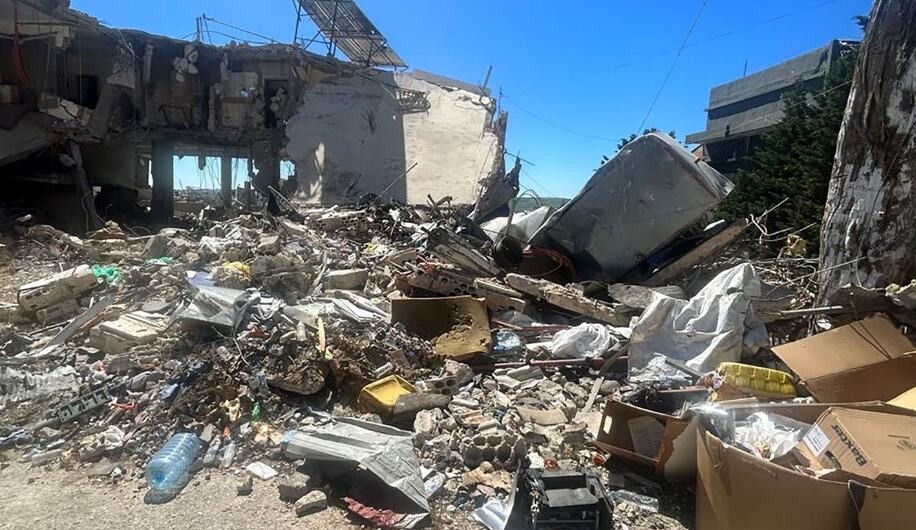
Israel and Hezbollah entered a ceasefire on Friday afternoon, according to a senior U.S. official, following a day of intense hostilities that threatened broader regional diplomatic efforts amid reports that the new violence threatened to halt further progress on the nascent U.S.-Iran peace agreement.
Speaking shortly before the 4 p.m. local time deadline, the U.S. official confirmed that negotiators from the United States and Qatar, with Iranian support, had secured the agreement.
“We understand that after the exchange of fire earlier today, Israel and Hezbollah are now in a ceasefire,” the official stated on condition of anonymity.
The announcement came after one of the deadliest days since the initial U.S.-Iran accord aimed at ending the wider conflict.
Lebanese authorities reported that Israeli airstrikes killed at least 31 people across southern Lebanon, while Israel confirmed the deaths of four of its soldiers.
The escalation also derailed planned U.S.-Iran talks in Switzerland, which were intended to address the reopening of the Strait of Hormuz. A senior Hezbollah lawmaker stated that Iran had insisted on a comprehensive ceasefire as a precondition for further negotiations.
Renewed Hostilities
The Israeli military said it struck over 80 targets overnight, including command centers and launch sites in the Nabatieh area and elsewhere in southern Lebanon.
Hezbollah claimed it retaliated by targeting Israeli forces with rockets and mortar shells near strategic positions overlooking Nabatieh, reporting ongoing clashes before the truce took effect. Israeli strikes also hit the Baalbek region and the Bekaa Valley—areas previously insulated from major attacks—in response to what Israel described as repeated Hezbollah ceasefire violations.
The Israeli military identified one of its fallen soldiers as Lieutenant Colonel Dor Gedalia Ben Simhon. Reports indicated that an Israeli tank was struck by a drone or anti-tank missile. In a separate incident, a reserve officer was seriously wounded.
Iranian Condemnation
Iran condemned the Israeli strikes as “aggressive and terrorist” acts, holding Washington accountable for the violence. Foreign Ministry spokesman Esmail Baghaei cited a June 18 memorandum of understanding, arguing that ending the war in Lebanon is an essential component of the broader ceasefire framework. He vowed that Iran would take all necessary measures to protect its security and allies.
Lebanon’s National News Agency has attributed nearly 4,000 deaths and over 11,800 injuries to the conflict since March 2, with more than one million people displaced and Israeli forces advancing over 10 kilometers into Lebanese territory.
Israeli Political Reactions
Despite the ceasefire agreement, Israeli leaders adopted a defiant tone. Prime Minister Benjamin Netanyahu vowed that troops would remain in southern Lebanon “as long as necessary” and pledged that Hezbollah would pay a “heavy price” for its attacks. Defense Minister Israel Katz echoed this stance, affirming that the military would respond forcefully to any future aggression.
The military fatalities have intensified political pressure on Netanyahu ahead of elections scheduled for late October. Far-right ministers called for a harsher response, with National Security Minister Itamar Ben Gvir declaring that “all of Lebanon must burn.”
A Maariv poll found that 63% of Israelis are concerned about the country’s future following the agreement.
Opposition leader Avigdor Lieberman criticized the government’s approach, asserting that Hezbollah strongholds should face consequences “from which the other side will never recover,” and questioned why Beirut’s southern suburbs remained intact.

Muhammad Luqman is Associate Editor at Views News Now. He writes on wide-ranging issues including economy, South Asia, the Middle East, agriculture, economy and innovation. Luqman has worked some of the leading news organizations and won acclaim for his original and research-based works.