Iran’s nuclear program has evolved so significantly since 2015 that the original agreement can no longer serve as a foundation for future negotiations, according to Rafael Mariano Grossi, head of the International Atomic Energy Agency.
Speaking at UN Headquarters in New York, Grossi said Iran’s “exponential progress” in uranium enrichment, advanced centrifuge technology, and expanded facilities has fundamentally altered the landscape.
As a result, he argued, any new agreement must move beyond the framework of the Joint Comprehensive Plan of Action (JCPOA).
“The JCPOA could not constitute a basis” for a renewed deal, he said, emphasizing the need to “look into something different” given how much Iran’s program has changed.
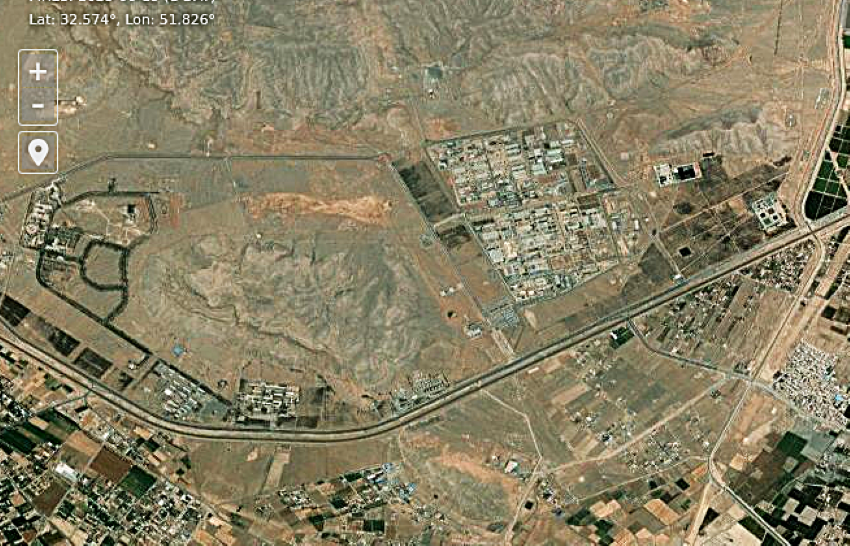
🇮🇷 IAEA chief Grossi: Iran’s near-weapons-grade uranium stockpile near Isfahan is still “accessible if there’s a wish.”
IAEA inspectors haven’t been inside Iran’s nuclear sites in 10 months.
All the strikes, all the pressure, and nobody on the ground can confirm what’s actually… https://t.co/hwqoVlYGzI pic.twitter.com/ewL3QF3J07
— Mario Nawfal (@MarioNawfal) April 29, 2026
Uncertainty Over Enriched Uranium
Grossi also addressed concerns over highly enriched uranium reportedly buried beneath debris following recent U.S.-Israeli airstrikes. He noted that IAEA inspectors last verified nuclear material in June 2025, when approximately 440 kilograms of uranium were sealed.
However, he cautioned that the agency cannot confirm the current status of that material until inspectors regain access.
Trump Rules Out Iran Nuclear Enrichment, Signals Sanctions Relief Ahead of Islamabad Talks
Renewed Focus on Non-Proliferation
Addressing a meeting tied to the Treaty on the Non-Proliferation of Nuclear Weapons, Grossi warned of the risks posed by weakening global safeguards. “A world with more countries possessing nuclear weapons would not be a safer world,” he said, urging renewed international commitment to non-proliferation.
His remarks come amid broader concerns over the erosion of multilateral agreements.
Test-Ban Treaty Under Pressure
Separately, Robert Floyd, head of the Comprehensive Nuclear-Test-Ban Treaty Organization, highlighted growing strain on global arms control frameworks, including the Comprehensive Nuclear-Test-Ban Treaty.
Floyd warned that rising geopolitical tensions and renewed rhetoric around nuclear testing underscore the importance of maintaining the treaty, which bans all nuclear explosions—whether underground, underwater, or in the atmosphere.
Iran Proposes Phased Deal to US to End War, Reopen Hormuz, Defer Nuclear Talks
Opened for signature three decades ago, the CTBT has dramatically reduced testing activity, with fewer than a dozen nuclear tests conducted since its adoption. While 187 countries have signed the treaty and 178 have ratified it, it has yet to enter into force, pending approval from nine key states, including United States, China, Russia, India, Pakistan, Iran, Israel, North Korea and Egypt.
Floyd suggested that coordinated action among major powers—particularly the United States, Russia, and China—would be necessary to advance ratification.
Monitoring and Misinformation
Despite the treaty’s pending status, its verification system is already more than 90 percent complete, with 307 monitoring facilities operational worldwide. Floyd noted that all six nuclear tests conducted by North Korea have been successfully detected, including the earliest and smallest.
The system is capable of identifying explosions as small as 500 tons of TNT—just a fraction of the yield of the atomic bomb dropped on Hiroshima during World War II.
Floyd also addressed the role of the CTBTO in countering misinformation, citing false claims in late 2024 that seismic activity in Iran indicated nuclear testing. Analysis later confirmed the events were natural earthquakes.
Both officials underscored the fragile state of global arms control efforts. While decades of progress have strengthened international security frameworks, they warned that renewed geopolitical tensions and technological advances are testing their limits, leaving significant work still to be done.

Iftikhar Ali is a veteran Pakistani journalist, former president of UN Correspondents Association, and a recipient of the Pride of Performance civil award