

As the United States approaches its 250th birthday on July 4, marking the signing of the Declaration of Independence, the nation faces a defining question: How do we celebrate amid deep and growing divisions?
The semi-quincentennial is more than a historical commemoration; it is an opportunity for reflection on whether the nation is living up to its founding ideals.
At such a moment, religious communities have a vital role to play. Across traditions, faith voices can affirm the moral dimension of our national life by upholding shared principles of peace, justice, dignity, and compassion embedded in all religions.
Faith leaders are uniquely positioned to rebuild the local relationships and norms on which civic trust depends by encouraging civic engagement, fostering dialogue, and elevating universal values. They can inspire their congregations to embrace pluralism, responsibility, and respect for others—cornerstones of a stable democracy.
Encouragingly, these principles are taking shape through the Faith250 initiative and the vibrant interfaith networks of the Washington metropolitan region, which promote dialogue, public participation and engagement with the nation’s founding ideals.
Rabbi Michael Holzman, spiritual leader of the Northern Virginia Hebrew Congregation in Reston and the founder of the Rebuilding Democracy Project, helped launch the initiative. It has since expanded throughout Virginia and beyond, engaging dozens of interfaith coalitions and hundreds of congregational clusters nationwide. Participants often sing in chorus Emma Lazarus’s “The New Colossus” and “America the Beautiful” as an expression of shared civic values.
The rabbi observes that “The toxicity of American politics has caused cynicism, mistrust, and despair to spread. People are afraid, anxious, depressed, and angry.” His concern reflects a reality many Americans recognize.
The day I went on air without break to support America’s interfaith conversation
The Rev. Stephen Smith-Cobbs, pastor of Trinity Presbyterian Church in Herndon, a participating congregation, said, “I believe the role of religious leaders in America, as we commemorate the 250th birthday of the United States, is to offer thanks to the Almighty for the gifts of religious liberty and freedom we are blessed to enjoy in this country. At the same time, with blessing comes responsibility, to work as partners to mend this country’s every flaw. As a country made up of human beings, ours is not a perfect country, and we are called to seek to make this a more perfect union.”
Similarly, Vernon C. Walton, senior pastor of the 158-year–old First Baptist Church of Vienna, whose congregation recently hosted a Faith250 gathering, emphasizes that patriotism and honesty must go hand in hand.
“As religious leaders, we celebrate America’s promise while telling the truth about its journey,” he said. From the African American faith tradition, he argues, “freedom and democracy are sacred responsibilities that call us to pursue justice, protect human dignity, and ensure liberty reaches every community.”
Frederick Douglass’s famous question— “What to a slave is your Fourth of July?”—challenged the nation to confront the gap between its principles and its practices. Abraham Lincoln’s Gettysburg Address later reframed the Civil War as a struggle for equality, democracy, and national unity. Those ideals remain unfinished.
Rizwan Jaka, who serves as the ADAMS Center Mosque’s Interfaith, Government, and Scouting America chair, also sees faith and citizenship as mutually reinforcing.
Drawing on the Scout Oath’s commitment to “Duty to God and Country” and the pledge to “help other people at all times,” he encourages civic responsibility, service, and respect for diverse beliefs. The ADAMS Center is among the congregations participating in the Faith250 effort.

These inter-religious initiatives promote civic engagement and a renewed appreciation for America’s founding documents—the Declaration of Independence, the Constitution, and the Bill of Rights.
They remind us that these instruments weren’t intended to divide Americans, but to unite them around the ethics of civility—grounded in hope, respect, kindness, and dignity to “love thy neighbor” and “welcome the stranger.” Religious freedom is a blessing worth celebrating—not everyone around the world has that privilege.
Such efforts reflect the enduring aspiration captured in “One nation under God” and E pluribus unum— “Out of many, one.”
Advertisemnt
Faith leaders alone cannot solve polarization, yet they can bring people together, foster understanding across differences, and remind Americans that democracy depends not only on institutions, but also on habits of humility, mutual respect, restraint, and concern for the common good. If they can help Americans see one another not as enemies but as neighbors, they will have made an invaluable contribution to the nation’s next chapter.
If America’s 250th anniversary is to mean more than a birthday celebration, it must become a moment of civic renewal.
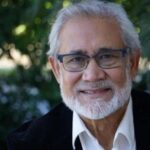
Victor Begg is an author and interfaith leader based in Virginia. His book Our Muslim Neighbors is an autobiography, detailing an American Dream achiever's journey as an immigrant and his thoughts on the American experience.







