Despite years of predictions about the decline of traditional media, Americans appear to be reaffirming the press’s role as a vital check on political power, a new study reveals.
The shift comes at a paradoxical moment for journalism: social media platforms, independent commentators and digital personalities are reshaping how audiences consume news, challenging the dominance of established news organizations.
Yet, as the boundaries between news, opinion and political messaging become increasingly blurred, the public appears to recognize the enduring value of professional journalism in scrutinizing those in power and holding political leaders accountable.
According to a new Pew Research Center survey. eight in ten U.S. adults (80%) now say criticism from news organizations keeps political leaders from doing things they shouldn’t — a notable jump from 75% in September 2025,
Just 16% believe such scrutiny prevents politicians from doing their jobs.
The finding cuts across party lines. Nearly nine in ten Democrats and Democratic-leaning independents (89%) endorse the media’s so-called “watchdog role,” alongside 73% of Republicans and Republican leaners.
Views remain consistent across age groups and ideological divides within both parties.
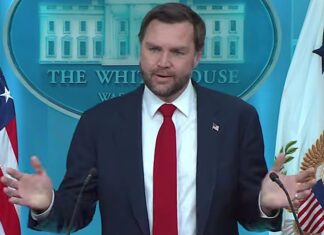
The findings come at a time of increasingly strained relations between the White House and mainstream media. President Donald Trump and some of his supporters have continued to portray major news organizations in deeply negative terms, frequently dismissing critical coverage as “fake news” and attacking journalists and outlets he considers hostile to his administration.
Trump’s second term has also seen an escalation in confrontations with media organizations, including legal battles and restrictions on press access to the White House, developments that press freedom advocates and media observers have described as unprecedented in aspects of modern American presidential history.
The tension is reflected in a separate Pew Research Center study published in September 2026, which found that 71% of Americans consider the relationship between the Trump administration and the news media to be bad, compared with just 11% who view it positively.
A Break From Partisan Patterns
Historically, support for the media’s watchdog role has often shifted depending on which party controls the White House, with supporters of the opposition party tending to place greater value on press scrutiny. But the latest Republican numbers do not follow that pattern neatly.
In September 2024, during the final year of President Joe Biden’s Democratic administration, 67% of Republicans said news criticism helped keep leaders in check. Today, with Republican Donald Trump in office, that figure has risen to 73%. Democrats, meanwhile, have moved in the same direction — from 81% to 89%.
The American people might not trust the media, but that doesn’t mean the media doesn’t have influence.
MRC’s @Davidbozell on with @LarryOConnor https://t.co/2v7VPq66Pc
— Media Research Center (@theMRC) November 5, 2026
Trust in Media Rebounds
The findings coincide with a modest recovery in public confidence in national and local news organizations. Separate Pew Research Center research published alongside the watchdog survey found that trust in information from both national and local news organizations has increased since 2025, reversing a prolonged period of declining confidence, particularly among Republicans.
While the improvement remains relatively modest, the parallel trends suggest that public recognition of the media’s accountability role is accompanied by some improvement in confidence in news organizations themselves.
Social Media’s Growing Influence Creates a New Challenge
The findings come against a backdrop of profound changes in how Americans consume news. Social media platforms, video-sharing services and independent commentators have increasingly challenged traditional news organizations as the primary sources of information.
The Reuters Institute’s 2025 Digital News Report documents the continued shift away from television, print and established news websites toward social media, video platforms and online personalities. This fragmented media environment has also allowed political figures to bypass traditional journalistic scrutiny and communicate directly with audiences.
Why societal change and technology may be key to Americans regaining trust in the news media https://t.co/HV9TrBICwU
— Fast Company (@FastCompany) March 21, 2026
Yet the shift in news consumption has not necessarily translated into greater confidence in alternative sources. Pew Research Center found that just 38% of Americans trust information from social media sites, compared with 62% for national news organizations and 75% for local news organizations in September 2026.
The contrast suggests that while social media has fundamentally weakened traditional media’s dominance as an information gatekeeper, it has not displaced its perceived value as an independent source of scrutiny and accountability.
Public Support Does Not Mean Unconditional Trust
There is, however, an important qualification to the apparent recovery in public confidence. A separate Pew Research Center study found that 55% of Americans believe news organizations have too much power and influence in politics, including 69% of Republicans and 43% of Democrats.
The findings reveal a complicated relationship between the public and the press: Americans can value journalism’s role in holding political leaders accountable while remaining skeptical of the political influence and credibility of media institutions themselves.
Rather than signaling a wholesale return to traditional media, the latest findings may reflect renewed recognition of the importance of independent journalism at a time of growing political polarization and fragmented information sources.

Ali Imran is a Washington-based journalist, who has worked for leading world news organizations as a correspondent, expert and in editorial positions. He is a published author and poet.