Pakistan, from its northern valleys to plains, is reeling from one of its deadliest monsoon seasons in recent history, as cloudbursts and extreme rainfall—fueled by climate change—have triggered devastating flash floods and landslides.
With over 700 confirmed deaths, hundreds missing, and thousands displaced, the crisis underscores the deadly intersection of global warming and domestic governance failures.
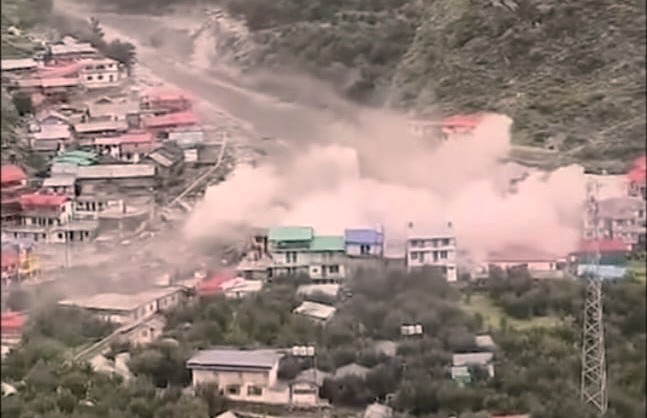
Khyber Pakhtunkhwa province in the country’s northwest has been most adversely affected by gushing waters which buffeted villages and towns with the devastating impact of unstoppable powerful waterfalls.
In the scenic region, prized for its tourism attractions, has suffered at least 427 deaths – 270 in Buner district – where entire villages were swept away in seconds.
On the southern edge of the country, financial capital Karachi witnessed its heaviest rainfall since 1979 over two days (up to **178 mm**), overwhelming outdated drainage systems and leading to urban flooding, power outages, and at least seven deaths.
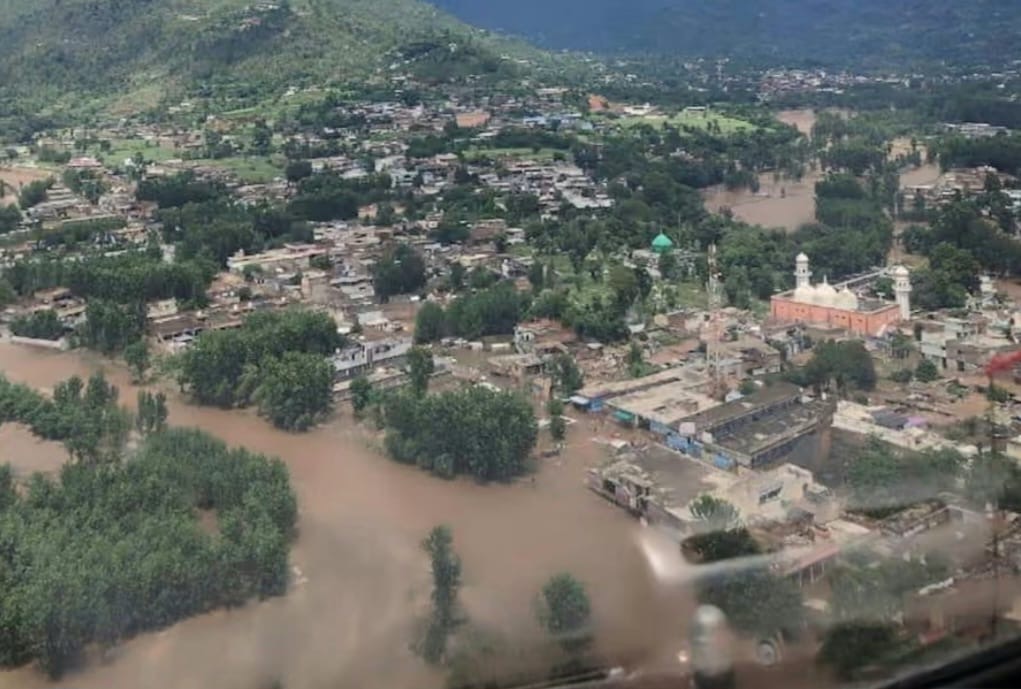
Flooding has also battered Punjab, Gilgit-Baltistan, Azad Kashmir, and Balochistan, damaging homes, roads, schools, and hospitals, and leaving vast areas inaccessible.
The total damage is likely to run into billions of Rupees, and it could take years for the country to repair.
Governance Failures Amplify Disaster
Despite ominous warnings over the past decade, Pakistan’s preparedness remains dangerously inadequate: drainage systems in major cities are outdated and poorly maintained: early warning systems** are missing or ineffective, especially in remote regions; and environmental degradation including deforestation and illegal construction along riverbanks, has left the country woefully exposed to natural disasters.
Former Climate Minister Senator Sherry Rehman called the disaster a “toxic mix of global climate change and local institutional collapse,” citing misuse of climate funds and declining forest cover.
Rescue and Relief Efforts
The disaster has also brought out some positives under the gloomy skies with Pakistan army and non-governmental civilian organizations contributing to rescues and relief efforts.
While institutional failures are evident, Pakistan’s military and citizens have mounted a determined response.
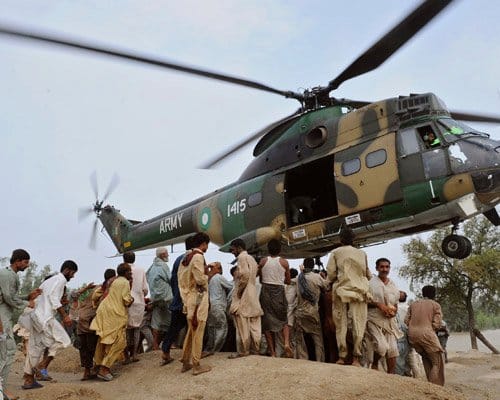
Army and Air Force have deployed helicopters, boats, and medical teams to reach stranded communities, especially in KPK province; emergency field hospitals treated flood-related injuries and diseases; air bridges transported 48 tons of aid from Karachi to Peshawar, ensuring supplies reached cut-off regions like Buner and Shangla; Sindh Police under SSP Mehroz Ali, played a frontline role in Karachi’s evacuation and traffic control; and volunteers and NGO mobilized nationwide to distribute food, water, and clothing.
Call for Urgent Reform
For the past many years studies and experts have warned Pakistan against treating these disasters as seasonal inevitabilities.

Key recommendations include afforestation to restore natural flood barriers; Urban planning to modernize drainage and ban construction on floodplains.
Advanced early warning systems for remote and vulnerable areas and transparent climate financing will also be critical to ensuring resilience in place of traditional corruption.
A Global Warning
Pakistan is responsible for less than 1%** of global carbon emissions but ranks among the world’s most climate-vulnerable nations.
The scary frequency of cloudbursts and glacial outbursts makes Pakistan’s suffering a warning to the world: climate instability is no longer abstract—it is dismantling nations.
Unless deep reforms are enacted, Pakistan will continue to drown—not just in water, but in preventable failure. The courage of its people stands in stark contrast to the paralysis of its institutions. The time for international solidarity and domestic accountability is now.
Watchword
The international community must view Pakistan’s crisis as a global warning. The accelerating frequency of cloudbursts, glacial lake outbursts, and urban flooding are too large to be ignored.
Pakistan, despite being the northern most South Asian country is drowning, not just in water, but in decades of neglect.
The resilience of its people and the heroism of soldiers, police, and volunteers shine in tragedy.
However, unless governance reforms match the scale of the climate threat, the cycle of disaster will repeat, with higher costs each time.
What unfolds today in Pakistan is not a local tragedy—it is a climate catastrophe with global lessons.
Follow for more: Twitter (X) | Facebook | Instagram | LinkeIn

Kiran Asim is a writer who covers the U.S., Europe, South Asia, and the Middle East. Her reports and analyses look at the geostrategic issues and contemporary developments and their economic and political implications. She also writes about society and education.