President Donald Trump said Thursday that the war with Iran could conclude “pretty soon,” while signaling that a deal to reopen the strategic Strait of Hormuz may be imminent – though Tehran has denied any direct negotiations with Washington.
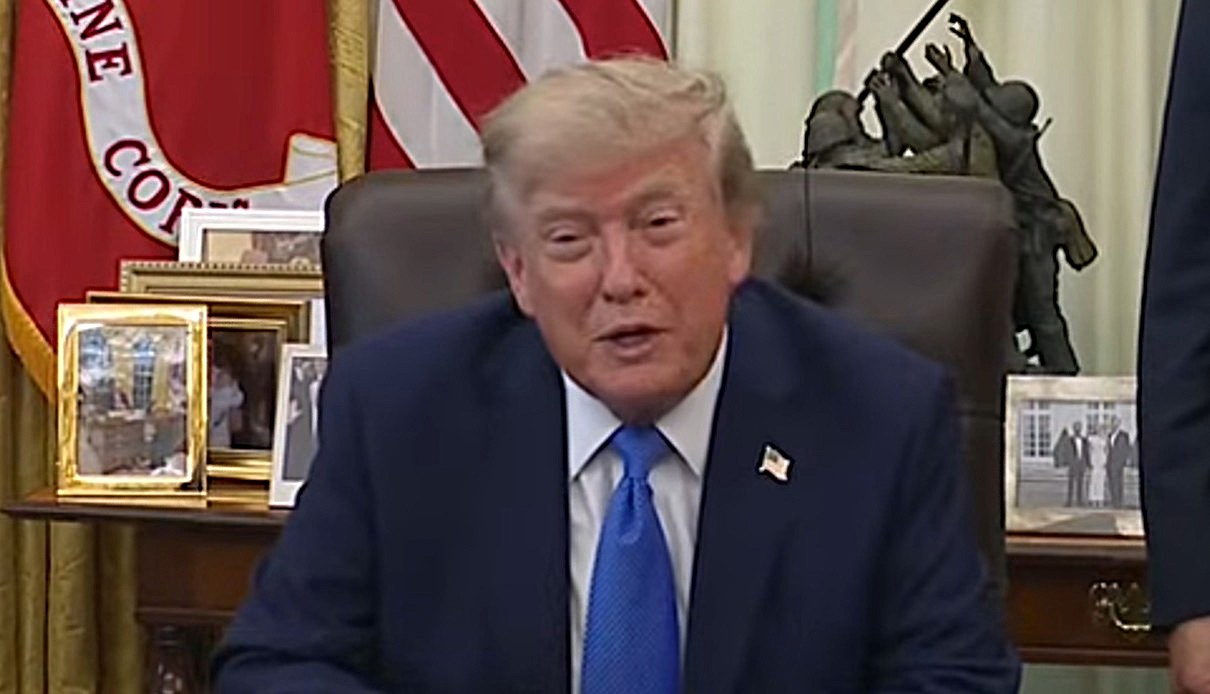
“I think it’s going to end pretty soon. I don’t think they can go much longer,” Trump told reporters in the Oval Office, referring to the conflict with Iran that erupted on February 28 with coordinated U.S.-Israeli strikes on Iran.
The war, now in its fifth month, flared up again recently despite a brief ceasefire and memorandum of understanding signed in Islamabad on June 17, which gave the two sides 60 days to resolve major issues, including the fate of Iran’s enriched uranium stockpile.
Trump: I think the war with Iran will end pretty soon. I don’t think they can go much longer.
Q: Have you reached a deal to reopen the strait of Hormuz?
Trump: It’s sort of open right now. pic.twitter.com/J3lcPyuVwM
— Acyn (@Acyn) August 6, 2026
Munitions Strain
Trump appeared to acknowledge that U.S. weapons supplies are under pressure, even as he sought to downplay concerns.
“We have certain types of munitions that are very powerful, that we have unlimited – virtually unlimited – supply,” he said. “We have others where it’s a little bit tighter.”
The president said defense manufacturers are building additional production plants, including facilities for Patriot and Tomahawk missiles.
“We have literally massive amounts of ammunition.”
President Trump pushed back on reports that the U.S. was running low on missile stockpiles after months of conflict with Iran, insisting the military remains fully supplied.
Speaking to reporters, Trump said the U.S. is “in… pic.twitter.com/W2pXecgJK1
— Fox News (@FoxNews) August 6, 2026
Hormuz Standoff
On the Strait of Hormuz – a critical chokepoint for global oil shipments where Iran has attacked commercial vessels and the U.S. has maintained a naval blockade of Iranian ports – Trump offered cautious optimism without declaring a final agreement.
“Well, I don’t want to say it has been,” he said when asked if a deal was finalized. “It’s sort of open right now.”
While confirming that the U.S. Navy continues to enforce the blockade, Trump acknowledged persistent risks from Iranian forces.
“They can always shoot something,” he said. “They always have something or drop a mine. And if you have one mine sitting out there, you sort of mess things up because people don’t want to take their billion-dollar boats and accidentally get hit by a mine.”
Yet Trump struck a positive note on the waterway’s prospects. “I think we’re doing very well,” he said. “I’m involved in the negotiation. I think we’re doing fine. It could be soon.”
When asked whether there is a deal with Iran to reopen the Strait of Hormuz, President Trump tells @weijia, “It’s sort of open right now.” Trump also said he’s involved in the negotiations, saying “I think we’re doing fine.”
Iran and Oman are close to agreeing on new… pic.twitter.com/1NWQDl6Mms
— CBS News (@CBSNews) August 6, 2026
New Reported Interim Arrangement
News outlet Axios reported Tuesday, citing unnamed regional and U.S. officials, that the U.S., Iran and Oman were nearing an interim deal to reopen the waterway.
The arrangement under discussion would establish a 60-day period of safe passage in the strait between Iran and Oman, with Washington hoping to announce it as early as Wednesday – though no such announcement materialized.
Secretary of State Marco Rubio said Tuesday that the United States was involved in negotiations between Oman and Iran aimed at increasing traffic through the Strait.
.@Gharibabadi : Agreement between Iran and Oman on arrangements for Strait of Hormuz is finalizinghttps://t.co/h8Xdmoz3ri pic.twitter.com/jNnznh2sIH
— IRNA News Agency ☫ (@IrnaEnglish) August 5, 2026
Tehran Denies Direct U.S. Talks
Iran’s foreign ministry has denied that negotiations with Washington are taking place, contradicting Trump’s insistence that they are underway.
Ebrahim Azizi, chairman of the National Security Committee of the Iranian Parliament, posted on X that the day when U.S. forces would be expelled from the region and from countries hosting their bases “is not far off.” The committee also described Trump’s approach to negotiations as “contradictory and unreliable.”
🔴 BREAKING: Seven of those injured in Houthi terrorist attacks on Saudi Arabia’s Najran are Saudi nationals, including a woman and a child, according to the Coalition Joint Forces Command. pic.twitter.com/YgBTtKUfWv
— Al Arabiya English (@AlArabiya_Eng) August 6, 2026
Trump’s Reversal on Threats
Last week, Trump had threatened to hit Iran “very hard,” including possible attacks against civilian infrastructure, after Tehran launched retaliatory strikes against Gulf nations hosting American military bases and Iranian proxies set Saudi oil tanks ablaze in the Red Sea.
However, Trump later announced he was holding off on attacks at the request of oil- and gas-exporting Gulf countries, including Saudi Arabia, and suggested a deal was near.
Coalition forces spokesman: The Houthi terrorist militia launched an indiscriminate attack on Najran, wounding 11 civilians — among them a 4-year-old child and a woman.
Gen. Al-Maliki condemned this cowardly targeting of civilians as a flagrant violation of international law,… https://t.co/vcf6j4kJbc
— Saudi Embassy USA (@SaudiEmbassyUSA) August 6, 2026
Mediators’ Role
Pakistan and Qatar have been mediating between the parties in an effort to resolve the conflict and return to the framework of the June 17 Islamabad Memorandum of Understanding.
The initial peace deal gave Washington and Tehran 60 days to negotiate the future of Iran’s enriched uranium stockpile – a deadline that now appears to have expired without a final resolution.

Kiran Asim is a writer who covers the U.S., Europe, South Asia, and the Middle East. Her reports and analyses look at the geostrategic issues and contemporary developments and their economic and political implications. She also writes about society and education.