President Donald Trump has confirmed the United States is once again weighing a military strike against Iran, warning that a nuclear deal should be reached within 10 to 15 days.
“I guess I can say I am considering that,” the President said when asked if he was looking at using limited force to pressure Tehran into agreeing to a nuclear deal.
“Otherwise, bad things happen,” Trump said. “You’ll be finding out over the next probably 10 days. I would think that would be enough time — 10, 15 days, pretty much maximum.”
The United States and Iran have concluded two rounds of indirect Oman-mediated negotiations.
Tehran has asked for about ten days before it comes back with a decision on the high-stakes deal offer that came amid heavy U.S. military presence in the Arabian Sea.
If the deal does not come through experts fear that a U.S. strike this time could be more than the “surgical” strike of 2025, when American struck Iranian nuclear sites during Iran-Israel conflict in June.
This time, the stakes are significantly higher, and the regional fuse is much shorter. The diplomatic environment has also grown increasingly raucous in the backdrop of series of developments including Iran’s harsh crackdown on widespread anti-government protests, and President Trump’s tough high-pressure approach, combining talks and an attack-ready military posture.
The Iranian government has demanded evidence after the US President Donald Trump told reporters that 32,000 people were killed during last month’s nationwide protests in the Islamic Republic. The claim has not been independently verified.
US presses Iran for deal as military power shifts into readiness
Reacting to the statement, Iran’s Foreign Minister Abbas Araghchi said the government released a list of 3,117 people, including about 200 security personnel, whom he described as “victims of recent terrorist operation.”
“If anyone disputes accuracy of our data, please share any evidence,” the diplomat, who has previously stated that 690 people on the list were “terrorists” armed and funded by the US and Israel, wrote on X.
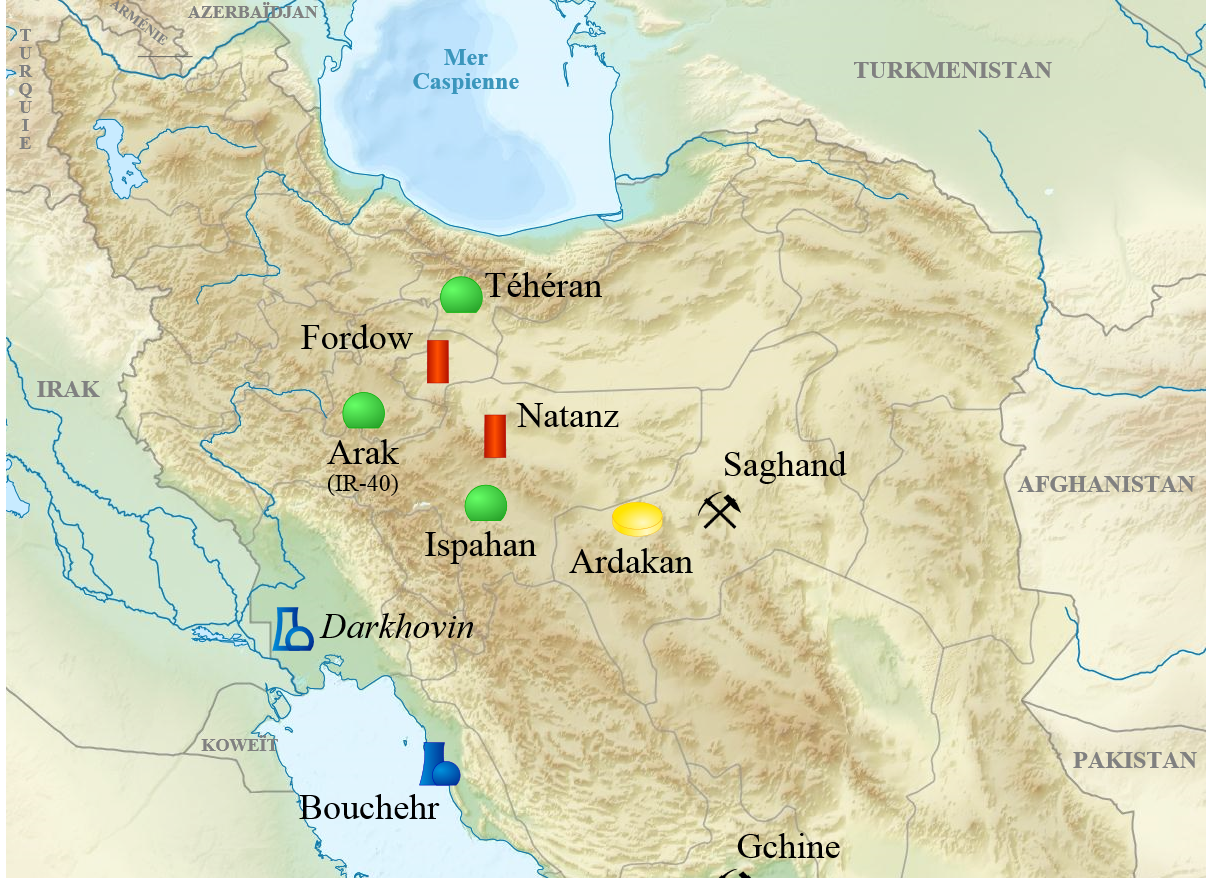
The current tension stems from the 12-day war of June 2025. What began as an Israeli operation evolved into a brief U.S. intervention, where American “bunker-buster” strikes successfully targeted Iranian nuclear facilities at Natanz and Fordow.
At the time, the operation was hailed by the administration as a success—achieving its goals with zero American casualties and a swift ceasefire.
Amid military buildup, Trump indicates Iran wants to make a deal
However, the “success” of 2025 may have been a historical anomaly. Today, the Pentagon is overseeing the largest military surge in the Middle East since the 2003 invasion of Iraq. This isn’t just a show of force; it is a structural preparation for a sustained campaign.
Two carrier strike groups—the USS Abraham Lincoln and the USS Gerald R. Ford—are converging on the region. A massive influx of F-35s, F-22s, and E-3 Sentry command planes suggests the military is planning for weeks of operations, not days.
Meanwhile, Iranian President Masoud Pezeshkian said on Saturday that his country would not bow its head to pressure from world powers amid nuclear talks with the United States.
“World powers are lining up to force us to bow our heads … but we will not bow our heads despite all the problems that they are creating for us,” Pezeshkian said in a speech carried live by state TV.
The latest warning came after Iran’s foreign minister said a draft proposal for an agreement with Washington would be ready within days, following negotiations between the two sides in Geneva earlier this week.
Yet, ambiguity over what might happen in the next few weeks, persists. Unlike 2025, where the U.S. objective was clear (nuclear setback), a broader 2026 offensive may be perceived by Tehran as an existential threat.
“Iran could calculate that its muted response to previous American military operations had only invited more threats,” warns Vali Nasr of Johns Hopkins SAIS. “They may decide they must escalate the cost of war for the U.S.”
Iran’s U.N. mission has already issued a chilling warning: any attack will make all 30,000 to 40,000 U.S. troops in the region legitimate targets. While Iran gave “private warnings” before striking Al Udeid Air Base last June, experts believe this time the gloves will stay on.
Israel, which bore the brunt of Iran’s 2025 retaliation, remains on high alert. Despite an 80% interception rate last year, Iranian missiles killed dozens of civilians and caused extensive damage. Israeli officials now worry that a multi-week conflict would deplete their interceptor stockpiles, leaving cities vulnerable.
Any conflict would not be without wide-ranging ramifications for the world economy.
Iran controls the Strait of Hormuz, the maritime pathway critical to world oil trade with almost all the neighboring Middle Eastern countries including Saudi Arabia, Iraq and the U.A.E. relying heavily on it smoothly operating to allow their exports.
Tehran last week temporarily closed the strait in a clear indication what could happen if a conflict broke out.
The next 10 to 15 days will determine if the Middle East enters a new era of diplomacy or a conflict that could reshape the global order. As time for Iran’s response passes away and the USS Gerald R. Ford nears the coast, the window for a “limited” solution may be narrowing.

Kiran Asim is a writer who covers the U.S., Europe, South Asia, and the Middle East. Her reports and analyses look at the geostrategic issues and contemporary developments and their economic and political implications. She also writes about society and education.