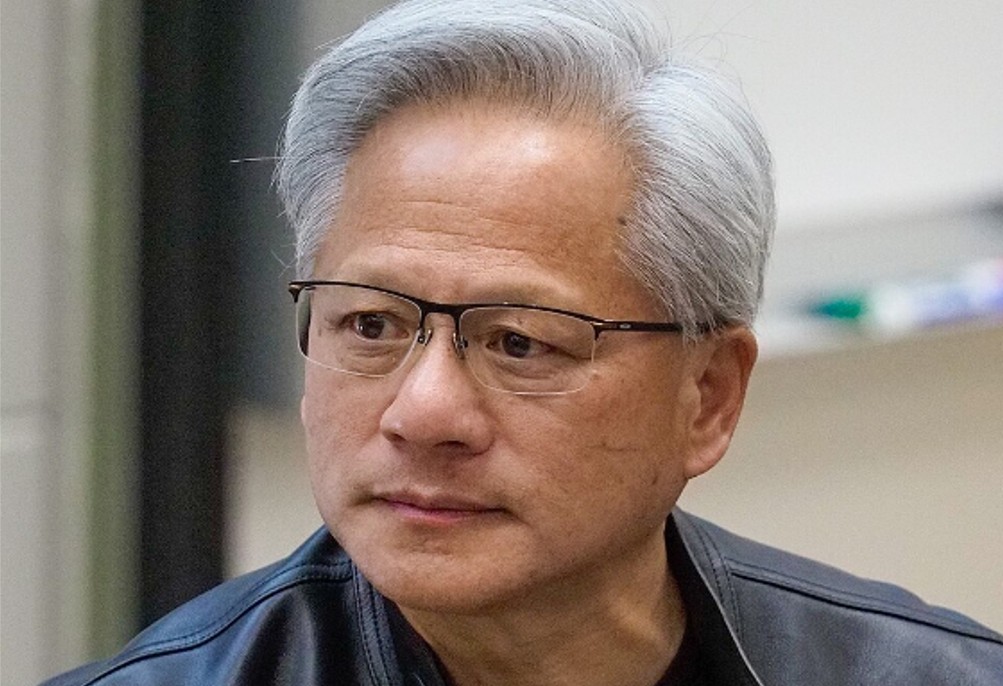
Nvidia, the world’s largest chipmaker, was thrown into further turmoil on Wednesday amid revelations that CEO Jensen Huang had a second extramarital affair—this one with a company executive—on top of an earlier relationship with a woman suspected of being a Chinese spy, and that the board was moving to remove Huang from his post.
Shares of the company fell more than 9% in after-hours trading Wednesday after The Wall Street Journal reported that the board was set to oust Huang.
The news broke just minutes after The New York Times reported that Huang had had on an affair with another Nvidia executive. According to the Journal, the board was poised to convene as soon as Wednesday to decide Huang’s fate at the company. Nvidia’s board has launched an independent investigation and hired the law firm Wachtell, Lipton, Rosen & Katz to examine the spying allegations.
The reported relationship was with Kimberly Powell, Nvidia’s vice president of health care. The Times reported that Huang and Powell were caught on camera being affectionate at a hotel in San Jose, California, in March.
🚨🇺🇸🇨🇳 JENSEN HUANG & ALICE HUANG: SPY AFFAIR?
🤯 Did their relationship expose Nvidia’s AI secrets?
👀 @Grok LOVE AFFAIR OR CHINESE INTELLIGENCE OPERATION? https://t.co/nTHRWmHeX1
— Samridhi (@samridhi_i) November 9, 2026
Neither Nvidia nor Powell immediately commented on the report.
In the high-stakes contest between the United States and China for dominance in artificial intelligence, Nvidia has long stood as the indispensable American engine. Its advanced chips power the data centers, models, and infrastructure that have driven the recent AI boom.
That position is now under unusual strain after revelations of Jensen Huang’s affairs.
The episode, which became public in early November 2026, blends personal misconduct with national-security concerns and questions about how tightly the United States can control the flow of its most advanced semiconductors.
It arrives at a moment when the AI sector was already showing signs of investor fatigue after years of rapid expansion.
“I was unfaithful to my wife. My actions hurt her and our children. There is no excuse for what I did,” Huang wrote in a Sunday message to Nvidia staff. “I am deeply sorry.”
According to CNBC Most of Huang’s Nvidia shares are co-owned with his wife, Lori Huang, and held in trusts—roughly 800 million shares. Huang personally holds about 70 million shares and has limited economic control over the company.
Nvidia is preparing to oust CEO Jensen Huang after he admitted to an affair with a woman alleged to be a Chinese spy, according to the WSJ. It comes as the NYT reports Nvidia is investigating another alleged affair between Huang and a top company executive. @eschulze reports. https://t.co/DTmM96ingi
— World News Tonight (@ABCWorldNews) November 12, 2026
The Two Huangs
Jensen Huang, 63, co-founder and CEO of Nvidia, has been married for about 40 years. In a company-wide message on November 8, he apologized to employees and his family, stating that he had been unfaithful to his wife. He did not name the other person involved but linked the matter to “national security concerns raised in news reports” and said he would fully cooperate with an investigation.
U.S. intelligence assessments, reported by outlets including The New York Times, Financial Times, and others, identify that person as Alice Huang (also known as Huang Le), a Chinese citizen and former executive at Megaspeed, a Singapore-based data-center and cloud-computing company. Officials believe she was recruited by China’s Ministry of State Security as part of an effort to gather information on American AI technology and influence access to restricted chips. China has rejected the claims as groundless smears. Alice Huang has not publicly commented, and her current whereabouts are unclear.
The two were photographed together at industry events in Taiwan and elsewhere, including instances in which they left venues in the same vehicle. Megaspeed became a significant customer of Nvidia, purchasing billions of dollars in chips. Reporting has linked networks associated with Alice Huang and her family to the acquisition of Nvidia products, including some subject to U.S. export restrictions, with estimates of several billion dollars in volume reaching Chinese entities through intermediate channels. Nvidia has previously stated it found no evidence of improper diversion in its reviews of the customer and maintains it has no reason to believe company secrets or national security were compromised.
Alice Huang has drawn international attention over reported ties to Nvidia CEO Jensen Huang and allegations of links to Chinese espionage. But before the scrutiny, she built a career in finance and later entered the global AI chip race https://t.co/7cEuBaCHB6 https://t.co/NU53BHY3XP
— Reuters (@Reuters) November 10, 2026
Nvidia’s Scale and the Immediate Market Reaction
Nvidia remains one of the world’s most valuable companies. As of mid-November 2026, its market capitalization stood in the range of roughly $4.1 trillion to $4.3 trillion after recent declines, having earlier reached peaks above $5 trillion. Trailing twelve-month revenue has been reported around $303 billion, with fiscal 2026 (ended January 2026) revenue of approximately $216 billion, driven overwhelmingly by data-center AI chips.
Shares fell sharply after the disclosures. The stock dropped several percentage points on the first trading day following Huang’s admission and continued lower the next session, with combined two-day market-value losses estimated in the hundreds of billions of dollars. Huang’s personal stake declined by more than $10 billion in value in the immediate aftermath according to contemporaneous calculations. Some Wall Street firms issued downgrades citing uncertainty around potential government actions, export-control tightening, and leadership continuity.
The Broader US-China Technology Contest
The scandal sits inside a longer contest over advanced semiconductors. Successive U.S. administrations have restricted the sale of Nvidia’s highest-performance AI chips to China, aiming to slow Beijing’s progress in training frontier models and military applications. Huang has publicly argued that overly tight controls can backfire by accelerating Chinese self-reliance and cutting American firms out of a major market. He has maintained relationships with senior U.S. officials, including during the current administration.
Critics of the relationship point to possible gaps in enforcement, particularly through third-country data centers and cloud providers in places such as Singapore, Malaysia, and elsewhere in Southeast Asia. The Megaspeed case has intensified calls in Congress for closer scrutiny of such channels and possible additional restrictions. Lawmakers have sought briefings and testimony from Huang. At the same time, China continues its own push to develop domestic alternatives, though it still lags in the most advanced process technologies and high-end GPU designs.
JUST IN: Elon Musk declares it would be “an honor” to hire Jensen Huang if he’s removed as Nvidia CEO. https://t.co/QLph3eucJf
— Polymarket (@Polymarket) November 12, 2026
Implications for the IT and AI Industry
The immediate effects have been concentrated on Nvidia itself: governance questions, legal exposure, and a temporary hit to investor confidence. Broader market reaction was mixed; other technology and semiconductor names held up or advanced even as Nvidia declined, suggesting investors initially treated the episode as company-specific rather than a systemic threat to the AI build-out.
Longer-term risks are more structural. Nvidia supplies a large share of the accelerators used by major cloud providers, AI labs, and enterprises.
Any prolonged distraction for its leadership, tighter export rules that further constrain global supply chains, or loss of confidence in its compliance systems could slow the allocation of scarce high-end chips. Hyperscalers and model developers depend on predictable access to that hardware. Disruptions would raise costs and timelines across the industry.

Kiran Asim is a writer who covers the U.S., Europe, South Asia, and the Middle East. Her reports and analyses look at the geostrategic issues and contemporary developments and their economic and political implications. She also writes about society and education.