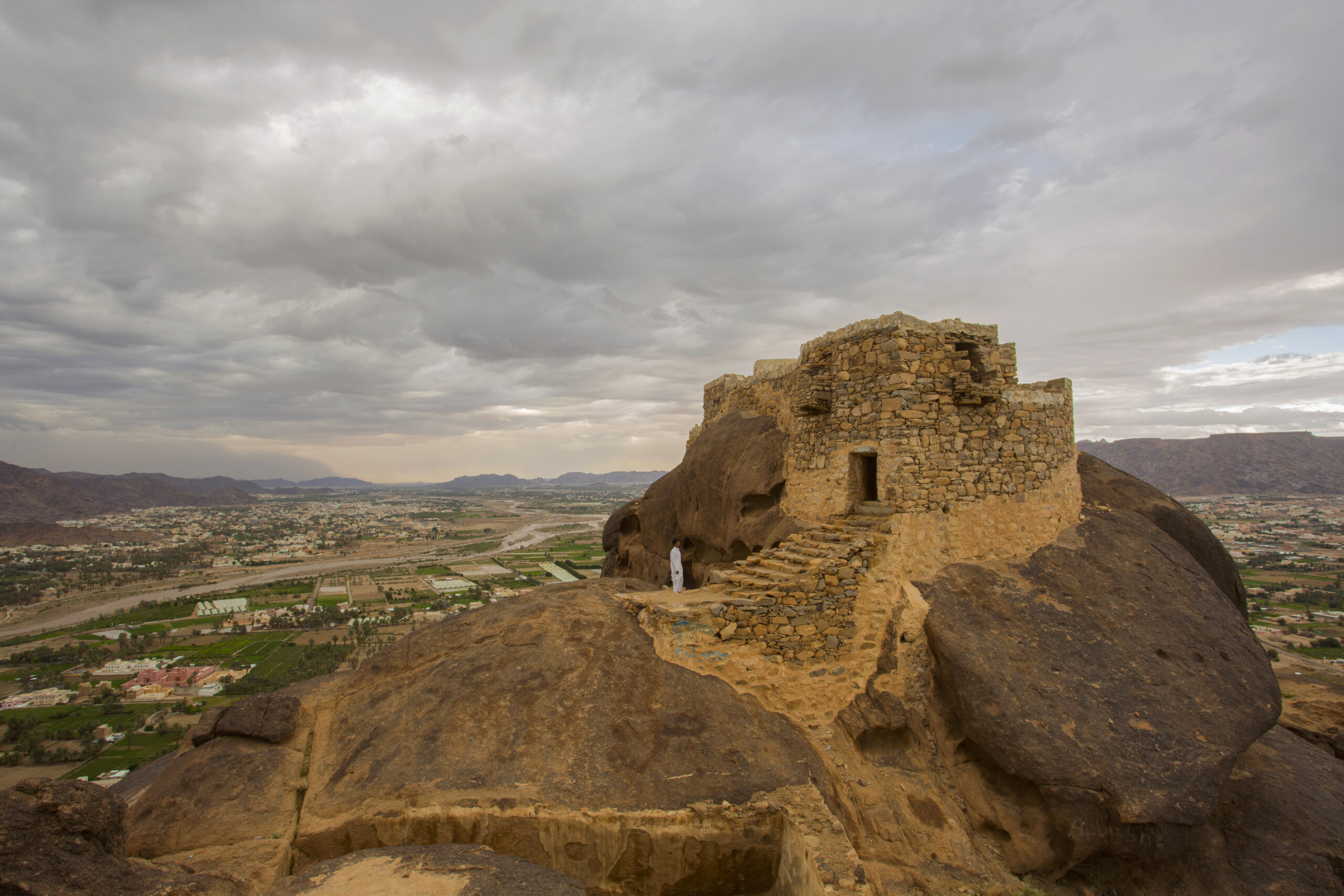
Yemen’s Iran-backed Houthi movement launched an attack on Saudi Arabia’s Najran border region on Friday, injuring several civilians.
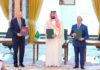
The strike, carried out by the Iranian proxy in the Arabian Peninsula, occurred as Saudi Arabia, Pakistan, and Türkiye signed a joint defense agreement in Makkah—underscoring the heightened security threats facing the Kingdom.
The latest assault comes against a backdrop of escalating regional tensions linked directly to Iran’s wider confrontations with Gulf states and their allies in retaliation for U.S. and Israeli attacks.
Houthi strikes on Saudi territory and Red Sea shipping routes continue to raise concerns about energy security and the risk of further escalation, even as diplomatic efforts and new defense arrangements seek to reinforce collective security.
Coalition forces spokesman: The Houthi terrorist militia launched an indiscriminate attack on Najran, wounding 11 civilians — among them a 4-year-old child and a woman.
Gen. Al-Maliki condemned this cowardly targeting of civilians as a flagrant violation of international law,… https://t.co/vcf6j4kJbc
— Saudi Embassy USA (@SaudiEmbassyUSA) August 6, 2026
Intelligence Warnings of More Attacks
Riyadh has warned that the Houthis are coordinating with Iran-backed Iraqi militias to plan further strikes.
CNN, citing an unnamed Saudi official, reported that “multiple intelligence reports” from Saudi, U.S., and regional sources indicate Iraqi militia members, “in coordination with the Houthis,” are planning imminent attacks under the guidance of Iran’s Islamic Revolutionary Guard Corps (IRGC).
New Defense Pact and Broader Context
In a pivotal strategic development, the three Sunni majority nations, each considered a regional power, signed the “Makkah Joint Defense Agreement,” committing to treat an attack on any one member as an attack on all.
Pakistan’s Foreign Office stated the pact aims to strengthen “collective deterrence against any act of aggression.” The Houthis have also continued to disrupt Saudi oil shipping, including Aramco vessels, in the Red Sea.
#BREAKING | 🇸🇦 🇾🇪 — Saudi-led Coalition spokesperson Maj. Gen. Turki Al-Maliki reports that 11 civilians were injured in Saudi Arabia’s Najran region in Houthi attacks on Thursday.
The wounded include seven Saudis (among them a woman and a four-year-old child who suffered… pic.twitter.com/kltnMpvyzc
— The Global Eye (@TGEThGlobalEye) August 6, 2026
Meanwhile, Iraq’s Prime Minister Ali al-Zaidi has been invited to Riyadh, his office confirmed Friday.
The diplomatic move that comes as Iran-aligned groups postpone their planned response to U.S. and Saudi strikes on July 29 that killed 20 militants, including five Iranians.
Zaidi had postponed the previously scheduled visit in the aftermath of the strikes.
Iran Criticizes Defense Pact
Iranian parliamentarian Ebrahim Rezaei dismissed the new defense as “a paper agreement” with Türkiye and Pakistan that “will not provide [Saudi Arabia] with security.”
“Saudis must know that a paper agreement with Turkiye and Pakistan will not bring them security, just as years of one-sided nursing to the Americans did not bring them security,” Rezaei wrote in a post on X platform.
“Reform your policies so that you do not need to beg for security from others,” added Rezaei, who is also a member of parliament’s National Security and Foreign Policy Commission.
Background of Saudi-Houthi Rivalry
The conflict is rooted in Yemen’s civil war. After Houthi forces seized Sanaa in 2014–2015, a Saudi-led coalition intervened to restore the internationally recognized government.
The conflict has since devolved into a regional proxy war, with the Houthis—whom multiple governments and the UN have accused of receiving Iranian arms, training, and financing—launching cross-border drones and missiles at Saudi airports and energy facilities, most notably the 2019 attack on Aramco’s Abqaiq and Khurais plants. Despite UN-brokered truces, a lasting political settlement remains elusive.
🔴 Houthi Missile and Drone Barrage Kills at Least 30 Yemeni Troops; Death Toll May Rise !
📍MARIB/HADRAMOUT, Yemen | August 7, 2026 | HewadPress — At least 30 Yemeni government soldiers were killed and dozens more wounded after Yemen’s Iran-backed Houthi movement launched a… pic.twitter.com/7F03NluFEm
— HewadPress (@HewadPress) August 7, 2026
Regional Condemnation
Qatar condemned the Najran attack as “a severe violation of sovereignty and international law,” expressing “complete solidarity” with Saudi Arabia.
Similarly, Arab League Secretary-General Nabil Fahmy denounced the strikes as a “very dangerous path” that undermines regional stability and de-escalation efforts.
BREAKING: Pact with Pakistan, Turkiye will not bring security to Saudi Arabia, warns Iranian MP
🔴 LIVE updates: https://t.co/sbSu8YBh2l pic.twitter.com/STW6aye8g7
— Al Jazeera Breaking News (@AJENews) August 7, 2026
In a statement carried by Al Jazeera, Fahmy stressed that targeting Saudi territory and endangering civilian lives, along with the attacks inside Yemen, represented a serious threat to the region’s security and undermined chances for a political settlement.
He expressed the Arab League’s full solidarity with the Kingdom and called for an immediate halt to the escalation and a return to the political track.

Kiran Asim is a writer who covers the U.S., Europe, South Asia, and the Middle East. Her reports and analyses look at the geostrategic issues and contemporary developments and their economic and political implications. She also writes about society and education.