In the sterile, high-security corridors of Urumqi, a desperate diplomatic gamble kicked off this week as senior officials from Pakistan and Afghanistan convened for high-level Beijing-hosted talks, aiming to stop the two uneasy neighbors’ descent into full-scale war at a time when the Middle East conflagration threatens to engulf the entire region.
The meeting, reportedly held at Kabul’s request, represents the most significant Chinese attempt to end the deadliest period of conflict between the South Asian neighbors since the Taliban’s return to power in 2021.
While officials have not come out with definitive readout of the meeting, Pakistan’s former senator Mushahid Hussain Sayed saw the talks beginning on an optimistic note.
“China has successfully brokered peace talks between Pakistan & Afghanistan with Kabul apparently ready & willing to address Pakistan’s genuine concerns on terrorism emanating from Afghanistan via ‘verifiable mechanism’! Pakistan-Afghanistan Border should be a border of Peace & Security, promoting prosperity for both peoples!” he commented.
Urumqi meeting https://t.co/OR7sr6Xj5z Great news that China has successfully brokered peace talks between Pakistan & Afghanistan with Kabul apparently ready & willing to address Pakistan’s genuine concerns on terrorism emanating from Afghanistan via ‘verifiable mechanism’!…
— Mushahid Hussain Sayed (@Mushahid) April 3, 2026
Cross-Border Militancy and Operation Ghazab lil Haq
The current crisis was catalyzed by a fundamental shift in Pakistan’s security doctrine. Following what Islamabad described as “repeated and unprovoked assaults” by Afghan-based militants, the Pakistani military launched Operation Ghazab lil Haq (Wrath for the Truth) in February, days before the Middle East erupted into an inflammatory conflict.
According to Pakistani military, this large-scale campaign—comprising both precision air strikes and ground maneuvers—was a “necessary deterrent” against the Tehreek-e-Taliban Pakistan (TTP) and hostile elements within the Afghan Taliban.
While Pakistan claims the operation has successfully “damaged terrorist centers” and led to a 59% drop in domestic terrorism incidents this March, the humanitarian cost on the Afghan side of has raised issues.
The Kabul Strike and the Disputed Tolls
Central to the friction have been two issues — Pakistani Taliban, TTP, using Afghan soil for attacks on Pakistani people and security forces and a massive recent air strike on the Omid Drug Rehabilitation Center in Kabul, last month.
The Afghan Ministry of Foreign Affairs, represented by spokesperson Abdul Qahar Balkh, alleges that more than 400 people were killed in the strike, describing it as a flagrant violation of sovereignty.
Some international observers have corroborated the severity of the incident. A Reuters reporter at the scene counted more than 100 bodies at a single hospital, while Human Rights Watch and UNAMA have reported figures ranging from 143 to over 200 dead, many of them patients breaking their Ramadan fast.
#Pakistan #Afghanistan #Taliban talks in #Urumqi Talks between Pakistan and Afghanistan continued in Urumqi, China, continued on the second day on Friday, sources aware of the negotiations told me. They did not provide further details.
“The talks continued but we can’t share… pic.twitter.com/Lj3QJ7u94Y
— Tahir Khan (@taahir_khan) April 3, 2026
Pakistan has categorically rejected these accounts. Foreign Ministry spokesperson Tahir Andrabi stated that the military “precisely targeted military installations and terrorist support infrastructure,” suggesting that any civilian facility hit was either misidentified or located near high-value militant assets.
Mutual Accusations and the ‘Verifiable’ Demand
The rhetoric in the Urumqi talks remained sharp, according to reports Pakistan accused the Afghan Taliban of “harboring Islamist militants” who use Afghan soil as a launchpad for attacks.
According to Pakistan Spokesperson Andrabi for the talks to succeed, Kabul must show “visible and verifiable actions” against these groups.
Kabul Defiance Despite UN Assessments
Afghan Spokesperson Balkh claims that the militancy is “Pakistan’s domestic problem” and has used the Urumqi forum to demand an end to Pakistani aerial incursions.
The Taliban denial runs against U.S., UN and other international assessments that clearly identify the presence of militant groups in Afghanistan as posing a threat to regional peace and stability.
Despite Kabul’s vitriol, Balkh acknowledged that the talks, initiated by China, are aimed at “strengthening good-neighborly relations, trade ties, and the effective management of security issues.”
The Beijing Factor: Trade as a Carrot
China, the world’s second largest economy with potential trade interests in the region, shares borders with both countries, and has the ability to play the role of a regional stabilizer.
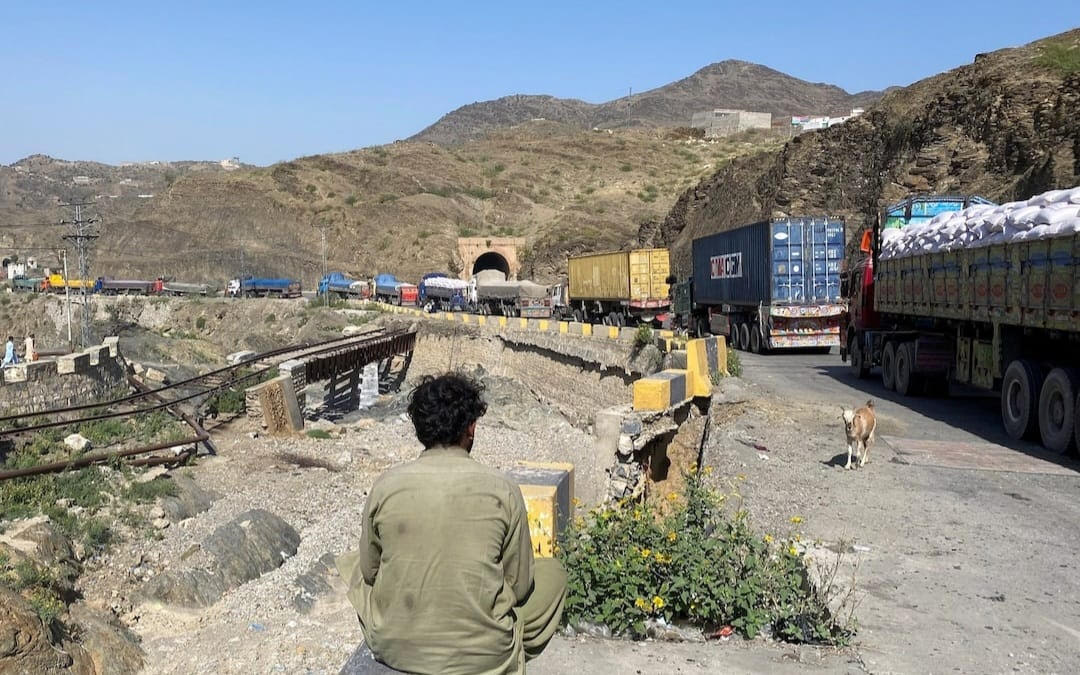
Beyond security, the negotiations are exploring: a sustainable ceasefire to formalize the current fragile pause in hostilities, the reopening of borders, and revival of economic cooperation including reopening transit routes to Central Asia, which have been dormant since the escalation.
Both Pakistan and Afghanistan value and welcome China’s mediation efforts and are willing to sit down again for negotiations, which is a positive development, Chinese Foreign Ministry spokesperson Mao Ning said on Friday, in response to media inquiries over the peace talks… pic.twitter.com/notwpOx0F5
— Global Times (@globaltimesnews) April 3, 2026
Pakistan closed eight major crossings in late 2025, stifling trade and causing prices to skyrocket in Afghanistan.
A Precarious Window for Peace
As officials from both sides—including military and intelligence officers—deliberate in China, the stakes could not be higher.
Operation Ghazab lil Haq has demonstrated Pakistan’s willingness to use force deep within Afghan territory, while Kabul has shown it can endure significant losses without abandoning its TTP allies.
If the Urumqi talks fail to produce a “verifiable mechanism” for security, the temporary silence at the border may only be the prelude to a much wider regional conflagration.
For now, the world waits to see if Beijing’s “exploratory discussions” can turn a bitter rivalry back into a functional, if cold, neighborly reality.

Kiran Asim is a writer who covers the U.S., Europe, South Asia, and the Middle East. Her reports and analyses look at the geostrategic issues and contemporary developments and their economic and political implications. She also writes about society and education.